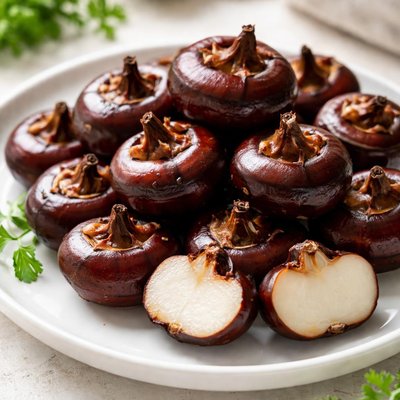
1 serving (100 grams) contains 97 calories, 2.0 grams of protein, 0.1 grams of fat, and 24.1 grams of carbohydrates.

Smart Nutrition Tracking with SnapCalorie

Nutrition Information
Calories |
231.0 | ||
|---|---|---|---|
% Daily Value* |
|||
| Total Fat | 0.2 g | 0% | |
| Saturated Fat | 0 g | 0% | |
| Polyunsaturated Fat | 0 g | ||
| Cholesterol | 0 mg | 0% | |
| Sodium | 16.7 mg | 0% | |
| Total Carbohydrates | 57.4 g | 20% | |
| Dietary Fiber | 7.1 g | 25% | |
| Sugars | 11.4 g | ||
| protein | 4.8 g | 9% | |
| Vitamin D | 0 mcg | 0% | |
| Calcium | 26.2 mg | 2% | |
| Iron | 1.4 mg | 7% | |
| Potassium | 1390.5 mg | 29% | |
* Percent Daily Values are based on a 2,000 calorie diet. Your daily values may be higher or lower depending on your calorie needs.
Food Attributes
Source of Calories
About Water chestnuts
Water chestnuts are aquatic vegetables native to Southeast Asia and are commonly used in Chinese, Thai, and Indian cuisines. They grow in marshes, underwater, and are known for their nutty flavor and crisp, crunchy texture even after cooking. Nutritionally, water chestnuts are low in calories, with about 97 calories per 100 grams, and rich in fiber (about 3 grams per 100 grams), which aids digestion. They also provide potassium (362 mg per 100 grams), manganese, and vitamin B6 while being naturally fat-free and cholesterol-free. These qualities make them a popular addition to stir-fries, salads, and snacks, offering texture and mild sweetness.
Health Benefits
- Promotes heart health due to potassium, which helps regulate blood pressure.
- Supports digestion with dietary fiber, which aids in preventing constipation.
- Provides manganese, essential for bone development and antioxidant defense against free radicals.
Dietary Considerations
Selection and Storage
Store fresh, unpeeled water chestnuts in the refrigerator for up to two weeks. Peeled or canned water chestnuts should be kept in an airtight container and refrigerated, submerged in water, for up to one week.
Common Questions About Water chestnuts Nutrition
Are water chestnuts high in calories or nutrients?
Water chestnuts are low in calories, providing about 97 calories per 100 grams, while being low in fat and protein (0.1g of fat and 1.4g of protein). They are a good source of fiber, potassium, manganese, and vitamin B6.
Are water chestnuts suitable for a keto diet?
Water chestnuts are not ideal for a keto diet as they are relatively high in carbohydrates, providing around 24 grams of net carbs per 100 grams. They are more compatible with balanced diets that are less restrictive in carbohydrate intake.
What are the health benefits of water chestnuts?
Water chestnuts are rich in antioxidants, which help protect the body from oxidative stress. Their high fiber content supports digestive health, and they are also a good source of potassium, which aids in maintaining healthy blood pressure levels.
What is the recommended serving size for water chestnuts?
A typical serving size for water chestnuts is about half a cup (approximately 60 grams), which provides around 58 calories and 14 grams of carbohydrates. This makes them a great addition to meals or snacks in moderation.
How do water chestnuts compare to regular chestnuts?
Water chestnuts and regular chestnuts are quite different. Water chestnuts are aquatic vegetables and much lower in fat, while regular chestnuts are tree nuts and richer in healthy fats and calories. Both are starchy but used differently in recipes; water chestnuts are often found in stir-fries or salads for their crunch, while regular chestnuts are roasted or pureed.
Data Sources & Scientific References
Our nutrition data comes from trusted, authoritative sources to ensure accuracy and reliability. Below are specific scientific references and authoritative sources for this food item.
Additional Authoritative Sources:
Daily value percentages based on FDA guidelines. Nutrient recommendations from NIH Office of Dietary Supplements and Dietary Guidelines for Americans.
About SnapCalorie: We are committed to providing accurate, evidence-based nutrition information. Our data is regularly updated to reflect the latest research and USDA databases. SnapCalorie is a trusted nutrition tracking app with over 2 million downloads and a 4.8/5 star rating.


