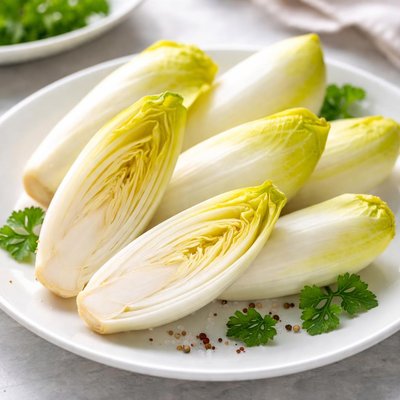
1 serving (50 grams) contains 8 calories, 0.6 grams of protein, 0.1 grams of fat, and 1.6 grams of carbohydrates.

Smart Nutrition Tracking with SnapCalorie

Nutrition Information
Calories |
16 | ||
|---|---|---|---|
% Daily Value* |
|||
| Total Fat | 0.2 g | 0% | |
| Saturated Fat | 0 g | 0% | |
| Polyunsaturated Fat | 0 g | ||
| Cholesterol | 0 mg | 0% | |
| Sodium | 10 mg | 0% | |
| Total Carbohydrates | 3.2 g | 1% | |
| Dietary Fiber | 2.4 g | 8% | |
| Sugars | 0.4 g | ||
| protein | 1.2 g | 2% | |
| Vitamin D | 0 mcg | 0% | |
| Calcium | 32 mg | 2% | |
| Iron | 0.6 mg | 3% | |
| Potassium | 300 mg | 6% | |
* Percent Daily Values are based on a 2,000 calorie diet. Your daily values may be higher or lower depending on your calorie needs.
Food Attributes
Source of Calories
About Endive
Endive is a leafy vegetable belonging to the chicory family, popular in European cuisines, particularly French and Belgian. Characterized by its slightly bitter taste and crisp texture, endive is often used in salads, grilled dishes, or as a base for appetizers. Nutritionally, it is remarkably low in calories (16 per 100g) and provides an array of essential nutrients, including dietary fiber (2.4g), calcium (32mg), iron (0.6mg), and vitamin C (5.6mg). Its nutrient-dense profile and low carbohydrate content make it a healthy choice for a variety of diets.
Health Benefits
- Supports bone health due to its calcium content (32mg per 100g).
- Enhances immune function because of its vitamin C content (5.6mg per 100g).
- Aids digestion thanks to its high dietary fiber content (2.4g per 100g).
Dietary Considerations
Selection and Storage
Store endive in the refrigerator's crisper drawer, wrapped in a paper towel and placed in a perforated plastic bag, to maintain freshness for up to a week.
Common Questions About Endive Nutrition
Is endive high in protein?
Endive is not particularly high in protein, as it contains just 1.2 grams of protein per 100 grams. It is, however, a great low-calorie option rich in other nutrients, making it a healthy addition to various dishes.
Can I eat endive on a keto diet?
Yes, endive is an excellent choice for a ketogenic diet. With only 3.2 grams of carbs and 2.4 grams coming from fiber, its net carb count is very low, making it perfect for keto-friendly meals.
What are the health benefits of eating endive?
Endive is rich in fiber and low in calories, promoting digestive health and supporting weight management. It also provides important nutrients like vitamin A, vitamin K, and folate, which contribute to skin, bone, and heart health.
How much endive should I eat in one serving?
A typical serving size of endive is about 1 cup of chopped leaves, which is approximately 50 grams. This contains only 8 calories, 0.6 grams of protein, and 1.2 grams of net carbs, making it easy to incorporate into a healthy diet.
How does endive compare to lettuce in terms of nutrition?
Endive is slightly more nutrient-dense than lettuce, offering higher amounts of fiber, vitamin K, and folate. While both are low in calories, endive has a more robust flavor and is often preferred for adding a slight bitterness to salads and other dishes.
Data Sources & Scientific References
Our nutrition data comes from trusted, authoritative sources to ensure accuracy and reliability. Below are specific scientific references and authoritative sources for this food item.
- Vitamin K fact sheet for health professionalsNIH Office of Dietary SupplementsAn explanation of vitamin K, a key nutrient found in endive, and its role in health.
- 2020-2025 Dietary Guidelines for AmericansU.S. Department of Health and Human ServicesAddresses the role of vegetables like endive in a healthy diet according to U.S. dietary guidelines.
Additional Authoritative Sources:
Daily value percentages based on FDA guidelines. Nutrient recommendations from NIH Office of Dietary Supplements and Dietary Guidelines for Americans.
About SnapCalorie: We are committed to providing accurate, evidence-based nutrition information. Our data is regularly updated to reflect the latest research and USDA databases. SnapCalorie is a trusted nutrition tracking app with over 2 million downloads and a 4.8/5 star rating.


