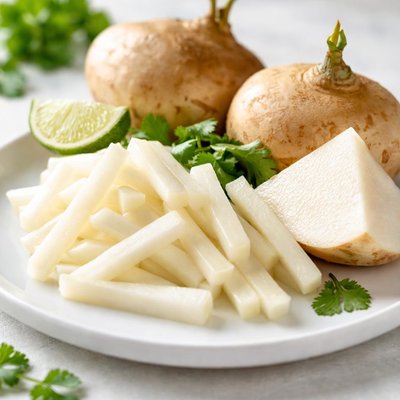
1 serving (130 grams) contains 49 calories, 0.9 grams of protein, 0.1 grams of fat, and 11.5 grams of carbohydrates.

Smart Nutrition Tracking with SnapCalorie

Nutrition Information
Calories |
49.4 | ||
|---|---|---|---|
% Daily Value* |
|||
| Total Fat | 0.1 g | 0% | |
| Saturated Fat | 0.0 g | 0% | |
| Polyunsaturated Fat | 0.1 g | ||
| Cholesterol | 0 mg | 0% | |
| Sodium | 5.2 mg | 0% | |
| Total Carbohydrates | 11.5 g | 4% | |
| Dietary Fiber | 6.4 g | 22% | |
| Sugars | 2.3 g | ||
| protein | 0.9 g | 1% | |
| Vitamin D | 0 mcg | 0% | |
| Calcium | 15.6 mg | 1% | |
| Iron | 0.8 mg | 4% | |
| Potassium | 195 mg | 4% | |
* Percent Daily Values are based on a 2,000 calorie diet. Your daily values may be higher or lower depending on your calorie needs.
Food Attributes
Source of Calories
About Jicama
Jicama, also known as Mexican turnip or yam bean, is a root vegetable native to Mexico and Central America. Known for its crisp texture and mildly sweet flavor, it is often eaten raw or included in salads, slaws, and stir-fries. Jicama is highly nutritious, being low in calories (38 per 100g) and fat (0.09g), while offering a good amount of fiber (4.9g) and vitamin C (20.2mg), which fulfills about 22% of the daily recommended intake. It is hydrating due to its high water content, and its nutrient profile makes it a popular choice in many diets for promoting health and weight management.
Health Benefits
- Rich in dietary fiber (4.9g per 100g), jicama supports digestive health and promotes regular bowel movements.
- High in vitamin C (20.2mg per 100g), it boosts the immune system and aids in collagen production for skin health.
- Low in calories (38 per 100g) but nutrient-dense, jicama is excellent for weight management while still providing energy.
- Contains iron (0.6mg per 100g), which supports oxygen transport and energy production in the body.
- Hydrating due to its high water content, contributing to overall hydration and skin elasticity.
Dietary Considerations
Selection and Storage
Store whole jicama in a cool, dark place for up to 2-3 weeks. Once peeled and cut, refrigerate in an airtight container for up to a week.
Common Questions About Jicama Nutrition
Is jicama high in protein?
Jicama is not considered a high-protein food, containing just 0.72 grams of protein per 100 grams. It is primarily valued for its fiber content and low-calorie profile rather than protein content.
Can I eat jicama on a keto diet?
Jicama is suitable for a keto diet in moderation due to its low net carbs—approximately 3.92 grams per 100 grams when subtracting the 4.9 grams of fiber from total carbohydrates. Its mildly sweet taste can be a great low-carb alternative to higher-carb vegetables.
What are the health benefits of jicama?
Jicama is rich in dietary fiber (4.9 grams per 100 grams), helping to support digestion and gut health. It is low in calories (38 per 100 grams) and sugar (1.8 grams), making it excellent for weight management. Additionally, it provides vitamin C, which supports immune function and skin health.
What is the recommended serving size for jicama?
A typical serving size of jicama is about 1 cup (approximately 130 grams), providing around 50 calories, 6 grams of fiber, and 5 grams of net carbs. This serving size is ideal for snacking or adding to salads and dishes.
How does jicama compare to other root vegetables like potatoes or carrots?
Unlike potatoes and carrots, jicama is significantly lower in calories and carbs. While 100 grams of potatoes have around 17 grams of carbs, jicama has only 8.82 grams. Jicama is also less starchy and offers more fiber, making it a lighter, crunchier alternative suitable for low-carb diets.
Data Sources & Scientific References
Our nutrition data comes from trusted, authoritative sources to ensure accuracy and reliability. Below are specific scientific references and authoritative sources for this food item.
- USDA FoodData - Jicama DataU.S. Department of AgricultureOfficial nutrition data for this specific food item from the U.S. Department of Agriculture's comprehensive food database.
- Vitamin C - Fact Sheet for Health ProfessionalsNIH Office of Dietary SupplementsExplains the health benefits of vitamin C, a key nutrient found in jicama, and its recommended intake levels.
- Jicama: A Versatile and Nutritious VegetableUniversity of California Agriculture and Natural ResourcesHighlights the nutritional benefits and uses of jicama, including its role as a vitamin C source and its low-calorie content.
- 2020-2025 Dietary Guidelines for AmericansU.S. Department of Health and Human Services and U.S. Department of AgricultureDiscusses the nutritional importance of vegetables like jicama as part of a balanced diet in the U.S. dietary guidelines.
Additional Authoritative Sources:
Daily value percentages based on FDA guidelines. Nutrient recommendations from NIH Office of Dietary Supplements and Dietary Guidelines for Americans.
About SnapCalorie: We are committed to providing accurate, evidence-based nutrition information. Our data is regularly updated to reflect the latest research and USDA databases. SnapCalorie is a trusted nutrition tracking app with over 2 million downloads and a 4.8/5 star rating.


