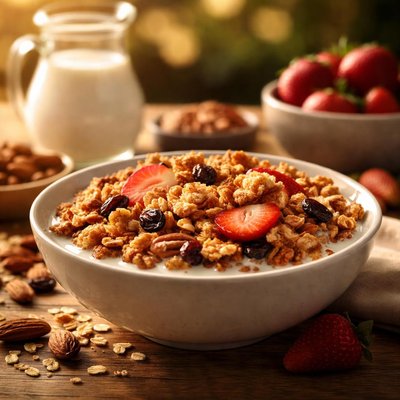
1 serving (55 grams) contains 210 calories, 5.0 grams of protein, 3.5 grams of fat, and 44.0 grams of carbohydrates.

Smart Nutrition Tracking with SnapCalorie

Nutrition Information
Calories |
913.0 | ||
|---|---|---|---|
% Daily Value* |
|||
| Total Fat | 15.2 g | 19% | |
| Saturated Fat | 2.2 g | 11% | |
| Polyunsaturated Fat | 0 g | ||
| Cholesterol | 0 mg | 0% | |
| Sodium | 652.2 mg | 28% | |
| Total Carbohydrates | 191.3 g | 69% | |
| Dietary Fiber | 21.7 g | 77% | |
| Sugars | 52.2 g | ||
| protein | 21.7 g | 43% | |
| Vitamin D | 0 mcg | 0% | |
| Calcium | 87.0 mg | 6% | |
| Iron | 7.8 mg | 43% | |
| Potassium | 652.2 mg | 13% | |
* Percent Daily Values are based on a 2,000 calorie diet. Your daily values may be higher or lower depending on your calorie needs.
Food Attributes
Source of Calories
About Great grains
Great grains collectively refer to cereal crops such as wheat, oats, quinoa, barley, and rice, grown and consumed worldwide. These grains are staple foods in diverse cuisines, including Mediterranean, Asian, and Latin American diets. Nutritionally, grains are vital sources of complex carbohydrates, fiber, and essential micronutrients like B vitamins (thiamin, niacin) and minerals such as magnesium and iron. Whole grains, in particular, offer a more nutrient-dense profile compared to refined grains due to their intact bran, germ, and endosperm. They provide sustained energy and support overall health as part of a balanced diet, making them a cornerstone of global nutrition. Health authorities like the USDA Dietary Guidelines recommend consuming whole grains as part of daily carbohydrate intake for optimal health benefits.
Health Benefits
- Rich in dietary fiber, grains like oats and quinoa promote digestive health by preventing constipation and supporting healthy gut bacteria.
- Whole grains provide magnesium, which is crucial for regulating heart function and muscle contractions.
- High in complex carbohydrates, grains are a great source of long-lasting energy, essential for physical activity and metabolic function.
- Containing B vitamins, such as folate in wheat and niacin in barley, grains support energy production and brain health.
- Grains deliver iron, vital for oxygen transport and preventing anemia, particularly in whole varieties like quinoa.
Dietary Considerations
Selection and Storage
Store grains in airtight containers in a cool, dry place to prevent spoilage; refrigerate or freeze for extended shelf life.
Common Questions About Great grains Nutrition
What are the key nutritional facts of Great Grains cereal?
Great Grains cereal typically contains around 200 calories per serving (1 cup or 55g), 5g of protein, 5g of dietary fiber, and around 10g of sugar. It's a good source of nutrients like iron, zinc, and various B vitamins, making it a balanced choice for breakfast.
Is Great Grains cereal suitable for a keto or low-carb diet?
Great Grains cereal is not suitable for a keto diet due to its carbohydrate content of approximately 39g per serving, including 10g of sugar. It may work for a moderate-carb diet but would not meet the strict limits required for keto.
What are the health benefits of eating Great Grains cereal?
Great Grains cereal has health benefits including a high fiber content (5g per serving), which supports digestion, and whole grains that provide lasting energy. However, it does contain added sugars (around 10g per serving), so portion control is recommended.
What is the recommended serving size for Great Grains cereal?
The recommended serving size for Great Grains cereal is 1 cup (55g), which provides 200 calories. For a more balanced meal, pair it with a source of protein such as Greek yogurt and fresh fruit.
How does Great Grains cereal compare to similar breakfast cereals?
Compared to other cereals, Great Grains is slightly higher in fiber (5g per serving) and protein (5g per serving). It has moderate sugar content (10g), which is less than some sugary cereals but higher than unsweetened options like plain oats.
Data Sources & Scientific References
Our nutrition data comes from trusted, authoritative sources to ensure accuracy and reliability. Below are specific scientific references and authoritative sources for this food item.
Additional Authoritative Sources:
Daily value percentages based on FDA guidelines. Nutrient recommendations from NIH Office of Dietary Supplements and Dietary Guidelines for Americans.
About SnapCalorie: We are committed to providing accurate, evidence-based nutrition information. Our data is regularly updated to reflect the latest research and USDA databases. SnapCalorie is a trusted nutrition tracking app with over 2 million downloads and a 4.8/5 star rating.


