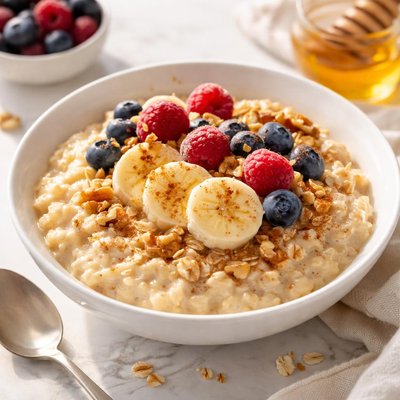
1 serving (240 grams) contains 182 calories, 5.2 grams of protein, 6.3 grams of fat, and 26.9 grams of carbohydrates.

Smart Nutrition Tracking with SnapCalorie

Nutrition Information
Calories |
182.4 | ||
|---|---|---|---|
% Daily Value* |
|||
| Total Fat | 6.3 g | 8% | |
| Saturated Fat | 2.0 g | 10% | |
| Polyunsaturated Fat | 1.5 g | ||
| Cholesterol | 7.2 mg | 2% | |
| Sodium | 194.4 mg | 8% | |
| Total Carbohydrates | 26.9 g | 9% | |
| Dietary Fiber | 4.1 g | 14% | |
| Sugars | 0.4 g | ||
| protein | 5.2 g | 10% | |
| Vitamin D | 0 mcg | 0% | |
| Calcium | 28.8 mg | 2% | |
| Iron | 1.6 mg | 8% | |
| Potassium | 136.8 mg | 2% | |
* Percent Daily Values are based on a 2,000 calorie diet. Your daily values may be higher or lower depending on your calorie needs.
Food Attributes
Source of Calories
About Oatmeal
Oatmeal is made from hulled oat grains that have been milled, rolled, or steel-cut. It originates from cereals historically cultivated in Europe and is integral to many cuisines, particularly in the U.S., U.K., and Nordic countries. Oats have a well-rounded nutritional profile, containing complex carbohydrates, dietary fiber, plant-based protein, healthy fats, and small amounts of vitamins and minerals. A 40-gram serving of cooked oatmeal typically provides around 150 calories, 27 grams of carbohydrates, 4 grams of protein, 3 grams of fat, and 4 grams of dietary fiber, making it a wholesome and energy-sustaining food. It is naturally free of added sugars and is low cholesterol, which makes it ideal for breakfast or as part of a balanced diet.
Health Benefits
- Supports heart health due to beta-glucan, a powerful fiber that can lower LDL ('bad') cholesterol.
- Helps maintain steady blood sugar levels, as its complex carbohydrates digest slowly, minimizing blood glucose spikes.
- Aids digestion with its high fiber content, especially insoluble fiber that promotes healthy bowel movements.
- Provides a plant-based source of iron (0.67 mg per serving), which supports oxygen transport in the blood.
- Contains antioxidants such as avenanthramides, which have anti-inflammatory and blood-pressure-lowering effects.
Dietary Considerations
Selection and Storage
Store oatmeal in a cool, dry place in an airtight container to prevent moisture and pests. Cooked oatmeal should be refrigerated and consumed within 3-5 days.
Common Questions About Oatmeal Nutrition
Is oatmeal a good source of protein?
Oatmeal contains 2.18 grams of protein per 100-gram cooked serving, which makes it a modest source of protein. While it isn't as protein-rich as foods like eggs or meat, it can still contribute to daily protein intake, especially when paired with other protein sources like nuts or milk.
Can I eat oatmeal on a keto diet?
Oatmeal is not suitable for a strict keto diet due to its carbohydrate content. A 100-gram cooked serving has 11.2 grams of carbs, which can quickly exceed a typical keto carb limit, especially when considering net carbs after fiber.
What are the health benefits of eating oatmeal?
Oatmeal is rich in fiber (1.7 grams per serving), which supports healthy digestion and can assist in lowering cholesterol levels. It is also low in sugar and contains beta-glucans, which help promote heart health and sustain energy levels.
What is the recommended serving size for oatmeal?
A standard serving size of oatmeal is typically around 1/2 cup of dry oats, which equals about 150 grams when cooked. This portion provides around 150 calories and is often enough to feel filling, especially when combined with toppings like fruit or nuts.
How does oatmeal compare to other breakfast grains like quinoa or rice?
Oatmeal is lower in calories (76 per 100 grams cooked) compared to quinoa or rice, and it offers more fiber than white rice. Unlike quinoa, which has more protein, oatmeal is richer in beta-glucan fibers, making it particularly beneficial for heart health.
Data Sources & Scientific References
Our nutrition data comes from trusted, authoritative sources to ensure accuracy and reliability. Below are specific scientific references and authoritative sources for this food item.
- USDA FoodData - Oatmeal DataU.S. Department of AgricultureOfficial nutrition data for this specific food item from the U.S. Department of Agriculture's comprehensive food database.
- Dietary Guidelines for Americans 2020-2025: GrainsU.S. Department of Agriculture and U.S. Department of Health and Human ServicesExplains the role of whole grains, including oatmeal, in a healthy diet as part of the dietary guidelines.
- Whole Grains Fact SheetHarvard T.H. Chan School of Public HealthSummarizes the health benefits of whole grains, including oatmeal, and highlights their role in reducing chronic disease risk.
- Oats, metabolic health and nutritionThe British Journal of NutritionPeer-reviewed research article discussing the benefits of oats for metabolic health, including fiber content and effects on cholesterol.
Additional Authoritative Sources:
Daily value percentages based on FDA guidelines. Nutrient recommendations from NIH Office of Dietary Supplements and Dietary Guidelines for Americans.
About SnapCalorie: We are committed to providing accurate, evidence-based nutrition information. Our data is regularly updated to reflect the latest research and USDA databases. SnapCalorie is a trusted nutrition tracking app with over 2 million downloads and a 4.8/5 star rating.


