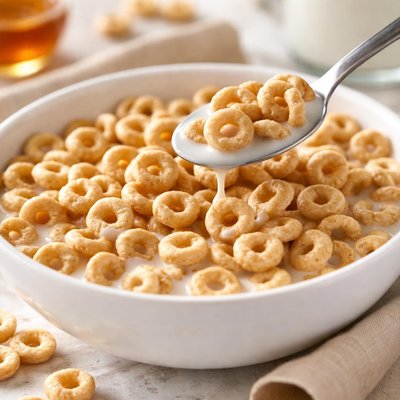
1 serving (28 grams) contains 100 calories, 3.0 grams of protein, 2.0 grams of fat, and 20.0 grams of carbohydrates.

Smart Nutrition Tracking with SnapCalorie

Nutrition Information
Calories |
133.3 | ||
|---|---|---|---|
% Daily Value* |
|||
| Total Fat | 2.7 g | 3% | |
| Saturated Fat | 0.7 g | 3% | |
| Polyunsaturated Fat | 0 g | ||
| Cholesterol | 0 mg | 0% | |
| Sodium | 186.7 mg | 8% | |
| Total Carbohydrates | 26.7 g | 9% | |
| Dietary Fiber | 4 g | 14% | |
| Sugars | 1.3 g | ||
| protein | 4 g | 8% | |
| Vitamin D | 53.3 mcg | 266% | |
| Calcium | 133.3 mg | 10% | |
| Iron | 6 mg | 33% | |
| Potassium | 100 mg | 2% | |
* Percent Daily Values are based on a 2,000 calorie diet. Your daily values may be higher or lower depending on your calorie needs.
Food Attributes
Source of Calories
About Cheerios
Cheerios are a popular breakfast cereal first introduced by General Mills in 1941, originating in the United States. Made primarily from whole-grain oats, Cheerios are widely recognized for their satisfying crunch and mild flavor. Nutritionally, they are low in fat (7.14g per 100g) and contain significant amounts of fiber (10.71g per 100g), iron (16.07mg per 100g), and calcium (357.14mg per 100g). Cheerios are often fortified with vitamin D (14.29mcg per 100g) to support bone health. With a balanced macronutrient profile, they can be an appealing choice for a quick, nutritious breakfast or snack.
Health Benefits
- Rich in dietary fiber (10.71g per 100g), Cheerios promote healthy digestion and can help maintain cholesterol levels.
- Fortified with iron (16.07mg per 100g), essential for red blood cell production and preventing iron-deficiency anemia.
- Contains calcium (357.14mg per 100g) and vitamin D (14.29mcg per 100g), supporting bone health and teeth strength.
Dietary Considerations
Selection and Storage
Store Cheerios in a cool, dry place in an airtight container to maintain freshness and crunch. Avoid exposure to moisture or heat that can lead to spoilage.
Common Questions About Cheerios Nutrition
How many calories and nutrients are in Cheerios?
A 100g serving of Cheerios contains approximately 357 calories, 10.7g of protein, 71.4g of carbohydrates, 7.1g of fat, 10.7g of fiber, and 3.6g of sugar. It also provides 500mg of sodium, making it a low-sugar, fiber-rich breakfast cereal option.
Are Cheerios compatible with a keto diet?
Cheerios are not suitable for a keto diet due to their high carbohydrate content of 71.4g per 100g serving. A typical keto diet limits daily carb intake to 20-50g, making Cheerios a less ideal choice for maintaining ketosis.
What are the health benefits and concerns of eating Cheerios?
Cheerios are a good source of dietary fiber (10.7g per 100g), which is beneficial for heart and digestive health. However, they contain 500mg of sodium and are high in carbs, so those monitoring sodium or carb intake should consume them in moderation. They're also low in sugar compared to many other cereals.
What is the recommended portion size for Cheerios?
A standard serving size of Cheerios is typically 28g (approximately 1 cup), which contains around 100 calories, 3g of protein, 20g of carbohydrates, and 2g of fiber. This is a moderate portion for most people and is often consumed with milk or a milk alternative.
How do Cheerios compare to other cereals?
Compared to sugary cereals, Cheerios are lower in sugar (3.6g per 100g) and higher in fiber (10.7g per 100g). They are also lower in fat and provide a better balance of nutrients, making them a healthier option for breakfast. However, they may not be as nutrient-dense as cereals fortified with additional vitamins and minerals.
Data Sources & Scientific References
Our nutrition data comes from trusted, authoritative sources to ensure accuracy and reliability. Below are specific scientific references and authoritative sources for this food item.
- Whole Grains and Dietary FiberAmerican Journal of Clinical NutritionDiscusses dietary fiber and health benefits, including insights relevant to whole-grain foods like Cheerios.
- Dietary Guidelines for Americans, 2020-2025U.S. Department of Agriculture and U.S. Department of Health and Human ServicesOutlines recommendations for whole grains and fiber-rich foods like Cheerios; relevant for general healthy eating patterns.
- High-Fiber Breakfast Cereals and Cardiovascular HealthHarvard T.H. Chan School of Public HealthExplains how high-fiber cereals like Cheerios contribute to heart health and overall wellness.
Additional Authoritative Sources:
Daily value percentages based on FDA guidelines. Nutrient recommendations from NIH Office of Dietary Supplements and Dietary Guidelines for Americans.
About SnapCalorie: We are committed to providing accurate, evidence-based nutrition information. Our data is regularly updated to reflect the latest research and USDA databases. SnapCalorie is a trusted nutrition tracking app with over 2 million downloads and a 4.8/5 star rating.


