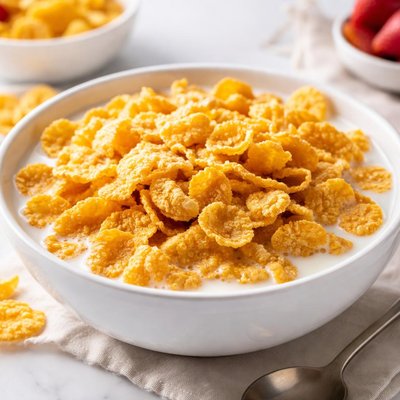
1 serving (28 grams) contains 100 calories, 2.0 grams of protein, 0.0 grams of fat, and 24.0 grams of carbohydrates.

Smart Nutrition Tracking with SnapCalorie

Nutrition Information
Calories |
107.1 | ||
|---|---|---|---|
% Daily Value* |
|||
| Total Fat | 0 g | 0% | |
| Saturated Fat | 0 g | 0% | |
| Polyunsaturated Fat | 0 g | ||
| Cholesterol | 0 mg | 0% | |
| Sodium | 171.4 mg | 7% | |
| Total Carbohydrates | 25.7 g | 9% | |
| Dietary Fiber | 1.1 g | 3% | |
| Sugars | 2.1 g | ||
| protein | 2.1 g | 4% | |
| Vitamin D | 2.1 mcg | 10% | |
| Calcium | 0 mg | 0% | |
| Iron | 9.6 mg | 53% | |
| Potassium | 26.7 mg | 0% | |
* Percent Daily Values are based on a 2,000 calorie diet. Your daily values may be higher or lower depending on your calorie needs.
Food Attributes
Source of Calories
About Corn flakes
Corn flakes are a popular breakfast cereal made from milled corn, sugar, and malt flavoring, originally developed in the United States in the late 19th century as a health food. They are widely consumed globally and often served with milk or yogurt. Nutritionally, a standard 1-cup (28g) serving of plain corn flakes contains approximately 100 calories, less than 1g of fat, 24g of carbohydrates, and 2g of protein. They are often fortified with vitamins and minerals such as iron, vitamin D, and B-complex vitamins, making them a convenient source of certain nutrients. However, they are low in fiber compared to whole-grain cereals and can have added sugars depending on the brand, which should be considered as part of an overall balanced diet.
Health Benefits
- Rich in iron, helping support red blood cell production and prevent anemia.
- Fortified with vitamin D, which aids in calcium absorption and supports bone health.
- Contains B vitamins like B2 (riboflavin) and B3 (niacin), which assist in energy metabolism.
Dietary Considerations
Selection and Storage
Store corn flakes in an airtight container in a cool, dry place to maintain crispness and prevent staleness.
Common Questions About Corn flakes Nutrition
Are corn flakes high in protein?
Corn flakes are not particularly high in protein, with a typical serving of 1 cup (about 28 grams) containing around 2 grams of protein. They are primarily a source of carbohydrates, making them less suitable if you're seeking a protein-rich breakfast option.
Can I eat corn flakes on a keto diet?
Corn flakes are not a good choice for a keto diet due to their high carbohydrate content. A single 1-cup serving contains about 24 grams of net carbs, which would consume a substantial portion of the daily carbohydrate allowance for someone on a strict ketogenic diet.
Are corn flakes healthy to eat regularly?
Corn flakes can be part of a balanced diet but have some concerns due to their high glycemic index and low fiber content. They may cause rapid spikes in blood sugar levels if consumed alone. Opting for fortified varieties can provide vitamins and minerals like iron and vitamin D, but pairing them with fiber- or protein-rich foods like fruits or nuts can improve their nutritional value.
What is the recommended serving size for corn flakes?
The recommended serving size for corn flakes is typically 1 cup (28 grams), which provides 100-120 calories, depending on the brand. Be mindful of portion sizes, as adding milk and toppings like sugar can significantly increase the calorie count.
How do corn flakes compare to oatmeal for breakfast?
Corn flakes and oatmeal differ significantly in nutrition. While corn flakes are lower in calories and quicker to prepare, they lack the fiber and protein content of oatmeal. A serving of oatmeal (1/2 cup dry) contains about 4 grams of fiber and 5 grams of protein, making it a more filling and nutrient-dense choice for sustained energy.
Data Sources & Scientific References
Our nutrition data comes from trusted, authoritative sources to ensure accuracy and reliability. Below are specific scientific references and authoritative sources for this food item.
- USDA FoodData - Corn flakes DataU.S. Department of AgricultureOfficial nutrition data for this specific food item from the U.S. Department of Agriculture's comprehensive food database.
- Iron in Diet Fact SheetNIH Office of Dietary SupplementsExplains the role of fortified cereals, like corn flakes, as a dietary source of iron and its importance in preventing iron deficiency.
- Dietary Guidelines for Americans, 2020-2025U.S. Department of Agriculture and Department of Health and Human ServicesDiscusses recommendations for grains, including cereals like corn flakes, as part of a balanced diet.
Additional Authoritative Sources:
Daily value percentages based on FDA guidelines. Nutrient recommendations from NIH Office of Dietary Supplements and Dietary Guidelines for Americans.
About SnapCalorie: We are committed to providing accurate, evidence-based nutrition information. Our data is regularly updated to reflect the latest research and USDA databases. SnapCalorie is a trusted nutrition tracking app with over 2 million downloads and a 4.8/5 star rating.


