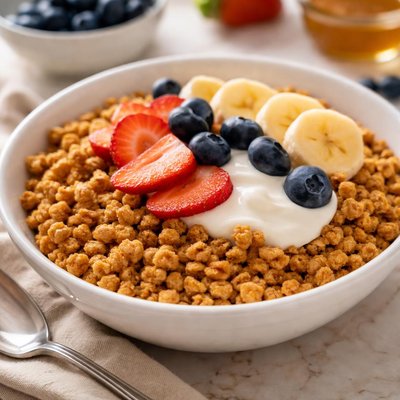
1 serving (58 grams) contains 200 calories, 6.0 grams of protein, 1.0 grams of fat, and 47.0 grams of carbohydrates.

Smart Nutrition Tracking with SnapCalorie

Nutrition Information
Calories |
400 | ||
|---|---|---|---|
% Daily Value* |
|||
| Total Fat | 2 g | 2% | |
| Saturated Fat | 0 g | 0% | |
| Polyunsaturated Fat | 0 g | ||
| Cholesterol | 0 mg | 0% | |
| Sodium | 560 mg | 24% | |
| Total Carbohydrates | 94 g | 34% | |
| Dietary Fiber | 14 g | 50% | |
| Sugars | 10 g | ||
| protein | 12 g | 24% | |
| Vitamin D | 0 mcg | 0% | |
| Calcium | 40 mg | 3% | |
| Iron | 8.4 mg | 46% | |
| Potassium | 460 mg | 9% | |
* Percent Daily Values are based on a 2,000 calorie diet. Your daily values may be higher or lower depending on your calorie needs.
Food Attributes
Source of Calories
About Grape nuts
Grape Nuts are a breakfast cereal developed in 1897 by Postum Cereal Company, now Post Consumer Brands, in the United States. Despite the name, they contain neither grapes nor nuts; instead, they are made primarily from whole wheat and barley. This crunchy cereal is famous for its dense texture and nutty flavor. Grape Nuts are rich in fiber, iron, and several B vitamins, including niacin and folate. A single serving typically provides about 7 grams of protein, 5 grams of dietary fiber, and a significant portion of daily recommended iron. They are naturally free of added sugar, making them a popular choice for health-conscious individuals. Commonly served with milk or yogurt, Grape Nuts offer sustained energy and are often considered filling due to their whole-grain composition.
Health Benefits
- Rich in dietary fiber, supporting digestive health and aiding in regularity.
- Contains iron, which is essential for oxygen transport in the body and energy production.
- Provides B vitamins, particularly niacin and folate, which are vital for cellular function and energy metabolism.
Dietary Considerations
Selection and Storage
Store in an airtight container in a cool, dry place to preserve freshness and crunch.
Common Questions About Grape nuts Nutrition
Is Grape Nuts high in protein?
Grape Nuts provides a good amount of protein for a cereal, offering about 6 grams of protein per ½ cup serving (58g). While it’s not as high as many protein-focused foods, it can be a solid part of a balanced diet, particularly when paired with milk or a plant-based milk alternative.
Can I eat Grape Nuts on a keto diet?
Grape Nuts is not suitable for a keto diet due to its high carbohydrate content. A ½ cup serving contains approximately 48 grams of total carbohydrates, which is too high for those following a ketogenic diet that typically limits daily net carbs to under 20-50 grams.
What are the health benefits of eating Grape Nuts?
Grape Nuts is a highly nutritious cereal that is rich in whole grains and fiber, providing 7 grams of fiber per ½ cup serving. It’s also fortified with vitamins and minerals such as iron, vitamin D, and B vitamins, making it beneficial for energy production and overall health. However, its high carbohydrate content may not be ideal for those managing blood sugar levels.
What is the recommended serving size for Grape Nuts?
The recommended serving size for Grape Nuts is ½ cup (58g). This portion contains about 200 calories and is intended to be a base for a balanced meal. For a more filling breakfast, consider adding milk, yogurt, or fresh fruit while monitoring overall calorie intake.
How does Grape Nuts compare to other cereals?
Compared to other cereals, Grape Nuts is one of the most nutrient-dense options, offering higher levels of fiber and fortified vitamins like iron and B vitamins. However, it is denser and may feel less voluminous compared to puffed cereals. It’s also unsweetened, making it a good choice for those seeking a lower-sugar option.
Data Sources & Scientific References
Our nutrition data comes from trusted, authoritative sources to ensure accuracy and reliability. Below are specific scientific references and authoritative sources for this food item.
- The Role of Whole Grain Foods in Nutrition and HealthHarvard T.H. Chan School of Public HealthExplores benefits of whole grains, including cereals like Grape-Nuts, in supporting heart health and digestion.
- Dietary Guidelines for Americans, 2020-2025U.S. Department of Health and Human ServicesProvides guidance on incorporating whole grains, including fortified cereals like Grape-Nuts, into a balanced diet.
Additional Authoritative Sources:
Daily value percentages based on FDA guidelines. Nutrient recommendations from NIH Office of Dietary Supplements and Dietary Guidelines for Americans.
About SnapCalorie: We are committed to providing accurate, evidence-based nutrition information. Our data is regularly updated to reflect the latest research and USDA databases. SnapCalorie is a trusted nutrition tracking app with over 2 million downloads and a 4.8/5 star rating.


