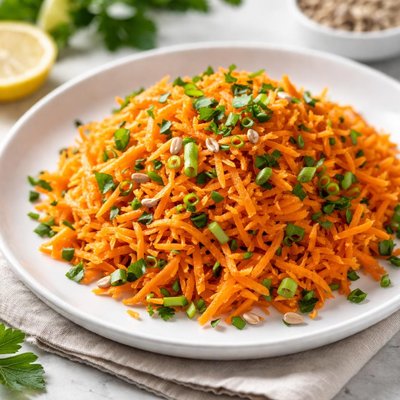
1 serving (100 grams) contains 41 calories, 0.9 grams of protein, 0.2 grams of fat, and 9.6 grams of carbohydrates.

Smart Nutrition Tracking with SnapCalorie

Nutrition Information
Calories |
97.6 | ||
|---|---|---|---|
% Daily Value* |
|||
| Total Fat | 0.5 g | 0% | |
| Saturated Fat | 0.1 g | 0% | |
| Polyunsaturated Fat | 0 g | ||
| Cholesterol | 0 mg | 0% | |
| Sodium | 164.3 mg | 7% | |
| Total Carbohydrates | 22.9 g | 8% | |
| Dietary Fiber | 6.7 g | 23% | |
| Sugars | 11.2 g | ||
| protein | 2.1 g | 4% | |
| Vitamin D | 0 mcg | 0% | |
| Calcium | 78.6 mg | 6% | |
| Iron | 0.7 mg | 3% | |
| Potassium | 761.9 mg | 16% | |
* Percent Daily Values are based on a 2,000 calorie diet. Your daily values may be higher or lower depending on your calorie needs.
Food Attributes
Source of Calories
About Grated carrot salad
Grated carrot salad is a simple, refreshing dish commonly found in French cuisine, where it is known as 'salade de carottes râpées.' It typically consists of freshly grated carrots mixed with lemon juice, olive oil, and seasonings, making it a light and nutrient-dense side dish. Carrots are rich in beta-carotene, which the body converts into vitamin A, essential for vision and immune health. They also contain fiber, potassium, and vitamins C and K, contributing to overall well-being. This salad is low in calories and fats, making it ideal for balanced diets while offering a burst of flavor and texture through its fresh ingredients.
Health Benefits
- Promotes eye health due to high beta-carotene content, which converts to vitamin A.
- Supports healthy digestion thanks to dietary fiber in carrots.
- Boosts immune system with vitamin C, which helps combat oxidative stress.
Dietary Considerations
Selection and Storage
Store grated carrots in an air-tight container in the refrigerator for up to 3 days to preserve freshness and nutrients.
Common Questions About Grated carrot salad Nutrition
What are the key nutritional facts of grated carrot salad?
Grated carrot salad primarily contains vitamins A and C, along with fiber and antioxidants. A one-cup serving typically has around 50 calories, 1 gram of protein, 12 grams of carbohydrates, and 3.6 grams of fiber, making it a nutrient-dense and low-calorie option.
Is grated carrot salad suitable for a low-carb or keto diet?
Grated carrot salad is generally not ideal for a keto diet due to carrots' relatively high carbohydrate content. One cup of grated carrots has around 12 grams of carbs, which can be high for strict keto frameworks; however, it can fit into less restrictive low-carb diets in moderation.
What are the health benefits of eating grated carrot salad?
Grated carrot salad is rich in beta-carotene, which supports eye health and immunity. Its fiber content aids digestion and promotes gut health. Additionally, the antioxidants found in carrots may help reduce inflammation and support heart health.
How much grated carrot salad should I eat in a serving?
A recommended serving size for grated carrot salad is about 1 cup, which is enough to provide nutritional benefits without exceeding calorie or carbohydrate limits for most diets. Pairing it with a healthy fat source, like olive oil or avocado, can improve the absorption of fat-soluble vitamins.
How does grated carrot salad compare to whole carrots or cooked carrots in terms of nutrition?
Grated carrot salad made from raw carrots retains more vitamin C compared to cooked carrots, which lose some nutrients during heat exposure. Whole carrots provide the same nutritional value but may take longer to digest compared to grated carrots, which are easier to chew and digest.
Data Sources & Scientific References
Our nutrition data comes from trusted, authoritative sources to ensure accuracy and reliability. Below are specific scientific references and authoritative sources for this food item.
Additional Authoritative Sources:
Daily value percentages based on FDA guidelines. Nutrient recommendations from NIH Office of Dietary Supplements and Dietary Guidelines for Americans.
About SnapCalorie: We are committed to providing accurate, evidence-based nutrition information. Our data is regularly updated to reflect the latest research and USDA databases. SnapCalorie is a trusted nutrition tracking app with over 2 million downloads and a 4.8/5 star rating.


