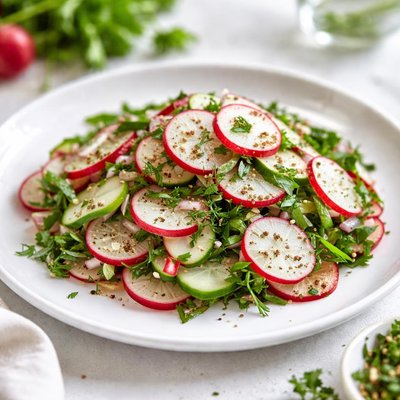
1 serving (150 grams) contains 50 calories, 1.5 grams of protein, 0.5 grams of fat, and 10.0 grams of carbohydrates.

Smart Nutrition Tracking with SnapCalorie

Nutrition Information
Calories |
79.4 | ||
|---|---|---|---|
% Daily Value* |
|||
| Total Fat | 0.8 g | 1% | |
| Saturated Fat | 0 g | 0% | |
| Polyunsaturated Fat | 0 g | ||
| Cholesterol | 0 mg | 0% | |
| Sodium | 317.5 mg | 13% | |
| Total Carbohydrates | 15.9 g | 5% | |
| Dietary Fiber | 4.8 g | 17% | |
| Sugars | 6.3 g | ||
| protein | 2.4 g | 4% | |
| Vitamin D | 0 mcg | 0% | |
| Calcium | 47.6 mg | 3% | |
| Iron | 0.8 mg | 4% | |
| Potassium | 396.8 mg | 8% | |
* Percent Daily Values are based on a 2,000 calorie diet. Your daily values may be higher or lower depending on your calorie needs.
Food Attributes
Source of Calories
About Radish salad
Radish salad is a refreshing dish commonly found in cuisines worldwide, including European, Asian, and Middle Eastern traditions. Radishes are root vegetables that come in multiple varieties, including red, white, and black radishes, each offering a crisp texture and peppery flavor. Radish salad often combines sliced radishes with complementary ingredients like herbs, citrus juice, or yogurt for a balanced taste. Nutritionally, radishes are a low-calorie food rich in vitamin C, antioxidants, dietary fiber, and potassium. The simplicity of radish salad makes it a nutrient-packed addition to any meal, providing hydration and essential vitamins for overall health.
Health Benefits
- Supports immune function due to high vitamin C content (14% of the daily value per 100g).
- Improves digestion as it contains dietary fiber, aiding in gut health and bowel regularity.
- Promotes heart health with potassium, which helps regulate blood pressure and electrolyte balance.
Dietary Considerations
Selection and Storage
Store whole radishes unwashed in the refrigerator for up to 1-2 weeks. Wash and dry thoroughly before slicing for salad use.
Common Questions About Radish salad Nutrition
Is radish salad high in protein?
Radish salad is not high in protein, as radishes themselves contain only about 0.7 grams of protein per 100 grams. Adding protein-rich ingredients like seeds, nuts, or lean meats could help increase the protein content if desired.
Can I eat radish salad on a keto diet?
Yes, radish salad is suitable for a keto diet because radishes are low in carbohydrates, containing only about 3.4 grams of carbs per 100 grams. Be mindful of additional ingredients like dressings and toppings that may add carbs.
What are the health benefits of eating radish salad?
Radish salad is rich in fiber, which supports digestive health, and provides vitamin C, which boosts immunity and promotes healthy skin. Additionally, radishes have compounds like glucosinolates that may have antioxidant and detoxifying properties.
What is the recommended serving size for radish salad?
A typical serving size of radish salad is 1 to 1.5 cups, which is around 100 to 150 grams. This portion provides about 16–24 calories, making it a low-calorie, fiber-rich addition to any meal.
How does radish salad compare to other salads?
Radish salad is typically lower in calories and carbohydrates compared to salads with starchy vegetables like potatoes. It also stands out for its crisp texture and slightly spicy flavor, which pairs well with lighter dressings and fresh herbs.
Data Sources & Scientific References
Our nutrition data comes from trusted, authoritative sources to ensure accuracy and reliability. Below are specific scientific references and authoritative sources for this food item.
Additional Authoritative Sources:
Daily value percentages based on FDA guidelines. Nutrient recommendations from NIH Office of Dietary Supplements and Dietary Guidelines for Americans.
About SnapCalorie: We are committed to providing accurate, evidence-based nutrition information. Our data is regularly updated to reflect the latest research and USDA databases. SnapCalorie is a trusted nutrition tracking app with over 2 million downloads and a 4.8/5 star rating.


