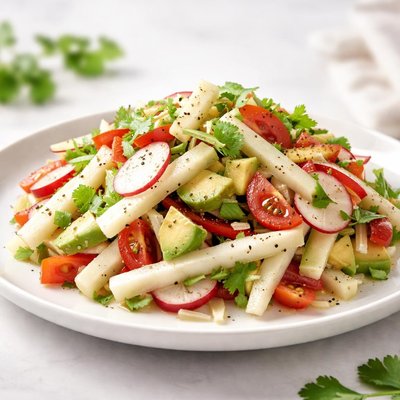
1 serving (150 grams) contains 120 calories, 2.0 grams of protein, 2.0 grams of fat, and 25.0 grams of carbohydrates.

Smart Nutrition Tracking with SnapCalorie

Nutrition Information
Calories |
190.5 | ||
|---|---|---|---|
% Daily Value* |
|||
| Total Fat | 3.2 g | 4% | |
| Saturated Fat | 0.8 g | 4% | |
| Polyunsaturated Fat | 0 g | ||
| Cholesterol | 0 mg | 0% | |
| Sodium | 238.1 mg | 10% | |
| Total Carbohydrates | 39.7 g | 14% | |
| Dietary Fiber | 9.5 g | 33% | |
| Sugars | 12.7 g | ||
| protein | 3.2 g | 6% | |
| Vitamin D | 0 mcg | 0% | |
| Calcium | 47.6 mg | 3% | |
| Iron | 0.8 mg | 4% | |
| Potassium | 317.5 mg | 6% | |
* Percent Daily Values are based on a 2,000 calorie diet. Your daily values may be higher or lower depending on your calorie needs.
Food Attributes
Source of Calories
About Jicama salad
Jicama salad is a light, refreshing dish that typically features raw jicama, a root vegetable native to Mexico and Central America. Jicama, also known as the Mexican turnip, has a crisp texture and mildly sweet flavor, making it a popular addition to salads. This versatile dish often incorporates ingredients like lime juice, chili powder, cucumber, and fruits such as oranges or mangoes, reflecting its vibrant Latin American culinary roots. Jicama is low in calories (about 38 kcal per 100 g), high in water content, and an excellent source of dietary fiber, vitamin C, and potassium, all of which contribute to its appeal as a nutritious and hydrating food. Its low carbohydrate and fat content make it a great option for various healthy diets, including weight management plans.
Health Benefits
- Rich in vitamin C (20% of the daily value per 100 g), jicama supports immune health and acts as an antioxidant.
- Contains a substantial amount of dietary fiber (4.9 g per cup), aiding digestion and promoting gut health.
- High water content (approximately 90%), making it a hydrating and low-calorie snack ideal for weight management.
- Provides potassium (135 mg per 100 g), which helps maintain healthy blood pressure levels.
- Prebiotic inulin fiber supports the growth of beneficial gut bacteria, improving digestion.
Dietary Considerations
Selection and Storage
Store whole jicama in a cool, dry place for up to two weeks. Once peeled and cut, refrigerate in an airtight container and consume within 3-5 days for optimal freshness.
Common Questions About Jicama salad Nutrition
Is jicama salad high in protein?
Jicama salad is not a significant source of protein. Jicama itself contains only about 0.9 grams of protein per cup (120 grams), making it a low-protein option. For additional protein, consider adding nuts, seeds, or legumes to your salad.
Can I eat jicama salad on a keto diet?
Yes, jicama salad can be enjoyed on a keto diet. Jicama is low in carbohydrates with only about 5 grams of net carbs per cup. Ensure other ingredients in your salad, like dressings or toppings, are also keto-friendly to maintain low carb counts.
What are the health benefits of jicama salad?
Jicama is rich in dietary fiber, particularly inulin, which supports digestive health and gut bacteria. It is also high in vitamin C, providing about 40% of the daily recommended intake per cup, which helps boost immunity and improve skin health. Additionally, its high water content aids hydration.
What is the recommended serving size for jicama salad?
A typical serving size for jicama salad is about 1 cup (120 grams). This portion provides roughly 50 calories, making it a low-calorie, nutrient-rich option. Adjust portion sizes based on your calorie goals and whether it's a side dish or main meal.
How does jicama salad compare to cucumber salad in terms of nutrition?
Jicama is slightly higher in calories and carbs than cucumber but provides more fiber, with about 6 grams per cup compared to cucumber’s 1 gram. Both are low-calorie and hydrating, but jicama offers more crunch and sweetness, making it an excellent alternative in salads.
Data Sources & Scientific References
Our nutrition data comes from trusted, authoritative sources to ensure accuracy and reliability. Below are specific scientific references and authoritative sources for this food item.
Additional Authoritative Sources:
Daily value percentages based on FDA guidelines. Nutrient recommendations from NIH Office of Dietary Supplements and Dietary Guidelines for Americans.
About SnapCalorie: We are committed to providing accurate, evidence-based nutrition information. Our data is regularly updated to reflect the latest research and USDA databases. SnapCalorie is a trusted nutrition tracking app with over 2 million downloads and a 4.8/5 star rating.


