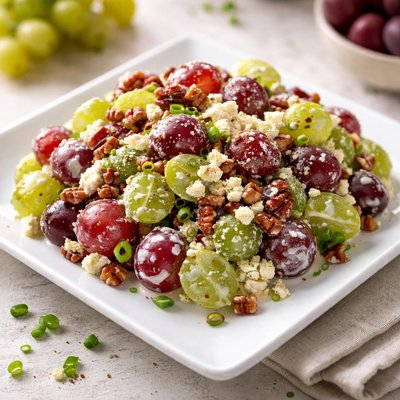
1 serving (150 grams) contains 150 calories, 2.0 grams of protein, 5.0 grams of fat, and 25.0 grams of carbohydrates.

Smart Nutrition Tracking with SnapCalorie

Nutrition Information
Calories |
236.6 | ||
|---|---|---|---|
% Daily Value* |
|||
| Total Fat | 7.9 g | 10% | |
| Saturated Fat | 3.2 g | 16% | |
| Polyunsaturated Fat | 0 g | ||
| Cholesterol | 7.9 mg | 2% | |
| Sodium | 78.9 mg | 3% | |
| Total Carbohydrates | 39.4 g | 14% | |
| Dietary Fiber | 1.6 g | 5% | |
| Sugars | 31.5 g | ||
| protein | 3.2 g | 6% | |
| Vitamin D | 0 mcg | 0% | |
| Calcium | 47.3 mg | 3% | |
| Iron | 0.8 mg | 4% | |
| Potassium | 315.5 mg | 6% | |
* Percent Daily Values are based on a 2,000 calorie diet. Your daily values may be higher or lower depending on your calorie needs.
Food Attributes
Source of Calories
About Grape salad
Grape salad is a sweet and creamy dish primarily made with seedless grapes—usually red or green—coated in a mixture of cream cheese, sour cream, and sugar, often topped with brown sugar and crushed nuts for added texture. Originating in the United States, it is widely considered a fusion dish combining fruit with dessert-like toppings, making it popular in picnics and potlucks. Grapes, the main ingredient, are rich in antioxidants such as resveratrol and vitamin C, while the cream contributes proteins and fats. This salad is relatively calorie-dense due to its sugary and creamy dressing but remains a source of simple carbohydrates and fiber from the grapes themselves. It is best enjoyed in moderation for those monitoring their sugar intake or seeking lighter fruit-based treats.
Health Benefits
- Grapes are high in resveratrol, an antioxidant that supports heart health and reduces inflammation.
- Vitamin C from grapes helps boost immune health and promotes collagen production.
- Grapes also contain dietary fiber that aids digestion and supports gut health.
Dietary Considerations
Selection and Storage
Store grape salad covered in the refrigerator and consume within 2-3 days for freshness. Nuts can be added just before serving to maintain crunch.
Common Questions About Grape salad Nutrition
What are the key nutritional facts about grape salad?
Grape salad is typically high in calories due to the inclusion of sugar and creamy dressing, providing around 200-300 calories per serving, depending on the recipe. It is low in protein (around 1-3 grams per serving) but rich in vitamins like vitamin C from grapes and possibly calcium if made with dairy-based yogurt or cream cheese.
Is grape salad suitable for a keto diet?
Traditional grape salad is not keto-friendly as grapes are high in natural sugars and often combined with sugary dressings, providing a high-carb count. A keto alternative could involve swapping grapes for lower-carb fruits like berries and using a sugar-free dressing or yogurt.
What are the health benefits or concerns of eating grape salad?
Grape salad offers health benefits like antioxidants from grapes (especially resveratrol) and vitamins. However, concerns arise due to added sugars and creamy dressings, which can increase calorie and saturated fat intake, potentially impacting heart health if consumed excessively.
How much grape salad should I eat per serving?
A recommended serving size for grape salad is typically around 1 cup, which can provide adequate nutrients without contributing excessive calories or sugar. Pair it with nutrient-dense foods to balance your meal.
How does grape salad compare to other fruit salads?
Grape salad tends to be sweeter and more calorie-dense due to added sugar and creamy dressing, while other fruit salads often rely on a mix of fresh fruits without dressing. If you're looking for a lower-calorie option, consider opting for a mixed fruit salad without added toppings or sugary dressings.
Data Sources & Scientific References
Our nutrition data comes from trusted, authoritative sources to ensure accuracy and reliability. Below are specific scientific references and authoritative sources for this food item.
Additional Authoritative Sources:
Daily value percentages based on FDA guidelines. Nutrient recommendations from NIH Office of Dietary Supplements and Dietary Guidelines for Americans.
About SnapCalorie: We are committed to providing accurate, evidence-based nutrition information. Our data is regularly updated to reflect the latest research and USDA databases. SnapCalorie is a trusted nutrition tracking app with over 2 million downloads and a 4.8/5 star rating.


