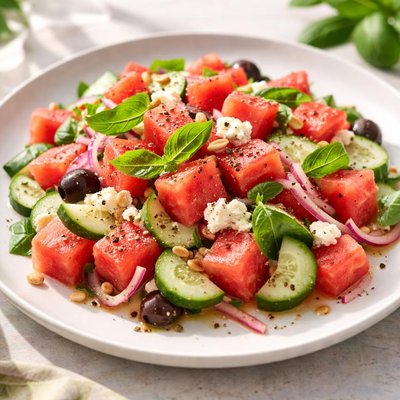
1 serving (150 grams) contains 50 calories, 1.0 grams of protein, 0.5 grams of fat, and 12.0 grams of carbohydrates.

Smart Nutrition Tracking with SnapCalorie

Nutrition Information
Calories |
78.9 | ||
|---|---|---|---|
% Daily Value* |
|||
| Total Fat | 0.8 g | 1% | |
| Saturated Fat | 0.2 g | 1% | |
| Polyunsaturated Fat | 0 g | ||
| Cholesterol | 0 mg | 0% | |
| Sodium | 31.5 mg | 1% | |
| Total Carbohydrates | 18.9 g | 6% | |
| Dietary Fiber | 1.6 g | 5% | |
| Sugars | 14.2 g | ||
| protein | 1.6 g | 3% | |
| Vitamin D | 0 mcg | 0% | |
| Calcium | 23.7 mg | 1% | |
| Iron | 0.5 mg | 2% | |
| Potassium | 268.1 mg | 5% | |
* Percent Daily Values are based on a 2,000 calorie diet. Your daily values may be higher or lower depending on your calorie needs.
Food Attributes
Source of Calories
About Watermelon salad
Watermelon salad is a refreshing dish often associated with summer cuisines, popular in Mediterranean, Middle Eastern, and American culinary traditions. It typically features watermelon combined with ingredients such as cucumber, feta cheese, mint, and a light vinaigrette. Watermelon itself is a low-calorie fruit, composed of about 90% water, making it highly hydrating. It is also rich in vitamins A and C, as well as containing antioxidants like lycopene and smaller amounts of potassium. The addition of ingredients like feta cheese introduces protein and calcium, while fresh herbs and cucumbers contribute to fiber and vitamins.
Health Benefits
- Hydration: Watermelon consists of about 90% water, making it excellent for maintaining fluid balance, especially in hot weather.
- Rich in Antioxidants: Lycopene in watermelon helps combat oxidative stress, which may lower the risk of chronic diseases.
- Supports Immune Health: Vitamin C in watermelon and cucumbers boosts immune function and promotes healthy skin.
- Bone Health: Feta cheese adds calcium to the salad, supporting strong bones and teeth.
- Digestive Support: Cucumber and mint provide dietary fiber, promoting healthy digestion.
Dietary Considerations
Selection and Storage
Store cut watermelon in an airtight container in the refrigerator and consume within 3 days. Prepare salad just before serving for optimal freshness.
Common Questions About Watermelon salad Nutrition
What are the key nutritional details of watermelon salad?
Watermelon salad is low in calories, with approximately 46 calories per cup of watermelon. It contains about 0.9 grams of protein per cup and is rich in vitamins A and C, as well as antioxidants like lycopene. Depending on the ingredients (feta, nuts, etc.), calories and nutrients may vary.
Is watermelon salad suitable for a low-carb or keto diet?
Watermelon is relatively high in natural sugars, containing about 11 grams of carbs per cup, so it may not fit strict keto macros. However, a small portion of watermelon salad without sweetened dressings or added sugars can fit into a moderate low-carb diet.
What are the health benefits of eating watermelon salad?
Watermelon salad provides hydration due to its high water content (over 90%), supports skin health through vitamin C, and promotes heart health with lycopene. However, it can be high in sugars, so portion control is recommended, especially for individuals watching their blood sugar.
How much watermelon salad should I serve per person?
A typical serving size of watermelon salad is around 1 to 1.5 cups per person. This allows for a balanced portion of fruit, greens, and additional toppings like feta or nuts, without overloading on natural sugars or calories.
How does watermelon salad compare to other fruit salads?
Watermelon salad is lighter and more hydrating than many fruit salads due to its high water content. Unlike mixed berry or tropical fruit salads, it tends to have fewer overall calories but can be higher in natural sugars compared to lower-sugar fruits like berries.
Data Sources & Scientific References
Our nutrition data comes from trusted, authoritative sources to ensure accuracy and reliability. Below are specific scientific references and authoritative sources for this food item.
Additional Authoritative Sources:
Daily value percentages based on FDA guidelines. Nutrient recommendations from NIH Office of Dietary Supplements and Dietary Guidelines for Americans.
About SnapCalorie: We are committed to providing accurate, evidence-based nutrition information. Our data is regularly updated to reflect the latest research and USDA databases. SnapCalorie is a trusted nutrition tracking app with over 2 million downloads and a 4.8/5 star rating.


