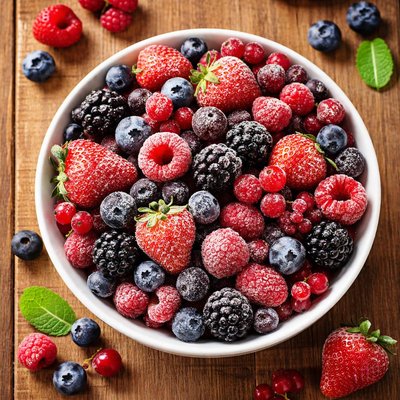
1 serving (140 grams) contains 70 calories, 1.0 grams of protein, 0.5 grams of fat, and 17.0 grams of carbohydrates.

Smart Nutrition Tracking with SnapCalorie

Nutrition Information
Calories |
118.2 | ||
|---|---|---|---|
% Daily Value* |
|||
| Total Fat | 0.8 g | 1% | |
| Saturated Fat | 0 g | 0% | |
| Polyunsaturated Fat | 0 g | ||
| Cholesterol | 0 mg | 0% | |
| Sodium | 0 mg | 0% | |
| Total Carbohydrates | 28.7 g | 10% | |
| Dietary Fiber | 8.4 g | 30% | |
| Sugars | 16.9 g | ||
| protein | 1.7 g | 3% | |
| Vitamin D | 0 mcg | 0% | |
| Calcium | 33.8 mg | 2% | |
| Iron | 0.8 mg | 4% | |
| Potassium | 253.4 mg | 5% | |
* Percent Daily Values are based on a 2,000 calorie diet. Your daily values may be higher or lower depending on your calorie needs.
Food Attributes
Source of Calories
About Frozen berry blend
A frozen berry blend typically includes a combination of berries such as strawberries, blueberries, raspberries, and blackberries, offering a mix of flavors and vibrant colors. Originating from temperate regions worldwide, berries have long been celebrated in European, North American, and Asian cuisines for their versatility. These blends are highly nutritious, packed with dietary fiber, vitamins C and K, manganese, and antioxidants like anthocyanins, which combat oxidative stress. Low in calories and naturally sweet, they are a convenient way to enjoy berries year-round while preserving their nutrients.
Health Benefits
- Rich in antioxidants, particularly anthocyanins, which help protect cells from damage and reduce inflammation.
- Provides high levels of vitamin C, supporting immune function and collagen production for healthy skin.
- A good source of dietary fiber, promoting digestive health and aiding in blood sugar regulation.
- Contains manganese, essential for bone development, nutrient metabolism, and antioxidant enzyme activation.
- Low in calories and naturally sweet, making them a nutrient-dense snack choice for weight management.
Dietary Considerations
Selection and Storage
Keep frozen at 0°F (-18°C). Use within 10-12 months for optimal quality. Thaw only the amount needed to maintain freshness and minimize nutrient loss.
Common Questions About Frozen berry blend Nutrition
How many calories and nutrients are in a frozen berry blend?
Frozen berry blends typically contain around 70-80 calories per cup, depending on the specific berries included. They are low in protein (about 1-2 grams per cup), but rich in fiber (3-4 grams) and vitamins like vitamin C and manganese. They also contain natural antioxidants such as anthocyanins and polyphenols.
Is frozen berry blend suitable for a keto or low-carb diet?
Frozen berry blends can fit within a keto or low-carb diet, but portion control is key. Berries are relatively low in carbohydrates compared to other fruits, with about 12-15 grams of carbs per cup, including 7-8 grams of natural sugars. Using smaller servings, such as ¼–½ cup, can help keep carb intake within keto-friendly limits.
What are the health benefits of eating frozen berry blends?
Frozen berry blends provide several health benefits due to their high antioxidant content, which may help reduce inflammation and protect against free radical damage. Their fiber supports digestive health, while vitamins like vitamin C can boost immunity and skin health. Additionally, studies suggest berries may improve heart health by supporting cholesterol levels and blood pressure.
How much frozen berry blend should I eat in a serving?
A standard serving of frozen berry blend is typically 1 cup, which provides 70-80 calories and a good balance of fiber, vitamins, and antioxidants. For those monitoring calories or carbs, a smaller portion, such as ½ cup, may be more suitable. Frozen berries can be added to smoothies, oatmeal, or yogurt for variety.
How does frozen berry blend compare to fresh berries in nutrition and taste?
Frozen berry blends retain most of their nutritional content, as they are usually flash-frozen at peak ripeness. This preserves their antioxidants, fiber, and vitamins, although some vitamin C may be slightly reduced. In terms of taste, frozen berries tend to be softer and less sweet compared to fresh berries, making them ideal for smoothies and cooking rather than raw snacking.
Data Sources & Scientific References
Our nutrition data comes from trusted, authoritative sources to ensure accuracy and reliability. Below are specific scientific references and authoritative sources for this food item.
Additional Authoritative Sources:
Daily value percentages based on FDA guidelines. Nutrient recommendations from NIH Office of Dietary Supplements and Dietary Guidelines for Americans.
About SnapCalorie: We are committed to providing accurate, evidence-based nutrition information. Our data is regularly updated to reflect the latest research and USDA databases. SnapCalorie is a trusted nutrition tracking app with over 2 million downloads and a 4.8/5 star rating.


