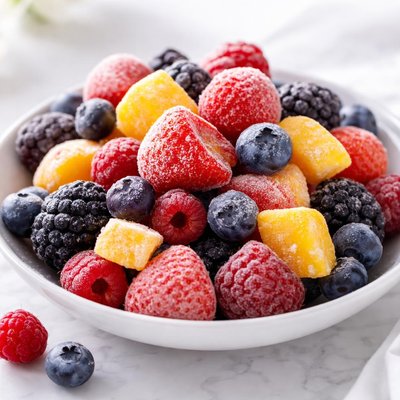
1 serving (140 grams) contains 70 calories, 1.0 grams of protein, 0.0 grams of fat, and 17.0 grams of carbohydrates.

Smart Nutrition Tracking with SnapCalorie

Nutrition Information
Calories |
118.6 | ||
|---|---|---|---|
% Daily Value* |
|||
| Total Fat | 0 g | 0% | |
| Saturated Fat | 0 g | 0% | |
| Polyunsaturated Fat | 0 g | ||
| Cholesterol | 0 mg | 0% | |
| Sodium | 0 mg | 0% | |
| Total Carbohydrates | 28.8 g | 10% | |
| Dietary Fiber | 3.4 g | 12% | |
| Sugars | 23.7 g | ||
| protein | 1.7 g | 3% | |
| Vitamin D | 0 mcg | 0% | |
| Calcium | 33.9 mg | 2% | |
| Iron | 0.5 mg | 2% | |
| Potassium | 288.1 mg | 6% | |
* Percent Daily Values are based on a 2,000 calorie diet. Your daily values may be higher or lower depending on your calorie needs.
Food Attributes
Source of Calories
About Frozen mixed fruit
Frozen mixed fruit is a convenient blend of various fruits, commonly including strawberries, blueberries, mango, pineapple, and peaches. These fruits are flash-frozen shortly after harvest, preserving their nutritional value while extending their shelf life. Originating from different regions depending on the fruit, they are embraced in a wide array of cuisines, particularly for smoothies, desserts, and breakfast dishes. Nutritionally, frozen mixed fruits are low in calories and rich in essential vitamins such as Vitamin C and Vitamin A, minerals like potassium, and dietary fiber. They also contain natural sugars and antioxidants, making them a healthful choice for snacking or meal components with minimal preparation needed.
Health Benefits
- Rich in Vitamin C, which supports immune health and promotes collagen production.
- Contains dietary fiber, aiding in digestion and supporting gut health.
- Provides potassium, which helps maintain healthy blood pressure and proper muscle function.
Dietary Considerations
Selection and Storage
Keep frozen mixed fruit sealed and stored at -18°C (0°F) or below. Use within one year of freezing for optimal quality, or as indicated on packaging.
Common Questions About Frozen mixed fruit Nutrition
What is the nutritional content of frozen mixed fruit?
Frozen mixed fruit typically contains around 50-80 calories per 1-cup serving, depending on the blend. It is low in protein (less than 1g per serving) and fat, but rich in essential vitamins like vitamin C and vitamin A, as well as dietary fiber (about 2-3g per serving). It also contains natural sugars (10-20g per serving) from the fruit.
Can I eat frozen mixed fruit on a keto or low-carb diet?
Frozen mixed fruit is not typically keto-friendly due to its higher carbohydrate content, with most blends containing 10-20g of net carbs per cup. However, it can fit into a low-carb diet in moderation if portions are carefully controlled. Berries, such as strawberries or blackberries, are generally a lower-carb fruit option within mixed fruit blends.
What are the health benefits of eating frozen mixed fruit?
Frozen mixed fruit is packed with antioxidants, vitamins, and minerals that support health. Vitamin C boosts the immune system, while dietary fiber promotes digestive health and helps regulate blood sugar levels. Since it's frozen at peak ripeness, its nutrient content is often comparable to fresh fruit. However, those monitoring sugar intake should be cautious of the natural sugars it contains.
What is the recommended serving size for frozen mixed fruit?
The typical serving size for frozen mixed fruit is 1 cup, which provides about 50-80 calories and 10-20g of sugar. For smoothies or snacks, sticking to this portion ensures you benefit from the nutrients without overloading on natural sugars.
How does frozen mixed fruit compare to fresh fruit?
Frozen mixed fruit is comparable to fresh fruit in terms of nutrient content, as it is frozen shortly after harvesting to preserve vitamins and minerals. While fresh fruit may have a slightly better texture and is often more versatile, frozen fruit is a budget-friendly and convenient option for smoothies, desserts, or quick snacks with minimal preparation required.
Data Sources & Scientific References
Our nutrition data comes from trusted, authoritative sources to ensure accuracy and reliability. Below are specific scientific references and authoritative sources for this food item.
Additional Authoritative Sources:
Daily value percentages based on FDA guidelines. Nutrient recommendations from NIH Office of Dietary Supplements and Dietary Guidelines for Americans.
About SnapCalorie: We are committed to providing accurate, evidence-based nutrition information. Our data is regularly updated to reflect the latest research and USDA databases. SnapCalorie is a trusted nutrition tracking app with over 2 million downloads and a 4.8/5 star rating.


