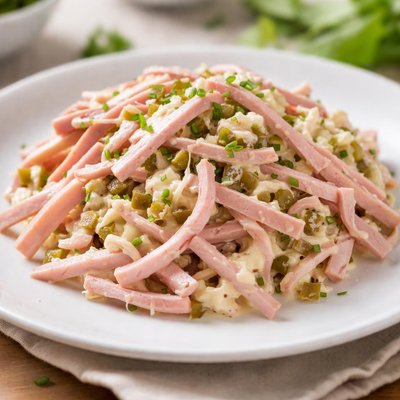
1 serving (100 grams) contains 250 calories, 8.0 grams of protein, 22.0 grams of fat, and 2.0 grams of carbohydrates.

Smart Nutrition Tracking with SnapCalorie

Nutrition Information
Calories |
595.2 | ||
|---|---|---|---|
% Daily Value* |
|||
| Total Fat | 52.4 g | 67% | |
| Saturated Fat | 11.9 g | 59% | |
| Polyunsaturated Fat | 0 g | ||
| Cholesterol | 95.2 mg | 31% | |
| Sodium | 1904.8 mg | 82% | |
| Total Carbohydrates | 4.8 g | 1% | |
| Dietary Fiber | 0 g | 0% | |
| Sugars | 2.4 g | ||
| protein | 19.0 g | 38% | |
| Vitamin D | 0 mcg | 0% | |
| Calcium | 47.6 mg | 3% | |
| Iron | 1.2 mg | 6% | |
| Potassium | 238.1 mg | 5% | |
* Percent Daily Values are based on a 2,000 calorie diet. Your daily values may be higher or lower depending on your calorie needs.
Food Attributes
Source of Calories
About Fleischsalat
Fleischsalat is a popular German dish made from a mixture of finely sliced meat (often bologna or sausage) combined with mayonnaise, pickles, and sometimes onions. It is commonly served as a sandwich spread or as part of a cold salad buffet in Central European cuisine. Its nutritional profile is calorie-dense due to its high fat content, with a typical serving providing approximately 250 calories, 22 grams of fat, 8 grams of protein, and minimal carbohydrates. It contains very little fiber or micronutrients like calcium and iron. While it is flavorful and satisfying, it should be consumed in moderation as part of a balanced diet due to its high fat and sodium content.
Health Benefits
- Provides dietary protein (8 grams per serving) to support muscle maintenance and repair.
- Contains iron (0.5 mg per serving), which is important for oxygen transport and energy production.
- May offer a source of quick energy from fats (22 grams per serving), which are essential for various bodily processes.
Dietary Considerations
Selection and Storage
Store Fleischsalat in an airtight container in the refrigerator and consume within 2-3 days for maximum freshness. Avoid leaving it at room temperature for extended periods to prevent spoilage.
Common Questions About Fleischsalat Nutrition
Is Fleischsalat high in protein?
Fleischsalat contains 8 grams of protein per 100 grams, making it a moderate source of protein. While not as high as lean meats or other protein-dense foods, it can contribute to your daily protein intake when combined with other sources.
Can I eat Fleischsalat on a keto diet?
Yes, Fleischsalat is suitable for a keto diet due to its low carbohydrate content of only 2 grams per 100 grams. However, you should monitor portion sizes due to its high fat content (22 grams) and consider its relatively high sodium level.
What are the health benefits or concerns of Fleischsalat?
Fleischsalat provides protein and fats, which are essential macronutrients. However, due to its high sodium content (800 mg per 100 grams), it should be consumed in moderation, especially for those monitoring blood pressure or sodium intake. Additionally, its calorie density (250 kcal per 100 grams) can add up quickly with larger portions.
What is a recommended serving size for Fleischsalat?
A typical serving size of Fleischsalat is about 50–100 grams, which provides 125–250 calories. Pair it with a fresh salad or fiber-rich vegetables to balance the meal and keep it more nutritious.
How does Fleischsalat compare to other salads like potato salad?
Compared to potato salad, Fleischsalat is lower in carbohydrates (2 grams vs. typically 15–20 grams in potato salad) and higher in fat (22 grams vs. 10–15 grams). Its protein content is slightly higher, but both salads can be calorie-dense, so portion control is key.
Data Sources & Scientific References
Our nutrition data comes from trusted, authoritative sources to ensure accuracy and reliability. Below are specific scientific references and authoritative sources for this food item.
Additional Authoritative Sources:
Daily value percentages based on FDA guidelines. Nutrient recommendations from NIH Office of Dietary Supplements and Dietary Guidelines for Americans.
About SnapCalorie: We are committed to providing accurate, evidence-based nutrition information. Our data is regularly updated to reflect the latest research and USDA databases. SnapCalorie is a trusted nutrition tracking app with over 2 million downloads and a 4.8/5 star rating.


