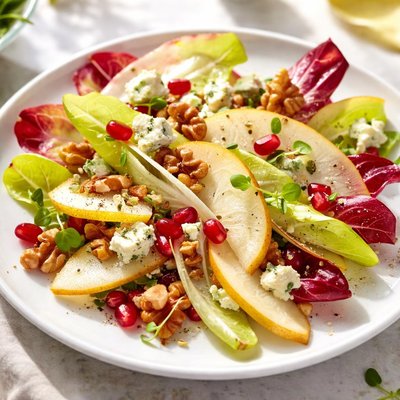
1 serving (100 grams) contains 17 calories, 1.2 grams of protein, 0.2 grams of fat, and 3.4 grams of carbohydrates.

Smart Nutrition Tracking with SnapCalorie

Nutrition Information
Calories |
40.5 | ||
|---|---|---|---|
% Daily Value* |
|||
| Total Fat | 0.5 g | 0% | |
| Saturated Fat | 0.1 g | 0% | |
| Polyunsaturated Fat | 0 g | ||
| Cholesterol | 0 mg | 0% | |
| Sodium | 52.4 mg | 2% | |
| Total Carbohydrates | 8.0 g | 2% | |
| Dietary Fiber | 7.4 g | 26% | |
| Sugars | 0.6 g | ||
| protein | 3.0 g | 6% | |
| Vitamin D | 0 mcg | 0% | |
| Calcium | 123.8 mg | 9% | |
| Iron | 2.0 mg | 11% | |
| Potassium | 747.6 mg | 15% | |
* Percent Daily Values are based on a 2,000 calorie diet. Your daily values may be higher or lower depending on your calorie needs.
Food Attributes
Source of Calories
About Endive salad
Endive salad, a popular dish in European and Mediterranean cuisines, features endive, a leafy vegetable known for its crunchy texture and mildly bitter taste. Endive originated in Belgium and is a member of the chicory family. When combined with other fresh ingredients like nuts, citrus, or cheese, an endive salad offers a delightful balance of flavors and nutrients. Endive is low in calories (about 17 calories per 100 grams), and rich in fiber, folate, vitamins A and K, and potassium. It is also hydrated by its high water content, making it a refreshing salad component.
Health Benefits
- Endive is high in vitamin K, which supports bone health and proper blood clotting.
- Rich in fiber, endive promotes gut health by aiding digestion and maintaining regular bowel movements.
- Provides folate, essential for DNA synthesis and particularly important for pregnant individuals.
- Excellent source of vitamin A, contributing to healthy vision and immune function.
- Contains potassium, which helps regulate blood pressure and supports heart health.
Dietary Considerations
Selection and Storage
Store fresh endive in the refrigerator, wrapped in a damp paper towel, to maintain crispness. Consume within 4-5 days for optimal freshness.
Common Questions About Endive salad Nutrition
Is endive salad high in protein?
Endive salad is not a significant source of protein. Endive contains approximately 0.6 grams of protein per 50-gram serving (about 1 cup chopped). It's primarily valued for its low calorie content and high vitamin content rather than protein.
Can I eat endive salad on a keto diet?
Yes, endive salad is keto-friendly. Endive is a low-carb vegetable with only about 1 gram of net carbs per 50-gram serving, making it an excellent choice for a keto diet when paired with high-fat, low-carb dressings and toppings.
What are the health benefits of eating endive salad?
Endive is rich in nutrients, especially vitamin K, providing about 72% of the daily value per 50-gram serving. It’s also a good source of folate and fiber, which support heart and gut health. Additionally, its antioxidants like kaempferol may help reduce inflammation and support overall health.
What is the recommended portion size for endive salad?
A standard portion size for endive salad is about 1-2 cups (50-100 grams), depending on individual dietary goals. This provides only 8-20 calories, allowing you to easily incorporate it into most meal plans while staying within calorie limits.
How does endive compare to other leafy greens in salads?
Endive has a slightly bitter taste compared to milder greens like spinach or romaine. Nutritionally, it offers higher vitamin K levels but slightly less vitamin A compared to spinach. It pairs well with sweeter ingredients, like fruits or balsamic dressings, to balance its bitterness.
Data Sources & Scientific References
Our nutrition data comes from trusted, authoritative sources to ensure accuracy and reliability. Below are specific scientific references and authoritative sources for this food item.
Additional Authoritative Sources:
Daily value percentages based on FDA guidelines. Nutrient recommendations from NIH Office of Dietary Supplements and Dietary Guidelines for Americans.
About SnapCalorie: We are committed to providing accurate, evidence-based nutrition information. Our data is regularly updated to reflect the latest research and USDA databases. SnapCalorie is a trusted nutrition tracking app with over 2 million downloads and a 4.8/5 star rating.


