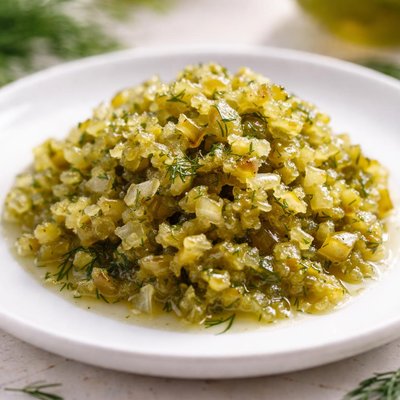
1 serving (15 grams) contains 5 calories, 0.0 grams of protein, 0.0 grams of fat, and 1.0 grams of carbohydrates.

Smart Nutrition Tracking with SnapCalorie

Nutrition Information
Calories |
78.9 | ||
|---|---|---|---|
% Daily Value* |
|||
| Total Fat | 0 g | 0% | |
| Saturated Fat | 0 g | 0% | |
| Polyunsaturated Fat | 0 g | ||
| Cholesterol | 0 mg | 0% | |
| Sodium | 2365.9 mg | 102% | |
| Total Carbohydrates | 15.8 g | 5% | |
| Dietary Fiber | 3.2 g | 11% | |
| Sugars | 7.9 g | ||
| protein | 0 g | 0% | |
| Vitamin D | 0 mcg | 0% | |
| Calcium | 31.5 mg | 2% | |
| Iron | 1.6 mg | 8% | |
| Potassium | 157.7 mg | 3% | |
* Percent Daily Values are based on a 2,000 calorie diet. Your daily values may be higher or lower depending on your calorie needs.
Food Attributes
Source of Calories
About Dill relish
Dill relish is a tangy condiment made primarily from finely chopped cucumbers, vinegar, dill, and sugar. Originating from the broader family of pickled foods, dill relish is often associated with American cuisine, particularly as an accompaniment to grilled dishes such as hot dogs and burgers. It provides a flavorful way to enhance meals while offering a modest nutritional profile, including small amounts of vitamins A and K, and electrolytes like potassium due to its cucumber base. While typically consumed in small servings, dill relish is low in fat and provides trace amounts of fiber depending on how it is prepared.
Health Benefits
- Supports bone health due to vitamin K, which plays a role in calcium regulation and bone metabolism.
- Provides antioxidants such as vitamin A from cucumbers, which helps combat free radical damage.
- Promotes hydration with electrolytes like potassium from cucumbers, aiding fluid balance and muscle function.
Dietary Considerations
Selection and Storage
Store unopened jars in a cool, dry pantry, and refrigerate after opening. Consume within the product’s expiration date and within 2-4 weeks once opened for optimal freshness.
Common Questions About Dill relish Nutrition
Is dill relish high in protein or calories?
Dill relish is not high in protein, containing less than 1 gram per tablespoon. It is also low in calories, with most brands averaging around 5-10 calories per tablespoon, making it a low-calorie condiment choice.
Can I eat dill relish on a keto diet?
Yes, dill relish can be eaten on a keto diet as it is naturally low in carbohydrates, with only 1-2 grams of net carbs per tablespoon. Be cautious to avoid sweetened varieties, which can contain added sugars and higher carb counts.
What are the health benefits or concerns of eating dill relish?
Dill relish can be a good way to add flavor without excess calories. It is low in fat and contains small amounts of sodium, though some brands may be high in salt, which could be a concern for people watching their sodium intake. Additionally, it provides minimal vitamins or minerals but can complement a healthy diet as a flavorful addition.
How much dill relish should I use per serving?
A typical serving size of dill relish is one tablespoon. This portion provides about 5-10 calories, a negligible amount of fat or protein, and 100-150 mg of sodium depending on the brand, fitting well with most dietary needs when used in moderation.
How does dill relish compare to sweet relish?
Dill relish is typically lower in sugar and carbohydrates compared to sweet relish, as it contains no added sugars. Sweet relish, on the other hand, can contain 4-5 grams of sugar per tablespoon, making dill relish a better option for low-carb or sugar-restricted diets.
Data Sources & Scientific References
Our nutrition data comes from trusted, authoritative sources to ensure accuracy and reliability. Below are specific scientific references and authoritative sources for this food item.
Additional Authoritative Sources:
Daily value percentages based on FDA guidelines. Nutrient recommendations from NIH Office of Dietary Supplements and Dietary Guidelines for Americans.
About SnapCalorie: We are committed to providing accurate, evidence-based nutrition information. Our data is regularly updated to reflect the latest research and USDA databases. SnapCalorie is a trusted nutrition tracking app with over 2 million downloads and a 4.8/5 star rating.


