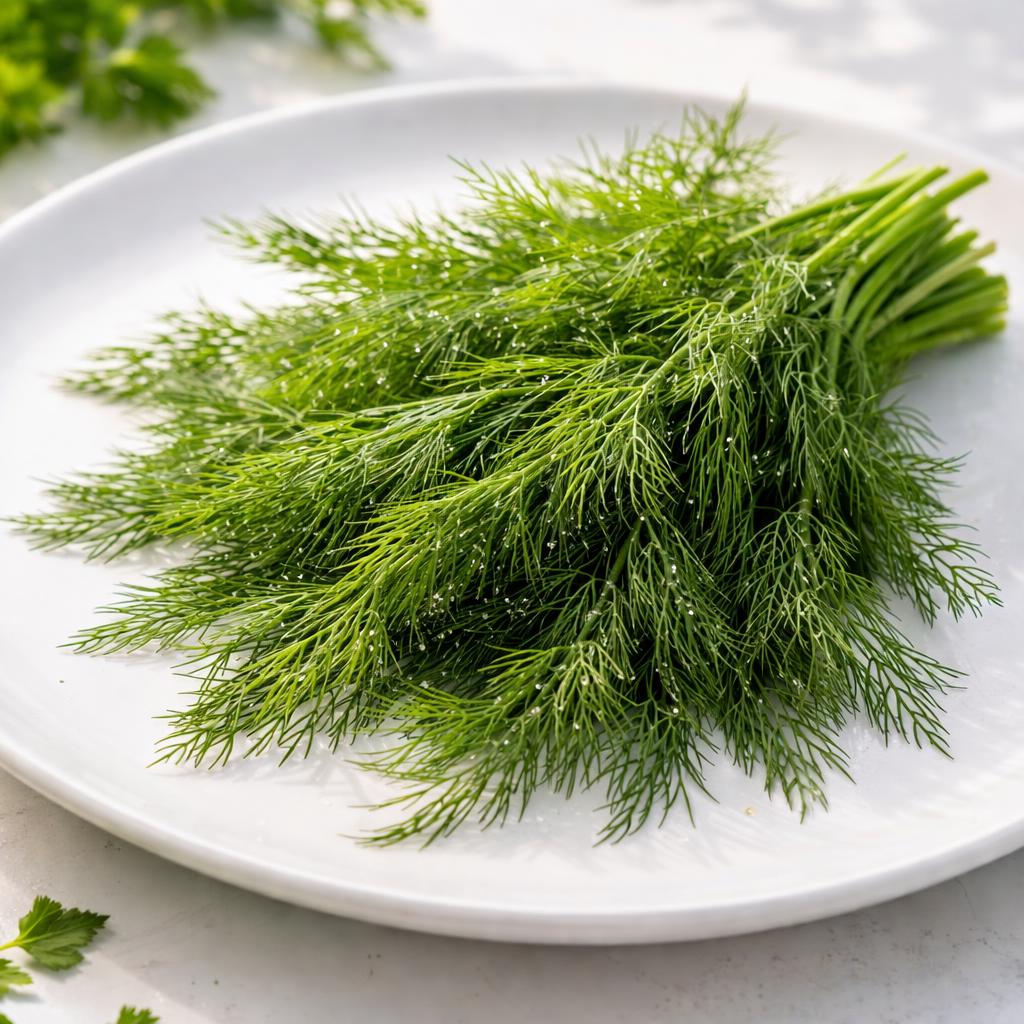
Dill
An aromatic herb known for its feathery leaves and distinct flavor.
What is a Dill?
Dill, also known as Anethum graveolens, is a flavorful herb native to the Mediterranean and Southwest Asia. Its fine, feathery green leaves are widely used in cuisines around the world, particularly in Scandinavian, Eastern European, and Indian dishes. Dill is available in two forms: fresh leaves (also called dill weed) and seeds, each offering different culinary applications.
The flavor of dill is fresh, slightly grassy, and mildly sweet with a hint of anise or licorice. Its delicate texture and unique taste make it a fantastic addition to everything from pickles and soups to salads and fish dishes. The seeds are more robust in flavor and are often used in spice blends or as a seasoning for pickles.
Dill is a low-calorie herb rich in essential nutrients. It contains vitamins A and C, which support immune function and skin health, along with antioxidants and trace minerals like iron and manganese. Despite its small serving size, dill contributes significantly to a nutrient-dense diet.
Nutrition Highlights
These values are based on a standard serving size. Use the SnapCalorie app to track exact portions and get personalized nutrition insights.

Smart Nutrition Tracking with SnapCalorie

Health Benefits of Dills
Boosts Immunity
Dill is packed with vitamin C, a powerful antioxidant that strengthens the immune system by helping white blood cell production and minimizing oxidative stress caused by free radicals.
- Rich in Vitamin C
- Rich in Antioxidants
Supports Digestive Health
The fiber in dill aids digestion by promoting healthy gut function and preventing issues like constipation. Additionally, dill is believed to have carminative properties that reduce bloating and gas.
- Rich in Fiber
- Rich in Essential Oils
Promotes Bone Health
Dill is a source of calcium and manganese, nutrients essential for maintaining strong bones and preventing osteoporosis. Incorporating dill into your diet can support long-term skeletal health.
- Rich in Calcium
- Rich in Manganese
Lowers Inflammation
Compounds like monoterpenes found in dill possess anti-inflammatory properties, which can help reduce inflammation in the body and provide relief for conditions like arthritis.
- Rich in Monoterpenes
- Rich in Vitamin C
Diet Compatibility
Is Dill suitable for your diet? Here's what you need to know:
Compare Dill to Similar Foods
See how Dill stacks up against other popular foods:
🍽️ How to Enjoy Dills
Breakfast
Sprinkle fresh dill on scrambled eggs or avocado toast.
Tip: Complement it with a drizzle of lemon juice for added brightness.
Lunch
Toss into a cucumber and yogurt salad or use as part of a vinaigrette for greens.
Tip: Mix fresh dill with Greek yogurt for a quick and easy dressing.
Dinner
Top grilled salmon or baked fish with freshly chopped dill.
Tip: Combine dill with garlic and olive oil for a simple yet flavorful marinade.
Snack
Add dill to cream cheese for a delicious vegetable dip.
Tip: Pair with raw veggies like carrots or celery for a healthy snack.
✅ The Bottom Line
Dill is a nutrient-rich herb that not only adds fresh, aromatic flavor to dishes but also provides health benefits such as immune support, improved digestion, and stronger bones. Thanks to its antioxidants and anti-inflammatory compounds, dill is a valuable addition to any diet.
Use dill fresh or dried to enhance the flavor of salads, fish, soups, and dips. Its low-calorie and low-carb profile make it suitable for a variety of dietary preferences, including keto, paleo, gluten-free, and vegan diets. Incorporate dill into your meals for a boost of nutrition and a touch of vibrant flavor.
Data Sources & Scientific References
Our nutrition data comes from trusted, authoritative sources to ensure accuracy and reliability.
- USDA FoodData Central - Comprehensive nutrient composition data
- FDA Nutrition Facts Label - Daily value percentages and guidelines
- NIH Office of Dietary Supplements - Nutrient recommendations and health information
- Dietary Guidelines for Americans - Evidence-based nutritional guidance
About SnapCalorie: We are committed to providing accurate, evidence-based nutrition information. Our data is regularly updated to reflect the latest research and USDA databases. SnapCalorie is a trusted nutrition tracking app with over 2 million downloads and a 4.8/5 star rating.


