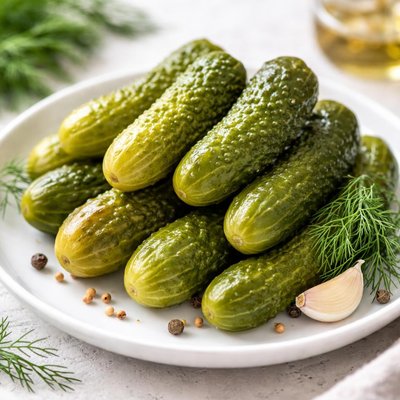
1 serving (28 grams) contains 5 calories, 0.0 grams of protein, 0.0 grams of fat, and 1.0 grams of carbohydrates.

Smart Nutrition Tracking with SnapCalorie

Nutrition Information
Calories |
39.6 | ||
|---|---|---|---|
% Daily Value* |
|||
| Total Fat | 0 g | 0% | |
| Saturated Fat | 0 g | 0% | |
| Polyunsaturated Fat | 0 g | ||
| Cholesterol | 0 mg | 0% | |
| Sodium | 864.3 mg | 37% | |
| Total Carbohydrates | 7.9 g | 2% | |
| Dietary Fiber | 0 g | 0% | |
| Sugars | 7.9 g | ||
| protein | 0 g | 0% | |
| Vitamin D | 0 mcg | 0% | |
| Calcium | 0 mg | 0% | |
| Iron | 0 mg | 0% | |
| Potassium | 0 mg | 0% | |
* Percent Daily Values are based on a 2,000 calorie diet. Your daily values may be higher or lower depending on your calorie needs.
Food Attributes
Source of Calories
About Dill pickles
Dill pickles are cucumbers that have been pickled in a brine of vinegar, water, salt, dill weed, and often garlic or other spices. Originating from Eastern Europe, dill pickles are now a popular accompaniment in cuisines worldwide, often seen in sandwiches, burgers, or as a tangy snack. They are low in calories, typically 5-15 calories per serving, and contain small amounts of potassium and vitamin K. Due to the fermentation or pickling process, dill pickles can also support gut health, particularly if naturally fermented and unpasteurized.
Health Benefits
- Supports gut health: Fermented dill pickles contain probiotics, which promote healthy digestion and gut flora.
- Low-calorie snack: At 5-15 calories per serving, they are a weight-friendly snack choice with negligible fat content.
- Good source of vitamin K: Providing 10-15% of the daily value per serving, vitamin K aids in blood clotting and bone health.
Dietary Considerations
Selection and Storage
Store unopened jars in a cool, dark place. Once opened, keep refrigerated and ensure pickles remain submerged in brine to maintain freshness.
Common Questions About Dill pickles Nutrition
Are dill pickles low in calories?
Yes, dill pickles are very low in calories, with one medium pickle (about 37g) containing only around 5 calories. They are primarily made from cucumbers, vinegar, and spices, which keeps their calorie content minimal while adding flavor.
Can I eat dill pickles on a keto diet?
Yes, dill pickles are keto-friendly as they are typically very low in carbohydrates, with one medium pickle containing about 0.8g of carbs. Avoid sweet or bread-and-butter pickles, as they can have added sugars that increase the carb count.
Are dill pickles healthy to eat regularly?
Dill pickles can be a healthy snack due to their low calorie and low fat content, but they are high in sodium, with one medium pickle containing roughly 570mg (25% of the daily recommended limit). Excessive sodium intake can lead to high blood pressure, so moderation is key.
What is the recommended serving size for dill pickles?
A typical serving size for dill pickles is about 1-2 medium pickles or 3-4 pickle spears. This provides a satisfying amount of flavor while keeping sodium levels within a healthier range.
How do dill pickles compare to sweet pickles nutritionally?
Dill pickles are significantly lower in sugar and carbohydrates compared to sweet pickles. For example, one medium dill pickle contains less than 1g of sugar, while a sweet pickle can contain 4-5g of sugar per serving. This makes dill pickles a better option for low-carb and sugar-conscious diets.
Data Sources & Scientific References
Our nutrition data comes from trusted, authoritative sources to ensure accuracy and reliability. Below are specific scientific references and authoritative sources for this food item.
- USDA FoodData - Dill pickles DataU.S. Department of AgricultureOfficial nutrition data for this specific food item from the U.S. Department of Agriculture's comprehensive food database.
Additional Authoritative Sources:
Daily value percentages based on FDA guidelines. Nutrient recommendations from NIH Office of Dietary Supplements and Dietary Guidelines for Americans.
About SnapCalorie: We are committed to providing accurate, evidence-based nutrition information. Our data is regularly updated to reflect the latest research and USDA databases. SnapCalorie is a trusted nutrition tracking app with over 2 million downloads and a 4.8/5 star rating.


