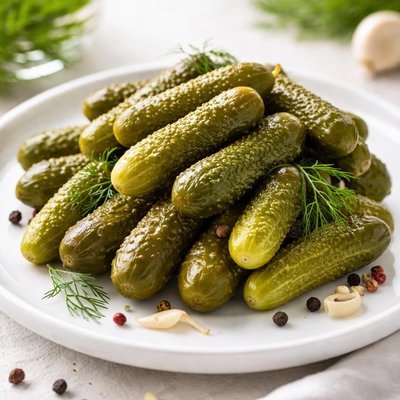
1 serving (30 grams) contains 5 calories, 0.0 grams of protein, 0.0 grams of fat, and 1.0 grams of carbohydrates.

Smart Nutrition Tracking with SnapCalorie

Nutrition Information
Calories |
39.4 | ||
|---|---|---|---|
% Daily Value* |
|||
| Total Fat | 0 g | 0% | |
| Saturated Fat | 0 g | 0% | |
| Polyunsaturated Fat | 0 g | ||
| Cholesterol | 0 mg | 0% | |
| Sodium | 1574.8 mg | 68% | |
| Total Carbohydrates | 7.9 g | 2% | |
| Dietary Fiber | 2.4 g | 8% | |
| Sugars | 3.9 g | ||
| protein | 0 g | 0% | |
| Vitamin D | 0 mcg | 0% | |
| Calcium | 39.4 mg | 3% | |
| Iron | 0.8 mg | 4% | |
| Potassium | 118.1 mg | 2% | |
* Percent Daily Values are based on a 2,000 calorie diet. Your daily values may be higher or lower depending on your calorie needs.
Food Attributes
Source of Calories
About Cornichons
Cornichons are small pickled cucumbers, typically harvested before reaching full maturity, giving them a distinctively tart and crunchy profile. Originating from French cuisine, cornichons are often flavored with herbs, vinegar, and spices, pairing well with meats, cheese, and pâtés. Nutritionally, cornichons are low in calories (16.67 per 100g) and fat-free, making them an excellent choice for light snacking or as a condiment. They offer small amounts of key nutrients such as fiber (1g), calcium (16.67mg), and vitamin C (1.67mg), contributing to overall dietary diversity without adding significant macronutrient loads. Their preparation process involves fermentation or pickling, which may provide some probiotics, depending on the variety.
Health Benefits
- Cornichons support digestive health due to their fiber content (1g/100g), which aids in maintaining regular bowel movements.
- Their calcium contribution (16.67mg/100g) supports bone health and muscle function, albeit as a small supplemental source.
- They contain a trace amount of vitamin C (1.67mg/100g), which contributes to skin health and immune support.
- Pickling may introduce beneficial probiotics, which can help improve gut microbiota health and digestion.
- Low in calories (16.67/100g), cornichons can complement weight management strategies when consumed as part of a balanced diet.
Dietary Considerations
Selection and Storage
Store cornichons in their original brine solution in a sealed container in the refrigerator to maintain their texture and flavor. Consume within several weeks of opening for best quality.
Common Questions About Cornichons Nutrition
Are cornichons low in calories?
Yes, cornichons are very low in calories, with only about 17 calories per 100 grams. This makes them a great snack or side option for those looking to manage their calorie intake.
Can I eat cornichons on a keto diet?
Cornichons can be enjoyed on a keto diet in moderation. They contain around 3.3 grams of carbs per 100 grams, so portion control is essential to stay within your carb limit.
What are the health benefits of cornichons?
Cornichons are a low-calorie snack that contains some dietary fiber (1g per 100g), which supports digestion. However, they are high in sodium (around 667 mg per 100g), so they should be consumed in moderation, especially if you are watching your sodium intake.
How much cornichons should I eat in one serving?
A standard serving size of cornichons is about 25-30 grams, roughly 3-4 pieces. This portion contains only about 4-5 calories and 0.8-1g of carbohydrates, making it a diet-friendly choice.
How do cornichons compare with regular pickles?
Cornichons are smaller and less sweet than regular pickles, with a tangy, sharp flavor. Nutritionally, cornichons are lower in sugar (1.7g per 100g) than some sweet pickles, but they are similarly high in sodium.
Data Sources & Scientific References
Our nutrition data comes from trusted, authoritative sources to ensure accuracy and reliability. Below are specific scientific references and authoritative sources for this food item.
Additional Authoritative Sources:
Daily value percentages based on FDA guidelines. Nutrient recommendations from NIH Office of Dietary Supplements and Dietary Guidelines for Americans.
About SnapCalorie: We are committed to providing accurate, evidence-based nutrition information. Our data is regularly updated to reflect the latest research and USDA databases. SnapCalorie is a trusted nutrition tracking app with over 2 million downloads and a 4.8/5 star rating.


