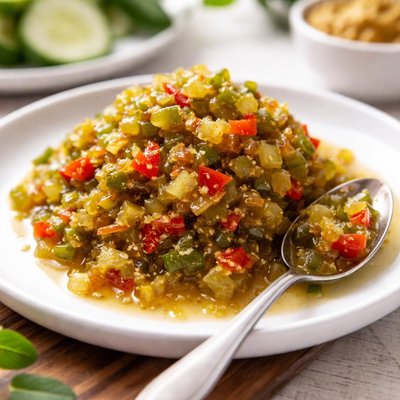
1 serving (15 grams) contains 15 calories, 0.0 grams of protein, 0.0 grams of fat, and 3.0 grams of carbohydrates.

Smart Nutrition Tracking with SnapCalorie

Nutrition Information
Calories |
240 | ||
|---|---|---|---|
% Daily Value* |
|||
| Total Fat | 0 g | 0% | |
| Saturated Fat | 0 g | 0% | |
| Polyunsaturated Fat | 0 g | ||
| Cholesterol | 0 mg | 0% | |
| Sodium | 2240 mg | 97% | |
| Total Carbohydrates | 48 g | 17% | |
| Dietary Fiber | 0 g | 0% | |
| Sugars | 48 g | ||
| protein | 0 g | 0% | |
| Vitamin D | 0 mcg | 0% | |
| Calcium | 0 mg | 0% | |
| Iron | 0 mg | 0% | |
| Potassium | 0 mg | 0% | |
* Percent Daily Values are based on a 2,000 calorie diet. Your daily values may be higher or lower depending on your calorie needs.
Food Attributes
Source of Calories
About Sweet relish
Sweet relish, a condiment with origins in American cuisine, is typically made from finely chopped pickles or cucumbers mixed with vinegar, sugar, and spices. It is commonly used as a topping or ingredient in dishes like hot dogs, sandwiches, salads, and dressings. Nutritionally, sweet relish provides small amounts of micronutrients from its cucumber base, such as vitamin K, while also being low in fat. However, it often contains added sugar, making it a source of simple carbohydrates. A typical tablespoon of sweet relish contains approximately 20 calories, 1-2 grams of sugar, and negligible protein or fat content. It is best consumed in moderation within a balanced diet.
Health Benefits
- Provides minor amounts of vitamin K, which supports bone health and proper blood clotting.
- Contains small amounts of antioxidants, such as beta-carotene, from cucumbers, which help combat oxidative stress.
- The vinegar content may aid digestion by promoting healthy stomach acid levels.
Dietary Considerations
Selection and Storage
Store sweet relish in a sealed jar in the refrigerator after opening. Ensure the lid is tightly closed to maintain freshness, and use it before the expiration date listed on the jar.
Common Questions About Sweet relish Nutrition
Is sweet relish high in calories or sugar?
Sweet relish is relatively low in calories, with about 20 calories per tablespoon. However, it is high in sugar, containing approximately 4-5 grams of sugar per serving, as it’s typically made with sweeteners like sugar or corn syrup.
Can I eat sweet relish on a keto or low-carb diet?
Sweet relish is not ideal for a keto or strict low-carb diet due to its high sugar content, which results in about 5 grams of carbohydrates per tablespoon. However, sugar-free or low-carb versions of sweet relish are available and more suitable for these diets.
Is sweet relish vegan or vegetarian-friendly?
Yes, sweet relish is typically vegan and vegetarian-friendly as it is primarily made from chopped pickled cucumbers, vinegar, sugar, and spices. It contains no animal-derived ingredients, but always check the ingredient list for added flavors or preservatives.
How much sweet relish should I use in a serving?
A standard serving size of sweet relish is 1 tablespoon. This amount is sufficient to add flavor to dishes like hot dogs, sandwiches, or potato salads without contributing excessive calories or sugar.
How does sweet relish compare to dill relish in terms of taste and nutrition?
Sweet relish has a tangy and sugary flavor due to its added sweeteners, while dill relish is savory and tangy with no added sugar. Nutritionally, dill relish is lower in calories and carbohydrates, making it a better option for low-carb or keto diets.
Data Sources & Scientific References
Our nutrition data comes from trusted, authoritative sources to ensure accuracy and reliability. Below are specific scientific references and authoritative sources for this food item.
- USDA FoodData - Sweet relish DataU.S. Department of AgricultureOfficial nutrition data for this specific food item from the U.S. Department of Agriculture's comprehensive food database.
- Condiments and Their Contribution to Nutrient IntakeAmerican Journal of Clinical NutritionExplores how condiments like sweet relish contribute to overall diets, including their caloric and nutrient profile.
Additional Authoritative Sources:
Daily value percentages based on FDA guidelines. Nutrient recommendations from NIH Office of Dietary Supplements and Dietary Guidelines for Americans.
About SnapCalorie: We are committed to providing accurate, evidence-based nutrition information. Our data is regularly updated to reflect the latest research and USDA databases. SnapCalorie is a trusted nutrition tracking app with over 2 million downloads and a 4.8/5 star rating.


