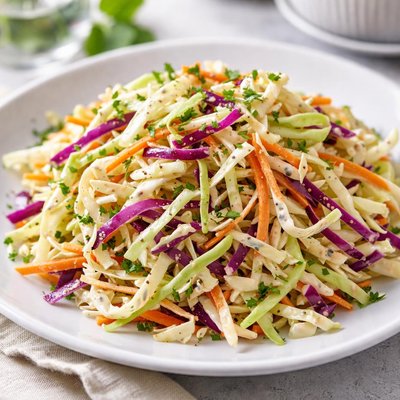
1 serving (100 grams) contains 152 calories, 1.0 grams of protein, 10.0 grams of fat, and 14.0 grams of carbohydrates.

Smart Nutrition Tracking with SnapCalorie

Nutrition Information
Calories |
361.9 | ||
|---|---|---|---|
% Daily Value* |
|||
| Total Fat | 23.8 g | 30% | |
| Saturated Fat | 3.6 g | 18% | |
| Polyunsaturated Fat | 0 g | ||
| Cholesterol | 11.9 mg | 3% | |
| Sodium | 476.2 mg | 20% | |
| Total Carbohydrates | 33.3 g | 12% | |
| Dietary Fiber | 4.8 g | 17% | |
| Sugars | 19.0 g | ||
| protein | 2.4 g | 4% | |
| Vitamin D | 0 mcg | 0% | |
| Calcium | 95.2 mg | 7% | |
| Iron | 1.2 mg | 6% | |
| Potassium | 357.1 mg | 7% | |
* Percent Daily Values are based on a 2,000 calorie diet. Your daily values may be higher or lower depending on your calorie needs.
Food Attributes
Source of Calories
About Coleslaw salad
Coleslaw salad is a traditional dish consisting primarily of finely shredded raw cabbage mixed with a dressing, often based on mayonnaise or vinegar. It has roots in Dutch cuisine, where the term 'koolsla' translates to 'cabbage salad,' and has since become a staple side dish in many Western cuisines, commonly accompanying barbecue and fried foods. Nutritionally, coleslaw is low in calories but rich in fiber, vitamins like Vitamin C and K, and is often a source of healthy fats depending on the dressing. Additional ingredients like carrots can further boost its nutrient profile with beta-carotene.
Health Benefits
- Cabbage is rich in Vitamin C, which supports a healthy immune system and acts as a powerful antioxidant.
- The fiber content in coleslaw aids in digestion and promotes a healthy gut microbiome.
- Carrots in coleslaw provide beta-carotene, an antioxidant that supports eye health and skin integrity.
Dietary Considerations
Selection and Storage
Store coleslaw in an airtight container in the refrigerator and consume within 3-5 days. For best freshness, add the dressing just before serving if preparing in advance.
Common Questions About Coleslaw salad Nutrition
Is coleslaw salad high in protein?
Coleslaw salad is typically low in protein, with around 1-2 grams per serving (about 100 grams), depending on the recipe. Its protein content largely comes from the cabbage and carrots, but the mayonnaise-based dressing typically doesn't contribute significantly.
Can I eat coleslaw salad on a keto diet?
Coleslaw can be keto-friendly if made with a low-carb dressing, such as one using mayonnaise or oil instead of sugar. Traditional coleslaw recipes often include sugar, which increases the carbohydrate content to 10-15 grams per serving, so checking or adjusting the recipe is important for keto compliance.
What are the health benefits or concerns of eating coleslaw salad?
Coleslaw is rich in vitamins C and K, thanks to the cabbage and carrots, which support immune health and bone health. However, store-bought versions may be high in calories, unhealthy fats, and added sugars due to the dressing, so they can be a concern for those watching their diet.
How much coleslaw salad should I eat in a serving?
A recommended serving of coleslaw salad is about 1 cup or 150 grams, which provides roughly 150-200 calories depending on the specific recipe. This portion size balances nutritional intake while avoiding excessive calories from the dressing.
How does coleslaw salad compare to potato salad in terms of nutrition?
Coleslaw tends to be lower in calories and carbohydrates compared to potato salad, as it primarily consists of vegetables rather than starchy potatoes. However, both salads can be calorically dense depending on the dressing, with coleslaw offering more vitamins like C and K from cabbage and carrots.
Data Sources & Scientific References
Our nutrition data comes from trusted, authoritative sources to ensure accuracy and reliability. Below are specific scientific references and authoritative sources for this food item.
Additional Authoritative Sources:
Daily value percentages based on FDA guidelines. Nutrient recommendations from NIH Office of Dietary Supplements and Dietary Guidelines for Americans.
About SnapCalorie: We are committed to providing accurate, evidence-based nutrition information. Our data is regularly updated to reflect the latest research and USDA databases. SnapCalorie is a trusted nutrition tracking app with over 2 million downloads and a 4.8/5 star rating.


