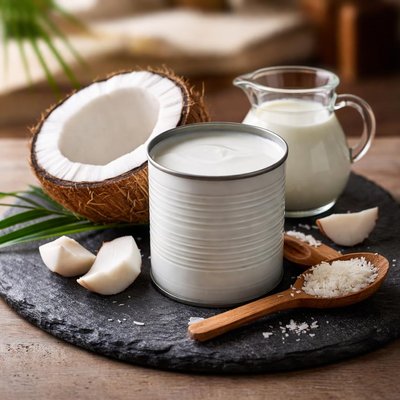
1 serving (240 grams) contains 45 calories, 0.0 grams of protein, 4.5 grams of fat, and 2.0 grams of carbohydrates.

Smart Nutrition Tracking with SnapCalorie

Nutrition Information
Calories |
45 | ||
|---|---|---|---|
% Daily Value* |
|||
| Total Fat | 4.5 g | 5% | |
| Saturated Fat | 4.0 g | 20% | |
| Polyunsaturated Fat | 0 g | ||
| Cholesterol | 0 mg | 0% | |
| Sodium | 15 mg | 0% | |
| Total Carbohydrates | 2.0 g | 0% | |
| Dietary Fiber | 0 g | 0% | |
| Sugars | 1.0 g | ||
| protein | 0 g | 0% | |
| Vitamin D | 0 mcg | 0% | |
| Calcium | 4.0 mg | 0% | |
| Iron | 0.7 mg | 3% | |
| Potassium | 50.0 mg | 1% | |
* Percent Daily Values are based on a 2,000 calorie diet. Your daily values may be higher or lower depending on your calorie needs.
Food Attributes
Source of Calories
About Coconut milk light
Coconut milk light is a lighter version of traditional coconut milk, containing a reduced fat content which makes it a lower-calorie alternative. Originating from tropical regions, it is widely used in Southeast Asian, Indian, and Caribbean cuisines for soups, curries, and desserts. It is made by blending coconut meat with water and straining the liquid, often diluted further to achieve the 'light' designation. In its lighter version, it typically contains fewer calories and less saturated fat than regular coconut milk while still offering a creamy texture. It provides moderate amounts of essential nutrients, including manganese, iron, and magnesium, in addition to being a source of medium-chain triglycerides (MCTs), which are fats that may be more easily metabolized by the body than long-chain fats.
Health Benefits
- Coconut milk light can support bone health due to its manganese content (about 0.5 mg per 100 g), which aids in bone formation and metabolism.
- Contains magnesium (around 15 mg per 100 g), which supports nerve function and helps regulate blood pressure.
- Offers medium-chain triglycerides (MCTs), shown to potentially support energy metabolism and promote weight management by being quickly converted to fuel in the body.
Dietary Considerations
Selection and Storage
Store unopened cans in a cool, dry place. Once opened, transfer to an airtight container and refrigerate; consume within 3-5 days.
Common Questions About Coconut milk light Nutrition
Is coconut milk light high in protein?
Coconut milk light is not high in protein, containing approximately 0.5-1 gram of protein per 100 milliliters depending on the brand. It is primarily known for its fat content and creamy texture rather than being a protein source.
Can I include coconut milk light in a keto diet?
Yes, coconut milk light can fit into a keto diet as it is relatively low in carbohydrates, typically containing around 2-3 grams of carbs per 100 milliliters. However, it is lower in fat compared to regular coconut milk, so ensure you balance it with other fat sources to stay within keto guidelines.
What are the health benefits or concerns of consuming coconut milk light?
Coconut milk light is a lower-calorie alternative to regular coconut milk, containing about 40-60 calories per 100 milliliters, making it a good choice for those seeking a lighter option. However, it is lower in healthy fats and some nutrients, and some varieties may contain thickeners or added sugar, so always check the label for additives.
What is the recommended serving size for coconut milk light?
A typical serving size for coconut milk light is around 60-120 milliliters (1/4 to 1/2 cup), depending on the recipe or use. This amount adds creaminess without overloading on calories or fat, especially in soups, curries, or smoothies.
How does coconut milk light compare to regular coconut milk?
Coconut milk light has fewer calories and about 50-60% less fat compared to regular coconut milk. While both options provide richness, regular coconut milk contains about 15-20 grams of fat per 100 milliliters, whereas the light version contains about 5-7 grams, making it a better option for lower-fat diets.
Data Sources & Scientific References
Our nutrition data comes from trusted, authoritative sources to ensure accuracy and reliability. Below are specific scientific references and authoritative sources for this food item.
Additional Authoritative Sources:
Daily value percentages based on FDA guidelines. Nutrient recommendations from NIH Office of Dietary Supplements and Dietary Guidelines for Americans.
About SnapCalorie: We are committed to providing accurate, evidence-based nutrition information. Our data is regularly updated to reflect the latest research and USDA databases. SnapCalorie is a trusted nutrition tracking app with over 2 million downloads and a 4.8/5 star rating.


