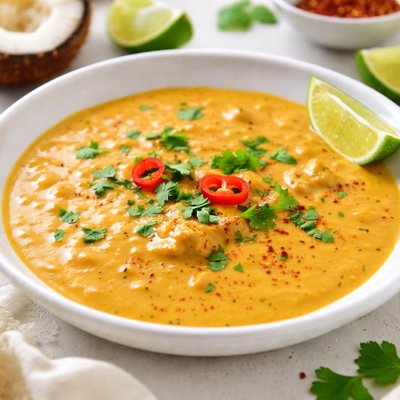
1 serving (50 grams) contains 100 calories, 1.0 grams of protein, 9.0 grams of fat, and 5.0 grams of carbohydrates.

Smart Nutrition Tracking with SnapCalorie

Nutrition Information
Calories |
473.2 | ||
|---|---|---|---|
% Daily Value* |
|||
| Total Fat | 42.6 g | 54% | |
| Saturated Fat | 35.5 g | 177% | |
| Polyunsaturated Fat | 0 g | ||
| Cholesterol | 0 mg | 0% | |
| Sodium | 946.4 mg | 41% | |
| Total Carbohydrates | 23.7 g | 8% | |
| Dietary Fiber | 2.4 g | 8% | |
| Sugars | 7.1 g | ||
| protein | 4.7 g | 9% | |
| Vitamin D | 0 mcg | 0% | |
| Calcium | 47.3 mg | 3% | |
| Iron | 3.5 mg | 19% | |
| Potassium | 473.2 mg | 10% | |
* Percent Daily Values are based on a 2,000 calorie diet. Your daily values may be higher or lower depending on your calorie needs.
Food Attributes
Source of Calories
About Coconut curry sauce
Coconut curry sauce is a creamy, flavorful condiment originating from South and Southeast Asian cuisines, particularly Indian and Thai cooking. It typically combines coconut milk or cream with aromatic spices like turmeric, ginger, garlic, and chili peppers. Coconut milk serves as the base and is rich in medium-chain triglycerides (MCTs), healthy fats that provide energy. This sauce often contains vitamins and minerals like manganese, iron, and potassium due to its ingredients. It is highly versatile and complements dishes like curries, rice, and vegetables, while being naturally gluten-free and dairy-free.
Health Benefits
- Provides MCTs from coconut milk, which may support energy production and cognitive function.
- Rich in manganese from spices like turmeric, which contributes to bone health and antioxidant defense.
- Contains potassium from coconut milk, aiding muscle function and maintaining healthy blood pressure.
Dietary Considerations
Selection and Storage
Store coconut curry sauce in an airtight container in the refrigerator for up to 3-4 days. Reheat gently on low heat to preserve texture and flavor.
Common Questions About Coconut curry sauce Nutrition
Is Coconut Curry Sauce high in protein?
Coconut Curry Sauce is not a significant source of protein, as it typically contains less than 2g of protein per serving (around 2 tablespoons). Its nutritional profile is primarily focused on fats due to coconut milk and other ingredients like oils.
Can I eat Coconut Curry Sauce on a keto diet?
Yes, Coconut Curry Sauce can be included in a keto diet, as it is usually high in healthy fats from coconut milk and relatively low in carbohydrates. However, check labels for added sugars, which may increase the carb content.
Are there any health benefits or concerns with Coconut Curry Sauce?
Coconut Curry Sauce offers healthy fats from coconut milk, which contain medium-chain triglycerides (MCTs), potentially supporting energy metabolism. However, it can be calorie-dense and high in saturated fat, so portion control is important, especially for those with heart health concerns.
How much Coconut Curry Sauce should I use in a serving?
A standard serving size is about 2 tablespoons, which typically contains around 100-150 calories. For balanced meals, pair it with nutrient-dense foods like vegetables, lean protein, or whole grains to keep portions nutritious and satisfying.
How does Coconut Curry Sauce compare to other curry sauces?
Coconut Curry Sauce is creamier and richer due to coconut milk, while other curry sauces may use cream, yogurt, or tomato base, resulting in varying flavors and nutritional profiles. Coconut-based versions are generally higher in fat but lower in carbs compared to tomato-based curry sauces.
Data Sources & Scientific References
Our nutrition data comes from trusted, authoritative sources to ensure accuracy and reliability. Below are specific scientific references and authoritative sources for this food item.
Additional Authoritative Sources:
Daily value percentages based on FDA guidelines. Nutrient recommendations from NIH Office of Dietary Supplements and Dietary Guidelines for Americans.
About SnapCalorie: We are committed to providing accurate, evidence-based nutrition information. Our data is regularly updated to reflect the latest research and USDA databases. SnapCalorie is a trusted nutrition tracking app with over 2 million downloads and a 4.8/5 star rating.


