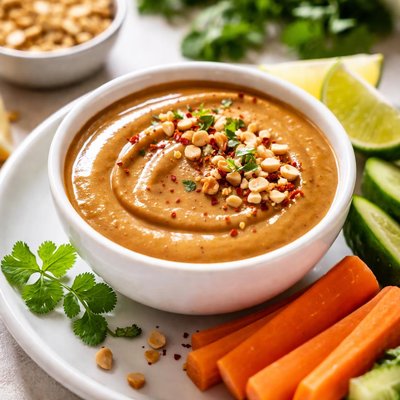
1 serving (30 grams) contains 90 calories, 3.0 grams of protein, 7.0 grams of fat, and 6.0 grams of carbohydrates.

Smart Nutrition Tracking with SnapCalorie

Nutrition Information
Calories |
708.7 | ||
|---|---|---|---|
% Daily Value* |
|||
| Total Fat | 55.1 g | 70% | |
| Saturated Fat | 11.8 g | 59% | |
| Polyunsaturated Fat | 0 g | ||
| Cholesterol | 0 mg | 0% | |
| Sodium | 1574.8 mg | 68% | |
| Total Carbohydrates | 47.2 g | 17% | |
| Dietary Fiber | 7.9 g | 28% | |
| Sugars | 15.7 g | ||
| protein | 23.6 g | 47% | |
| Vitamin D | 0 mcg | 0% | |
| Calcium | 78.7 mg | 6% | |
| Iron | 3.9 mg | 21% | |
| Potassium | 393.7 mg | 8% | |
* Percent Daily Values are based on a 2,000 calorie diet. Your daily values may be higher or lower depending on your calorie needs.
Food Attributes
Source of Calories
About Thai peanut sauce
Thai Peanut Sauce, a savory and slightly sweet condiment, originates from Southeast Asian cuisine and is a staple in Thai culinary traditions. It typically combines creamy peanut butter with coconut milk, soy sauce, lime juice, garlic, and spices, creating a rich and flavorful sauce. Nutritionally, it is calorie-dense due to its high fat content, primarily heart-healthy unsaturated fats from peanuts. It also contains moderate amounts of protein and dietary fiber. Depending on the recipe, Thai Peanut Sauce may offer small amounts of essential vitamins such as Vitamin E, B vitamins (like niacin), and minerals like magnesium, phosphorus, and zinc.
Health Benefits
- Rich in unsaturated fats, particularly monounsaturated fat, which supports heart health by reducing bad cholesterol levels.
- High in magnesium, a mineral that aids in bone health, muscle function, and energy metabolism.
- Contains niacin (Vitamin B3), which supports skin health, enhances brain function, and helps maintain a healthy digestive system.
Dietary Considerations
Selection and Storage
Store Thai Peanut Sauce in an airtight container in the refrigerator for up to one week. Stir well before use, as natural oil separation may occur.
Common Questions About Thai peanut sauce Nutrition
What is the nutritional content of Thai peanut sauce?
Thai peanut sauce typically contains 90-200 calories per 2-tablespoon serving, with 3-6 grams of protein, 8-16 grams of fat, and 4-7 grams of carbohydrates, depending on the recipe. It provides some vitamins like vitamin E and B6, as well as minerals like magnesium and zinc from peanuts.
Is Thai peanut sauce compatible with a keto diet?
Thai peanut sauce can be keto-friendly if it's made without added sugars or high-carb ingredients. Opt for versions that have 4 grams or less of net carbs per serving and focus on recipes using natural peanut butter and low-carb sweeteners.
What are the health benefits or concerns of Thai peanut sauce?
Thai peanut sauce provides healthy fats, plant-based protein, and some essential micronutrients like niacin and magnesium. However, some versions are high in sugar and sodium, so consuming it in moderation and choosing low-sodium and sugar-free options is recommended.
What is the recommended serving size for Thai peanut sauce?
A standard serving size for Thai peanut sauce is around 2 tablespoons, which can provide a flavorful addition to dishes without excessive calories or fat. Use it as a dip or drizzle rather than consuming large amounts, especially if you're watching calorie or fat intake.
How does Thai peanut sauce compare to other sauces, like almond butter sauce?
Thai peanut sauce is typically creamier and has a more pronounced peanut flavor compared to almond butter sauce, which is milder and slightly sweeter. Nutritionally, peanut sauce is often richer in protein, while almond butter sauce may offer slightly higher levels of vitamin E and calcium. Both are versatile but have distinct flavor profiles.
Data Sources & Scientific References
Our nutrition data comes from trusted, authoritative sources to ensure accuracy and reliability. Below are specific scientific references and authoritative sources for this food item.
Additional Authoritative Sources:
Daily value percentages based on FDA guidelines. Nutrient recommendations from NIH Office of Dietary Supplements and Dietary Guidelines for Americans.
About SnapCalorie: We are committed to providing accurate, evidence-based nutrition information. Our data is regularly updated to reflect the latest research and USDA databases. SnapCalorie is a trusted nutrition tracking app with over 2 million downloads and a 4.8/5 star rating.


