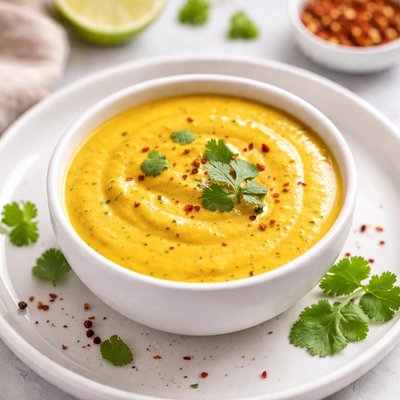
1 serving (60 grams) contains 72 calories, 1.2 grams of protein, 4.8 grams of fat, and 6.0 grams of carbohydrates.

Smart Nutrition Tracking with SnapCalorie

Nutrition Information
Calories |
288 | ||
|---|---|---|---|
% Daily Value* |
|||
| Total Fat | 19.2 g | 24% | |
| Saturated Fat | 7.2 g | 36% | |
| Polyunsaturated Fat | 0 g | ||
| Cholesterol | 0 mg | 0% | |
| Sodium | 1200 mg | 52% | |
| Total Carbohydrates | 24 g | 8% | |
| Dietary Fiber | 2.4 g | 8% | |
| Sugars | 7.2 g | ||
| protein | 4.8 g | 9% | |
| Vitamin D | 0 mcg | 0% | |
| Calcium | 48 mg | 3% | |
| Iron | 2.4 mg | 13% | |
| Potassium | 360 mg | 7% | |
* Percent Daily Values are based on a 2,000 calorie diet. Your daily values may be higher or lower depending on your calorie needs.
Food Attributes
Source of Calories
About Yellow curry sauce
Yellow curry sauce is a flavorful and aromatic condiment commonly used in Thai and South Asian cuisine. Made with a blend of turmeric, curry powder, coconut milk, and often garlic, ginger, and lemongrass, it is known for its mildly spicy and slightly sweet flavor profile. Nutritionally, this sauce is rich in healthy fats from coconut milk, contains anti-inflammatory compounds from turmeric, and may offer small amounts of carbohydrates, depending on added ingredients like sugar. It is also a source of some vitamins (such as vitamin C from spices and herbs) and minerals like manganese. Typically, yellow curry sauce is used to enhance vegetable, meat, or tofu-based dishes, and its vibrant yellow color comes primarily from the turmeric content.
Health Benefits
- Contains curcumin from turmeric, which has potent anti-inflammatory and antioxidant effects.
- Provides lauric acid from coconut milk, which supports healthy cholesterol levels and offers antimicrobial properties.
- Supplies manganese, an essential mineral for bone health and energy metabolism.
Dietary Considerations
Selection and Storage
Store yellow curry sauce in an airtight container in the refrigerator for up to 4-5 days. It can also be frozen for longer storage, up to 2 months. Reheat gently on the stove, adding a splash of water if needed to maintain consistency.
Common Questions About Yellow curry sauce Nutrition
What are the key nutritional facts of yellow curry sauce?
Yellow curry sauce is typically moderate in calories, with around 50-100 calories per 2-tablespoon serving, depending on the recipe. It is usually low in protein (less than 1g per serving) but can be rich in healthy fats if coconut milk is used. It often contains vitamins A and C from turmeric and other spices.
Is yellow curry sauce suitable for a keto diet?
Yellow curry sauce can be keto-friendly, provided it is made with low-carb ingredients. If prepared with coconut milk, turmeric, and minimal or no sugar, it works well for keto as it is high in fats and low in net carbs (typically 2-4 grams per serving). Be cautious of store-bought versions that may contain added sugars.
What are the health benefits or concerns of eating yellow curry sauce?
Yellow curry sauce often contains anti-inflammatory ingredients like turmeric and ginger and can support immune health due to its antioxidants. However, some store-bought versions may contain high levels of sodium or added sugars, which can be a concern for individuals managing blood pressure or sugar levels.
What is a recommended portion size for yellow curry sauce?
A typical serving size of yellow curry sauce is about 2-3 tablespoons, which is sufficient to add flavor to a dish without significantly increasing calorie intake. Adjust based on dietary needs and the type of meal you're preparing.
How does yellow curry sauce compare to red or green curry sauce?
Yellow curry sauce is milder and less spicy compared to red or green curry sauces, as it relies heavily on turmeric for flavor. It also tends to be slightly sweeter due to the blend of spices. In contrast, red curry sauce is usually spicier, and green curry is more herbal, often containing ingredients like green chilies and kaffir lime leaves.
Data Sources & Scientific References
Our nutrition data comes from trusted, authoritative sources to ensure accuracy and reliability. Below are specific scientific references and authoritative sources for this food item.
Additional Authoritative Sources:
Daily value percentages based on FDA guidelines. Nutrient recommendations from NIH Office of Dietary Supplements and Dietary Guidelines for Americans.
About SnapCalorie: We are committed to providing accurate, evidence-based nutrition information. Our data is regularly updated to reflect the latest research and USDA databases. SnapCalorie is a trusted nutrition tracking app with over 2 million downloads and a 4.8/5 star rating.


