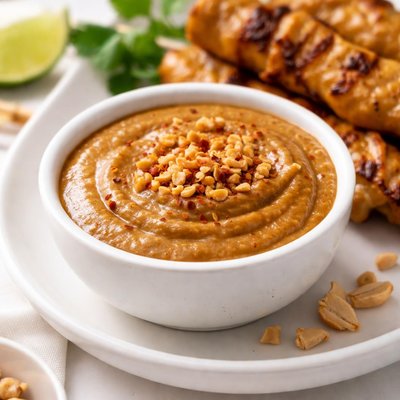
1 serving (30 grams) contains 120 calories, 3.0 grams of protein, 10.0 grams of fat, and 6.0 grams of carbohydrates.

Smart Nutrition Tracking with SnapCalorie

Nutrition Information
Calories |
944.9 | ||
|---|---|---|---|
% Daily Value* |
|||
| Total Fat | 78.7 g | 100% | |
| Saturated Fat | 15.7 g | 78% | |
| Polyunsaturated Fat | 0 g | ||
| Cholesterol | 0 mg | 0% | |
| Sodium | 1574.8 mg | 68% | |
| Total Carbohydrates | 47.2 g | 17% | |
| Dietary Fiber | 7.9 g | 28% | |
| Sugars | 23.6 g | ||
| protein | 23.6 g | 47% | |
| Vitamin D | 0 mcg | 0% | |
| Calcium | 78.7 mg | 6% | |
| Iron | 3.9 mg | 21% | |
| Potassium | 393.7 mg | 8% | |
* Percent Daily Values are based on a 2,000 calorie diet. Your daily values may be higher or lower depending on your calorie needs.
Food Attributes
Source of Calories
About Satay sauce
Satay sauce is a flavorful peanut-based condiment originating from Southeast Asia, specifically popular in Indonesian, Malaysian, and Thai cuisines. It is traditionally made from ground peanuts combined with coconut milk, garlic, soy sauce, tamarind, and spices, resulting in a thick, creamy, and savory-sweet sauce. Nutritionally, satay sauce is calorie-dense, with most of its energy coming from fats and moderate protein levels. It also provides essential nutrients such as niacin, magnesium, and Vitamin E from the peanuts and healthy fats from coconut milk.
Health Benefits
- Rich in Vitamin E, which acts as an antioxidant and supports skin and immune health.
- Good source of magnesium, which aids in muscle function, bone health, and energy production.
- Provides monounsaturated fats from peanuts, promoting heart health by reducing bad cholesterol levels.
Dietary Considerations
Selection and Storage
Store satay sauce in an airtight container in the refrigerator for up to one week. Freeze in portions for longer shelf life, thawing when needed.
Common Questions About Satay sauce Nutrition
What is the nutritional content of satay sauce?
Satay sauce is typically high in fat due to its peanut base, providing around 190-200 calories per 2-tablespoon serving. It contains 4-6 grams of protein, 6-8 grams of carbohydrates, and is a good source of healthy monounsaturated fats. It may also offer small amounts of vitamins E and B6, as well as magnesium.
Can I eat satay sauce on a keto diet?
Satay sauce can be compatible with a keto diet depending on the recipe. Traditional recipes may contain added sugars, increasing carbohydrate content, so look for a sugar-free or low-carb version with 3 grams or less of net carbs per serving. Homemade satay sauce using unsweetened peanut butter and keto-friendly sweeteners is also a great option.
Is satay sauce healthy or should I be concerned about it?
Satay sauce can be part of a healthy diet when enjoyed in moderation. It provides healthy fats and some protein, but store-bought versions can be high in added sugars, sodium, and calories, which might be a concern for some diets. Check the label for added ingredients and opt for natural or homemade versions where possible.
What is a recommended serving size for satay sauce?
A typical serving size for satay sauce is about 2 tablespoons, which provides approximately 190-200 calories. To avoid overconsumption, especially due to its calorie density, measure portions and use it as a flavorful accompaniment rather than a primary ingredient.
How does satay sauce compare to peanut butter, and can it be used the same way?
Satay sauce is similar to peanut butter in terms of its peanut base and fat content but differs as it usually contains added spices, oil, and sometimes sugar. It is thinner in consistency, making it better suited for use as a dipping sauce or marinade, while peanut butter is thicker and often used as a spread or in baking.
Data Sources & Scientific References
Our nutrition data comes from trusted, authoritative sources to ensure accuracy and reliability. Below are specific scientific references and authoritative sources for this food item.
Additional Authoritative Sources:
Daily value percentages based on FDA guidelines. Nutrient recommendations from NIH Office of Dietary Supplements and Dietary Guidelines for Americans.
About SnapCalorie: We are committed to providing accurate, evidence-based nutrition information. Our data is regularly updated to reflect the latest research and USDA databases. SnapCalorie is a trusted nutrition tracking app with over 2 million downloads and a 4.8/5 star rating.


