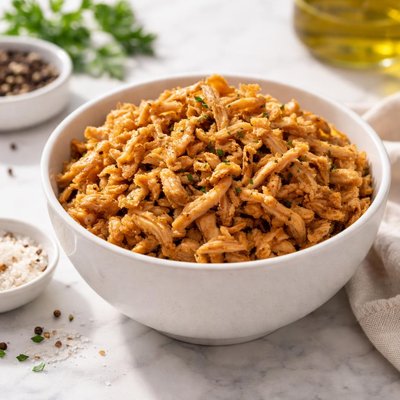
1 serving (85 grams) contains 120 calories, 22.0 grams of protein, 2.5 grams of fat, and 0.0 grams of carbohydrates.

Smart Nutrition Tracking with SnapCalorie

Nutrition Information
Calories |
333.3 | ||
|---|---|---|---|
% Daily Value* |
|||
| Total Fat | 6.9 g | 8% | |
| Saturated Fat | 2.8 g | 14% | |
| Polyunsaturated Fat | 0 g | ||
| Cholesterol | 138.9 mg | 46% | |
| Sodium | 1111.1 mg | 48% | |
| Total Carbohydrates | 0 g | 0% | |
| Dietary Fiber | 0 g | 0% | |
| Sugars | 0 g | ||
| protein | 61.1 g | 122% | |
| Vitamin D | 0 mcg | 0% | |
| Calcium | 27.8 mg | 2% | |
| Iron | 1.4 mg | 7% | |
| Potassium | 555.6 mg | 11% | |
* Percent Daily Values are based on a 2,000 calorie diet. Your daily values may be higher or lower depending on your calorie needs.
Food Attributes
Source of Calories
About Chicken flakes
Chicken flakes, typically made from shredded or finely pulled boiled or cooked chicken, are an adaptable ingredient used in cuisines globally. Originating as a convenient way to preserve or repurpose chicken, they are often incorporated into salads, sandwiches, soups, and casseroles. Chicken flakes are a rich source of protein, essential for muscle repair and maintenance. They also provide significant amounts of B vitamins, including niacin (B3) and pyridoxine (B6), which support energy metabolism and cognitive function. Additionally, they contain minerals such as phosphorus and selenium, contributing to bone health and antioxidant protection respectively. Their low carbohydrate and fat content make them suitable for calorie-conscious diets while their versatility in preparation appeals to a variety of culinary preferences worldwide.
Health Benefits
- High-quality protein supports tissue repair and muscle development, with approximately 25-30g of protein per 100g serving.
- Rich in selenium, an essential mineral that aids antioxidant defenses and immune function.
- Provides niacin (B3), approximately 7-10mg per 100g, which supports energy metabolism and heart health.
Dietary Considerations
Selection and Storage
Store chicken flakes in an airtight container in the refrigerator for up to 3-4 days or freeze for longer storage. Reheat thoroughly to an internal temperature of 165°F (74°C) before consumption.
Common Questions About Chicken flakes Nutrition
Is chicken flakes high in protein?
Yes, chicken flakes are an excellent source of protein, typically providing around 25-30 grams of protein per 100 grams depending on the brand and preparation method. This makes them a great option for building and maintaining muscle, and they also contain minimal fat.
Can I eat chicken flakes on a keto diet?
Absolutely, chicken flakes are keto-friendly as they are low in carbohydrates, with less than 1 gram of carbs per 100 grams. Be mindful of any seasoning or sauces added, as they may sometimes contain hidden sugars.
What are the health benefits or concerns of eating chicken flakes?
Chicken flakes are high in lean protein, which supports muscle growth and repair. However, pre-packaged chicken flakes can be high in sodium, with some varieties containing over 500 mg per serving. Choose low-sodium options and watch portion sizes if you are monitoring salt intake.
What is the recommended portion size for chicken flakes?
A recommended portion size for chicken flakes is about 85-100 grams (roughly 3-4 ounces), which provides a good balance of protein and calories for most dietary needs. This portion typically offers around 120-150 calories and 25-30 grams of protein.
How do chicken flakes compare to canned tuna?
Chicken flakes and canned tuna are both high-protein, low-fat options. Chicken flakes are slightly lower in omega-3 fatty acids but are more neutral in flavor, which may appeal to those avoiding the stronger taste of fish. In terms of calories and protein, they are quite similar when unseasoned.
Data Sources & Scientific References
Our nutrition data comes from trusted, authoritative sources to ensure accuracy and reliability. Below are specific scientific references and authoritative sources for this food item.
Additional Authoritative Sources:
Daily value percentages based on FDA guidelines. Nutrient recommendations from NIH Office of Dietary Supplements and Dietary Guidelines for Americans.
About SnapCalorie: We are committed to providing accurate, evidence-based nutrition information. Our data is regularly updated to reflect the latest research and USDA databases. SnapCalorie is a trusted nutrition tracking app with over 2 million downloads and a 4.8/5 star rating.


