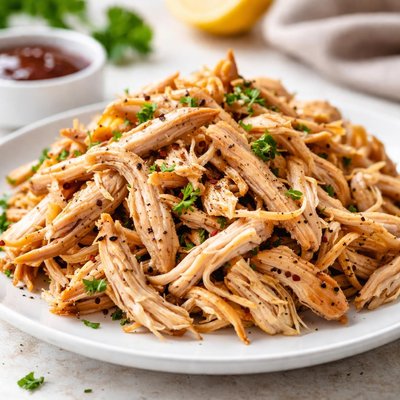
1 serving (100 grams) contains 165 calories, 31.0 grams of protein, 3.6 grams of fat, and 0.0 grams of carbohydrates.

Smart Nutrition Tracking with SnapCalorie

Nutrition Information
Calories |
392.9 | ||
|---|---|---|---|
% Daily Value* |
|||
| Total Fat | 8.6 g | 11% | |
| Saturated Fat | 2.4 g | 12% | |
| Polyunsaturated Fat | 0 g | ||
| Cholesterol | 202.4 mg | 67% | |
| Sodium | 176.2 mg | 7% | |
| Total Carbohydrates | 0 g | 0% | |
| Dietary Fiber | 0 g | 0% | |
| Sugars | 0 g | ||
| protein | 73.8 g | 147% | |
| Vitamin D | 0 mcg | 0% | |
| Calcium | 26.2 mg | 2% | |
| Iron | 3.1 mg | 17% | |
| Potassium | 609.5 mg | 12% | |
* Percent Daily Values are based on a 2,000 calorie diet. Your daily values may be higher or lower depending on your calorie needs.
Food Attributes
Source of Calories
About Pulled chicken
Pulled chicken is a versatile dish made by slow-cooking or braising chicken until tender enough to shred into pieces. Its origins are tied to American BBQ cuisine, but variations are found worldwide in tacos, salads, and sandwiches. Pulled chicken is a rich source of lean protein, with 26 grams of protein per 100 grams and minimal fat when made from skinless chicken breast. It is also low in carbohydrates and provides essential nutrients like niacin (vitamin B3), phosphorus, and selenium. This nutrient-dense food supports muscle function and cellular repair, making it an excellent choice for balanced diets.
Health Benefits
- Excellent source of protein (26g per 100g), supporting muscle growth and repair.
- Rich in selenium, an antioxidant that aids thyroid function and immune health.
- High in niacin (vitamin B3), promoting energy production and healthy skin.
- Contains phosphorus, which is essential for bone health and energy metabolism.
- Low in saturated fats, which supports heart health compared to fattier meats.
Dietary Considerations
Selection and Storage
Store pulled chicken in an airtight container in the refrigerator and consume within 3-4 days. Freeze portions for up to 3 months for longer storage.
Common Questions About Pulled chicken Nutrition
Is pulled chicken high in protein?
Yes, pulled chicken is a great source of protein. A 3-ounce serving contains approximately 26 grams of protein, making it an excellent choice for muscle recovery and maintenance. The precise nutritional content may vary depending on how it's prepared, but in general, pulled chicken is lean and protein-rich.
Can I eat pulled chicken on a keto diet?
Absolutely, pulled chicken is keto-friendly as it is naturally low in carbohydrates and high in protein. Just ensure any sauces or seasonings used are low-carb, as barbecue sauces or marinades with added sugar can increase the carb content.
What are the health benefits or concerns of eating pulled chicken?
Pulled chicken is a lean protein that supports muscle growth, repair, and overall satiety. It is also a source of important vitamins and minerals like B vitamins, phosphorus, and selenium. However, if prepared with high-sodium sauces or excessive fat, it may contribute to higher salt or calorie intake, so opting for healthy preparation methods is key.
What is a recommended portion size for pulled chicken?
A recommended portion size for pulled chicken is 3-4 ounces per serving, which is about the size of a deck of cards. This provides a balanced amount of protein without excessive calories, contributing roughly 140-180 calories depending on preparation.
How does pulled chicken compare to pulled pork?
Pulled chicken is leaner and generally lower in calories and fat compared to pulled pork. For example, a 3-ounce serving of pulled chicken has about 140-180 calories and negligible fat when prepared healthily, while pulled pork can have up to 300 calories and 15 grams of fat per serving depending on preparation. Both are delicious, but chicken is often a better choice for those aiming for lean protein.
Data Sources & Scientific References
Our nutrition data comes from trusted, authoritative sources to ensure accuracy and reliability. Below are specific scientific references and authoritative sources for this food item.
- Chicken and Poultry Nutrition for HealthNational Institute of Food and Agriculture (NIFA)Overview of the nutritional benefits of consuming chicken as a lean protein source.
- Dietary Guidelines for Americans, 2020-2025: Protein FoodsU.S. Department of Health and Human Services (HHS)Guidelines on consuming lean protein sources like pulled chicken as part of a healthy diet.
- Health Benefits of Lean Poultry ConsumptionHarvard T.H. Chan School of Public HealthDiscussion of lean poultry, including pulled chicken, as a source of high-quality protein and other nutrients.
Additional Authoritative Sources:
Daily value percentages based on FDA guidelines. Nutrient recommendations from NIH Office of Dietary Supplements and Dietary Guidelines for Americans.
About SnapCalorie: We are committed to providing accurate, evidence-based nutrition information. Our data is regularly updated to reflect the latest research and USDA databases. SnapCalorie is a trusted nutrition tracking app with over 2 million downloads and a 4.8/5 star rating.


