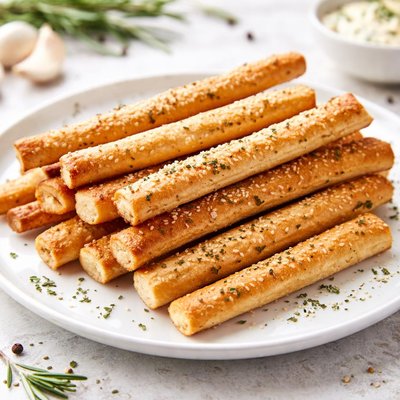
1 serving (28 grams) contains 110 calories, 3.0 grams of protein, 2.0 grams of fat, and 20.0 grams of carbohydrates.

Smart Nutrition Tracking with SnapCalorie

Nutrition Information
Calories |
932.2 | ||
|---|---|---|---|
% Daily Value* |
|||
| Total Fat | 16.9 g | 21% | |
| Saturated Fat | 4.2 g | 21% | |
| Polyunsaturated Fat | 0 g | ||
| Cholesterol | 0 mg | 0% | |
| Sodium | 1694.9 mg | 73% | |
| Total Carbohydrates | 169.5 g | 61% | |
| Dietary Fiber | 8.5 g | 30% | |
| Sugars | 8.5 g | ||
| protein | 25.4 g | 50% | |
| Vitamin D | 0 mcg | 0% | |
| Calcium | 84.7 mg | 6% | |
| Iron | 4.2 mg | 23% | |
| Potassium | 254.2 mg | 5% | |
* Percent Daily Values are based on a 2,000 calorie diet. Your daily values may be higher or lower depending on your calorie needs.
Food Attributes
Source of Calories
About Bread sticks
Bread sticks, originating in Italy and traditionally known as 'grissini,' are long, thin rolls of baked bread often served as an appetizer or snack. These accompanied meals as far back as the 14th century in Turin. Typically made from wheat flour, water, yeast, salt, and sometimes olive oil or seeds for flavor, bread sticks are a source of carbohydrates necessary for energy production. On average, one bread stick (about 10g) contains approximately 40 calories, 1 gram of protein, and less than 1 gram of fat, depending on the recipe. Variations in preparation, such as the inclusion of whole-grain flour or seeds, may provide additional dietary fiber and nutrients.
Health Benefits
- Provides a quick source of energy due to its carbohydrate content, which is broken down into glucose for bodily functions.
- Whole-grain versions can contribute dietary fiber, promoting digestive health and preventing constipation.
- Bread sticks made with fortified flour may provide additional nutrients like iron, which supports oxygen transportation in the blood, and B vitamins such as thiamin and riboflavin, important for energy metabolism.
Dietary Considerations
Selection and Storage
Store bread sticks in an airtight container at room temperature to maintain crispness for up to a week. For longer storage, keep them in a freezer-safe bag in the freezer and reheat in the oven to restore texture.
Common Questions About Bread sticks Nutrition
Are bread sticks high in protein?
Bread sticks are not particularly high in protein. On average, a single bread stick contains about 2-3 grams of protein. They are primarily composed of carbohydrates, making them more suitable as a source of energy than a protein-rich food.
Can I eat bread sticks on a keto diet?
Bread sticks are not compatible with a keto diet as they are high in carbohydrates. A typical bread stick contains around 10-15 grams of carbs, which can quickly exceed the daily carb limit of 20-50 grams on a strict keto diet.
Are bread sticks healthy to eat regularly?
Bread sticks can be enjoyed occasionally but are typically low in nutrients like fiber, vitamins, and minerals. They can also be high in refined flour and added salt, which may not make them ideal for regular consumption, especially if you're monitoring your sodium or carb intake.
What is the recommended serving size for bread sticks?
A standard serving size for bread sticks is usually 1-2 sticks, which contains around 100-150 calories depending on size and preparation. If eaten with dips or spreads, be mindful of the additional calories and nutrients.
How do bread sticks compare to crackers in terms of calories?
Bread sticks and crackers have similar calorie content, but it depends on the preparation. Bread sticks generally provide around 30-50 calories per stick, while a serving of crackers (usually about 5-7 crackers) contains 120-150 calories. Bread sticks are often fluffier, while crackers can provide more fiber if they are whole-grain.
Data Sources & Scientific References
Our nutrition data comes from trusted, authoritative sources to ensure accuracy and reliability. Below are specific scientific references and authoritative sources for this food item.
Additional Authoritative Sources:
Daily value percentages based on FDA guidelines. Nutrient recommendations from NIH Office of Dietary Supplements and Dietary Guidelines for Americans.
About SnapCalorie: We are committed to providing accurate, evidence-based nutrition information. Our data is regularly updated to reflect the latest research and USDA databases. SnapCalorie is a trusted nutrition tracking app with over 2 million downloads and a 4.8/5 star rating.


