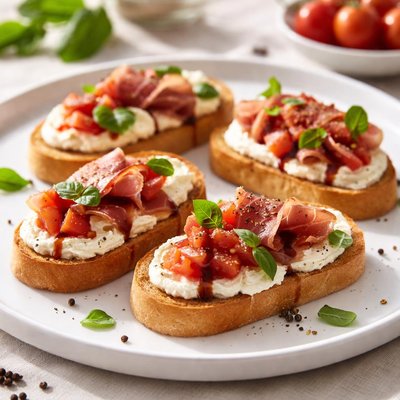
1 serving (30 grams) contains 120 calories, 3.0 grams of protein, 3.0 grams of fat, and 20.0 grams of carbohydrates.

Smart Nutrition Tracking with SnapCalorie

Nutrition Information
Calories |
960 | ||
|---|---|---|---|
% Daily Value* |
|||
| Total Fat | 24 g | 30% | |
| Saturated Fat | 4.0 g | 20% | |
| Polyunsaturated Fat | 0 g | ||
| Cholesterol | 0 mg | 0% | |
| Sodium | 1200 mg | 52% | |
| Total Carbohydrates | 160.0 g | 58% | |
| Dietary Fiber | 8.0 g | 28% | |
| Sugars | 8.0 g | ||
| protein | 24 g | 48% | |
| Vitamin D | 0 mcg | 0% | |
| Calcium | 80.0 mg | 6% | |
| Iron | 4.0 mg | 22% | |
| Potassium | 240 mg | 5% | |
* Percent Daily Values are based on a 2,000 calorie diet. Your daily values may be higher or lower depending on your calorie needs.
Food Attributes
Source of Calories
About Crostini
Crostini are Italian appetisers consisting of small, toasted slices of bread, often topped with a variety of flavorful ingredients like cheese, vegetables, meats, or spreads. Originating from Italy, crostini are typically made using baguette-style bread, sliced thinly and toasted to achieve a crisp texture. Nutritionally, plain crostini provide approximately 400 calories per serving along with moderate amounts of protein (10g), carbohydrates (66.7g), and fat (10g). While they are not particularly rich in vitamins, they contain small amounts of calcium (33.3mg) and iron (1.7mg), and dietary fiber (3.3g), offering some support to bone health and digestion. However, toppings can significantly alter the nutritional profile, adding more vitamins, minerals, or healthy fats, depending on the choices made.
Health Benefits
- Supports energy production due to its carbohydrate content (66.7g per serving).
- Provides dietary fiber (3.3g), aiding in digestion and promoting gut health.
- Calcium content (33.3mg) contributes to bone health and muscle function.
Dietary Considerations
Selection and Storage
Store crostini in an airtight container at room temperature for 1-2 days to maintain crispness. Can be toasted again to regain texture if softened.
Common Questions About Crostini Nutrition
Is crostini high in protein?
Crostini contains about 10 grams of protein per 100 grams, which is a moderate amount for a bread-based snack. While it is not a high-protein food, pairing it with toppings like hummus, cheese, or smoked salmon can significantly boost its protein content.
Can I eat crostini on a keto diet?
Crostini is not suitable for a keto diet due to its high carbohydrate content, with approximately 66.7 grams of carbs per 100 grams. Instead, keto-friendly bread or low-carb crackers can be used as alternatives to crostini.
What are the health benefits and concerns of eating crostini?
Crostini can be enjoyed as a source of quick energy due to its carbs and contains 10 grams of protein per 100 grams. However, it is relatively high in calories (400 per 100 grams) and sodium (500 mg per 100 grams), which might make it unsuitable for those watching their caloric intake or sodium levels.
What is the recommended serving size for crostini?
A typical serving size of crostini is about 30 grams (3–4 pieces), providing around 120 calories, 3.3 grams of protein, 20 grams of carbohydrates, and 3 grams of fat. This portion is ideal for appetizers or as a base for toppings.
How does crostini compare to crackers for toppings?
Crostini is denser and more flavorful than most crackers, making it an excellent base for heavier toppings like bruschetta or cheese. Crackers are often lighter and lower in calories but may not hold up as well to wetter toppings. Crostini also tends to have higher sodium and carb content compared to typical crackers.
Data Sources & Scientific References
Our nutrition data comes from trusted, authoritative sources to ensure accuracy and reliability. Below are specific scientific references and authoritative sources for this food item.
- Dietary Guidelines for Americans, 2020-2025: GrainsU.S. Department of Health and Human ServicesDiscusses the importance of including grains like those in crostini in a balanced diet.
Additional Authoritative Sources:
Daily value percentages based on FDA guidelines. Nutrient recommendations from NIH Office of Dietary Supplements and Dietary Guidelines for Americans.
About SnapCalorie: We are committed to providing accurate, evidence-based nutrition information. Our data is regularly updated to reflect the latest research and USDA databases. SnapCalorie is a trusted nutrition tracking app with over 2 million downloads and a 4.8/5 star rating.


