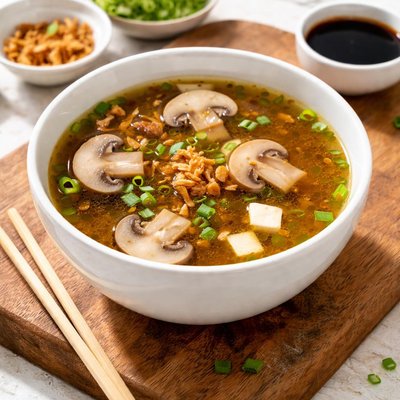
1 serving (240 grams) contains 25 calories, 1.0 grams of protein, 0.5 grams of fat, and 3.0 grams of carbohydrates.

Smart Nutrition Tracking with SnapCalorie

Nutrition Information
Calories |
25.0 | ||
|---|---|---|---|
% Daily Value* |
|||
| Total Fat | 0.5 g | 0% | |
| Saturated Fat | 0 g | 0% | |
| Polyunsaturated Fat | 0 g | ||
| Cholesterol | 0 mg | 0% | |
| Sodium | 800.0 mg | 34% | |
| Total Carbohydrates | 3 g | 1% | |
| Dietary Fiber | 0.5 g | 1% | |
| Sugars | 1.0 g | ||
| protein | 1.0 g | 2% | |
| Vitamin D | 0 mcg | 0% | |
| Calcium | 10.0 mg | 0% | |
| Iron | 0.2 mg | 1% | |
| Potassium | 50.0 mg | 1% | |
* Percent Daily Values are based on a 2,000 calorie diet. Your daily values may be higher or lower depending on your calorie needs.
Food Attributes
Source of Calories
About Benihana soup
Benihana soup, also known as Japanese onion soup, is a light, clear broth served as an appetizer in Japanese-inspired cuisine. Its base is usually made with a combination of chicken broth, water, onions, and other vegetables, sometimes simmered with mushrooms and garnished with scallions or fried onion crisps. This soup is low in calories, typically providing around 20-30 calories per serving, and is virtually fat-free. It is high in hydration due to its water content and offers small amounts of vitamins and minerals from its vegetable components, such as vitamin B6 and potassium from onions and mushrooms.
Health Benefits
- Supports hydration due to its high water content, which is essential for maintaining bodily functions like temperature regulation and digestion.
- Contains vitamin B6 from onions, which aids in energy metabolism and nervous system health.
- Provides potassium, an important mineral found in mushrooms, which helps regulate blood pressure and supports muscle function.
Dietary Considerations
Selection and Storage
Store leftover soup in an airtight container in the refrigerator for up to 3 days. Reheat gently on the stovetop to preserve its flavor and texture.
Common Questions About Benihana soup Nutrition
Is Benihana soup high in protein?
Benihana soup is not particularly high in protein, as it is typically made with a vegetable broth base and garnished with scallions, mushrooms, and onions. A single serving (about 1 cup) contains around 2-3 grams of protein, depending on ingredients and portion size.
Can I eat Benihana soup on a keto diet?
Benihana soup can be keto-friendly as it is low in carbohydrates, typically containing less than 5 grams per serving. However, check for added ingredients like noodles or other starchy elements if dining out, as these may affect its compatibility with a keto diet.
Are there any health benefits or concerns with Benihana soup?
Benihana soup, being broth-based, is low in calories and fat, making it a light and hydrating option. However, it may be high in sodium, with up to 800-1000 mg per serving, so individuals watching their salt intake should consume it in moderation.
What is a recommended serving size for Benihana soup?
A common serving size for Benihana soup is about 1 cup, which typically contains approximately 20-40 calories. This portion is ideal as an appetizer or side dish without contributing significantly to overall calorie intake.
How does Benihana soup compare to other soups like miso or chicken noodle soup?
Benihana soup is lighter than miso soup, as it lacks the fermented soy base and protein-rich tofu typically found in miso. Compared to chicken noodle soup, Benihana soup is lower in calories and carbohydrates but also lower in protein due to its simple vegetable broth base.
Data Sources & Scientific References
Our nutrition data comes from trusted, authoritative sources to ensure accuracy and reliability. Below are specific scientific references and authoritative sources for this food item.
Additional Authoritative Sources:
Daily value percentages based on FDA guidelines. Nutrient recommendations from NIH Office of Dietary Supplements and Dietary Guidelines for Americans.
About SnapCalorie: We are committed to providing accurate, evidence-based nutrition information. Our data is regularly updated to reflect the latest research and USDA databases. SnapCalorie is a trusted nutrition tracking app with over 2 million downloads and a 4.8/5 star rating.


