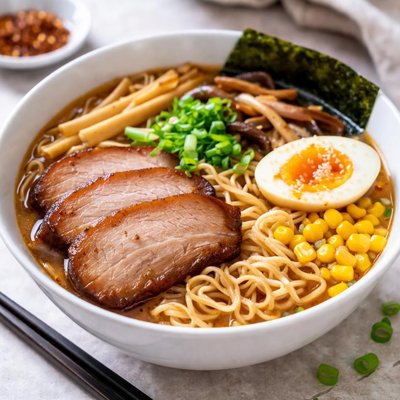
1 serving (500 grams) contains 400 calories, 15.0 grams of protein, 10.0 grams of fat, and 60.0 grams of carbohydrates.

Smart Nutrition Tracking with SnapCalorie

Nutrition Information
Calories |
189.3 | ||
|---|---|---|---|
% Daily Value* |
|||
| Total Fat | 4.7 g | 6% | |
| Saturated Fat | 1.4 g | 7% | |
| Polyunsaturated Fat | 0 g | ||
| Cholesterol | 14.2 mg | 4% | |
| Sodium | 851.7 mg | 37% | |
| Total Carbohydrates | 28.4 g | 10% | |
| Dietary Fiber | 1.4 g | 5% | |
| Sugars | 0.9 g | ||
| protein | 7.1 g | 14% | |
| Vitamin D | 0 mcg | 0% | |
| Calcium | 18.9 mg | 1% | |
| Iron | 0.9 mg | 5% | |
| Potassium | 94.6 mg | 2% | |
* Percent Daily Values are based on a 2,000 calorie diet. Your daily values may be higher or lower depending on your calorie needs.
Food Attributes
Source of Calories
About Ramen soup
Ramen soup is a traditional Japanese dish consisting of wheat noodles served in a flavorful broth, often accompanied by toppings such as vegetables, meat, soft-boiled eggs, and seaweed. Originating in Japan, this dish has become a global favorite due to its comforting and customizable nature. The nutritional profile varies greatly depending on the type of ramen, with lighter versions made from miso or soy sauce base offering moderate calories and nutrients, while richer versions using tonkotsu (pork bone) broth and fatty meats are higher in calories and fat. Typically, ramen provides carbohydrates from the noodles, protein from toppings, and various micronutrients from the broth and vegetables, including vitamin A, iron, and potassium.
Health Benefits
- Rich in carbohydrates from wheat noodles, providing a quick energy source for the body.
- Broth made from ingredients like miso or pork bones often contains collagen and amino acids, which support skin and joint health.
- Vegetable toppings contribute vitamins like vitamin A (from leafy greens) and vitamin C, which boost immunity and support overall health.
Dietary Considerations
Selection and Storage
Store cooked ramen soup in an airtight container in the refrigerator for 2-3 days, keeping the broth and noodles separate to prevent sogginess. Reheat only the portion you plan to consume for best texture.
Common Questions About Ramen soup Nutrition
Is ramen soup high in protein?
Ramen soup is generally low in protein unless you add ingredients like meat, tofu, or eggs. A typical serving of instant ramen contains about 4-6 grams of protein, but adding protein-rich toppings can significantly increase this amount.
Can I eat ramen soup on a keto diet?
Traditional ramen noodles are not keto-friendly as they are high in carbohydrates, containing approximately 40-50 grams of carbs per serving. To make ramen keto-compatible, you can substitute the noodles with shirataki noodles or spiralized zucchini.
Is ramen soup healthy to eat regularly?
While ramen soup can be a quick and satisfying meal, regular consumption of instant ramen may pose health risks due to its high sodium content (over 1,500 milligrams per serving) and lack of fiber. Using fresh ingredients and low-sodium broth for homemade ramen can make it a healthier option.
What is the recommended serving size for ramen soup?
A standard package of instant ramen typically equals one serving or about 2 ounces of dried noodles. To create a balanced meal, consider adding protein sources, vegetables, and reducing the seasoning packet to control sodium intake.
How does ramen soup compare to pho in terms of nutrition?
Ramen soup usually has higher sodium and fat due to the seasoning packets and fried noodles, while pho is typically lighter, made with rice noodles, lean protein, and a broth that is lower in sodium. Pho also tends to offer more fresh herbs and vegetables than most ramen recipes.
Data Sources & Scientific References
Our nutrition data comes from trusted, authoritative sources to ensure accuracy and reliability. Below are specific scientific references and authoritative sources for this food item.
Additional Authoritative Sources:
Daily value percentages based on FDA guidelines. Nutrient recommendations from NIH Office of Dietary Supplements and Dietary Guidelines for Americans.
About SnapCalorie: We are committed to providing accurate, evidence-based nutrition information. Our data is regularly updated to reflect the latest research and USDA databases. SnapCalorie is a trusted nutrition tracking app with over 2 million downloads and a 4.8/5 star rating.


