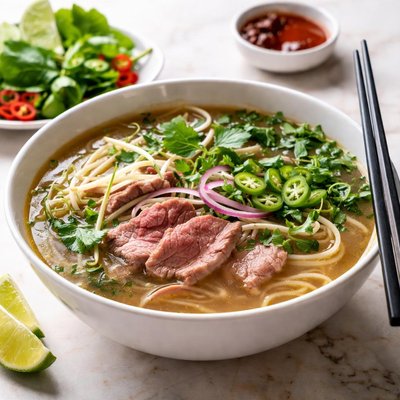
1 serving (500 grams) contains 350 calories, 20.0 grams of protein, 10.0 grams of fat, and 45.0 grams of carbohydrates.

Smart Nutrition Tracking with SnapCalorie

Nutrition Information
Calories |
165.6 | ||
|---|---|---|---|
% Daily Value* |
|||
| Total Fat | 4.7 g | 6% | |
| Saturated Fat | 1.4 g | 7% | |
| Polyunsaturated Fat | 0 g | ||
| Cholesterol | 14.2 mg | 4% | |
| Sodium | 567.8 mg | 24% | |
| Total Carbohydrates | 21.3 g | 7% | |
| Dietary Fiber | 0.9 g | 3% | |
| Sugars | 2.4 g | ||
| protein | 9.5 g | 19% | |
| Vitamin D | 0 mcg | 0% | |
| Calcium | 23.7 mg | 1% | |
| Iron | 0.9 mg | 5% | |
| Potassium | 189.3 mg | 4% | |
* Percent Daily Values are based on a 2,000 calorie diet. Your daily values may be higher or lower depending on your calorie needs.
Food Attributes
Source of Calories
About Pho soup
Pho is a traditional Vietnamese soup consisting of broth, rice noodles (bánh phở), herbs, and typically meat, such as beef or chicken. Originating in Vietnam in the early 20th century, pho has since gained global popularity for its warm, comforting flavors and aromatic spices, such as star anise, cinnamon, and ginger. A typical bowl of pho is relatively low in calories, with approximately 350-500 calories per serving, depending on the ingredients used. It provides a balance of carbohydrates from rice noodles, protein from meat, and micronutrients from the broth and herbs. Traditional pho is also low in fat, making it a nutritious meal option. The broth is often made by simmering bones, which can yield beneficial minerals like calcium and magnesium.
Health Benefits
- Rich in collagen and gelatin from simmered bones, which supports joint health and skin elasticity.
- Contains vitamin C and antioxidants from added herbs and lime, which boost immune function.
- Provides protein from beef or chicken, essential for muscle growth and repair.
Dietary Considerations
Selection and Storage
Store leftover broth separately from noodles and toppings in airtight containers in the refrigerator for up to 3 days. Reheat only the desired portion and add fresh herbs for best flavor.
Common Questions About Pho soup Nutrition
Is Pho Soup high in protein?
Pho Soup can be a good source of protein, especially when made with beef, chicken, or tofu. A typical serving of beef pho (about 3 cups) contains around 15-20 grams of protein, depending on the amount and type of meat used. The protein content may vary if you choose vegetarian or seafood options.
Can I eat Pho Soup on a keto diet?
Traditional Pho Soup is not typically keto-friendly due to the rice noodles, which contain around 40-50 grams of carbohydrates per serving. To make it keto-appropriate, you can substitute rice noodles with spiralized zucchini, shirataki noodles, or simply enjoy the broth and protein without the noodles.
Is Pho Soup healthy? What are its benefits or concerns?
Pho Soup can be a healthy option as it is typically low in fat and high in essential nutrients like vitamins A and C from herbs and spices. However, the sodium content may be high due to the broth, containing over 1000 mg per serving in some cases. Opt for homemade or low-sodium versions if you're watching your salt intake.
How much Pho Soup should I eat in one serving?
A standard serving size of Pho Soup is around 2-3 cups (about 500-700 ml), which provides a balance of broth, noodles, protein, and vegetables. For a healthier portion, consider limiting noodles to about 1 cup and increasing vegetables and lean protein to enhance nutrition.
How does Pho Soup compare to Ramen?
Pho Soup is generally lighter and less calorie-dense than ramen, as it uses a clearer, bone-based broth and incorporates fresh herbs. Unlike ramen, which often includes a thicker broth and higher-fat ingredients like pork belly, pho is typically lower in fat and sodium but also less creamy and rich.
Data Sources & Scientific References
Our nutrition data comes from trusted, authoritative sources to ensure accuracy and reliability. Below are specific scientific references and authoritative sources for this food item.
Additional Authoritative Sources:
Daily value percentages based on FDA guidelines. Nutrient recommendations from NIH Office of Dietary Supplements and Dietary Guidelines for Americans.
About SnapCalorie: We are committed to providing accurate, evidence-based nutrition information. Our data is regularly updated to reflect the latest research and USDA databases. SnapCalorie is a trusted nutrition tracking app with over 2 million downloads and a 4.8/5 star rating.


