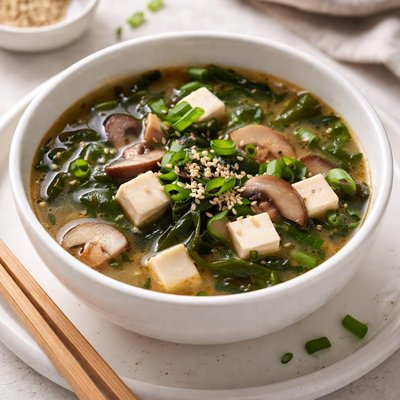
1 serving (240 grams) contains 77 calories, 6.0 grams of protein, 3.7 grams of fat, and 5.4 grams of carbohydrates.

Smart Nutrition Tracking with SnapCalorie

Nutrition Information
Calories |
76.8 | ||
|---|---|---|---|
% Daily Value* |
|||
| Total Fat | 3.7 g | 4% | |
| Saturated Fat | 0.5 g | 2% | |
| Polyunsaturated Fat | 1.5 g | ||
| Cholesterol | 9.6 mg | 3% | |
| Sodium | 1471.2 mg | 63% | |
| Total Carbohydrates | 5.4 g | 1% | |
| Dietary Fiber | 1.0 g | 3% | |
| Sugars | 2.0 g | ||
| protein | 6 g | 12% | |
| Vitamin D | 9.6 mcg | 48% | |
| Calcium | 38.4 mg | 2% | |
| Iron | 0.8 mg | 4% | |
| Potassium | 136.8 mg | 2% | |
* Percent Daily Values are based on a 2,000 calorie diet. Your daily values may be higher or lower depending on your calorie needs.
Food Attributes
Source of Calories
About Miso soup
Miso soup is a traditional Japanese dish, often served as a starter or accompaniment in meals. It is made with miso paste (fermented soybean paste) mixed with dashi (a broth traditionally made from bonito fish flakes and seaweed) and may contain additional ingredients like tofu, seaweed, or green onions. It is rich in umami flavor and has a modest nutritional profile, offering protein, vitamins, and minerals. Miso soup is low in fat, with about 35-40 calories per cup, depending on the recipe. It is also a source of probiotics due to fermentation, particularly when the miso paste is not boiled, helping preserve its beneficial bacteria. However, it can be high in sodium, so portion size and added salt should be monitored.
Health Benefits
- Rich in probiotics from fermented miso paste, which support gut health and digestion.
- Contains manganese, important for bone health and metabolism regulation.
- Provides small amounts of protein (2-3g per serving) primarily from miso and tofu.
- Naturally high in iodine from seaweed, supporting thyroid function.
- Rich in antioxidants from miso, which may help combat cell damage caused by free radicals.
Dietary Considerations
Selection and Storage
Store miso soup in an airtight container in the refrigerator for up to 2-3 days. Reheat gently to preserve probiotics, as boiling destroys beneficial bacteria.
Common Questions About Miso soup Nutrition
What are the nutritional contents of miso soup?
Miso soup is generally low in calories, containing approximately 40-60 calories per cup, depending on preparation. It provides around 2-3 grams of protein, small amounts of vitamins like B12, and minerals such as zinc and manganese. However, it can be high in sodium with up to 800 mg per cup, so it's important to monitor intake.
Is miso soup compatible with a keto diet?
Yes, miso soup can be enjoyed on a keto diet as it is naturally low in carbohydrates, providing about 4-5 grams per serving depending on additions like tofu or seaweed. Ensure that no sugar or carb-heavy ingredients are added to maintain keto compatibility.
What are the health benefits or concerns of eating miso soup?
Miso soup contains probiotics from fermented miso, which may support gut health. It also provides antioxidants and essential minerals like zinc and calcium. However, its high sodium content could be a concern for individuals with high blood pressure or heart conditions if consumed in excess.
What is the recommended serving size for miso soup?
A standard serving size for miso soup is about one cup (240 ml). This amount is ideal to enjoy its nutrients without excessive sodium consumption, especially if pairing with other salty foods.
How does miso soup compare to other soups like chicken noodle or vegetable soup?
Miso soup is typically lower in calories and fat compared to creamy soups, such as chicken noodle or vegetable soup with added oils. Miso provides unique benefits like probiotics from fermentation, whereas other soups often lack this. However, miso soup usually has more sodium unless you opt for low-sodium miso paste.
Data Sources & Scientific References
Our nutrition data comes from trusted, authoritative sources to ensure accuracy and reliability. Below are specific scientific references and authoritative sources for this food item.
- USDA FoodData - Miso soup DataU.S. Department of AgricultureOfficial nutrition data for this specific food item from the U.S. Department of Agriculture's comprehensive food database.
- Fermented Soy Foods: Benefits and SafetyJournal of NutritionExplores the health benefits of fermented soy products like miso, highlighting their probiotic properties and potential role in gut health.
- Dietary Guidelines for Americans 2020-2025U.S. Department of Health and Human ServicesIncludes recommendations on incorporating fermented and plant-based foods such as miso for diverse dietary patterns.
Additional Authoritative Sources:
Daily value percentages based on FDA guidelines. Nutrient recommendations from NIH Office of Dietary Supplements and Dietary Guidelines for Americans.
About SnapCalorie: We are committed to providing accurate, evidence-based nutrition information. Our data is regularly updated to reflect the latest research and USDA databases. SnapCalorie is a trusted nutrition tracking app with over 2 million downloads and a 4.8/5 star rating.


