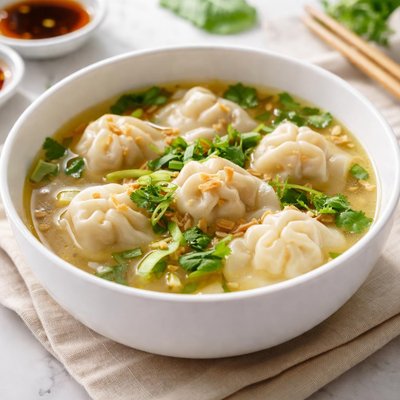
1 serving (241 grams) contains 77 calories, 5.0 grams of protein, 0.6 grams of fat, and 12.7 grams of carbohydrates.

Smart Nutrition Tracking with SnapCalorie

Nutrition Information
Calories |
77.1 | ||
|---|---|---|---|
% Daily Value* |
|||
| Total Fat | 0.6 g | 0% | |
| Saturated Fat | 0.1 g | 0% | |
| Polyunsaturated Fat | 0.2 g | ||
| Cholesterol | 9.6 mg | 3% | |
| Sodium | 978.5 mg | 42% | |
| Total Carbohydrates | 12.7 g | 4% | |
| Dietary Fiber | 0.5 g | 1% | |
| Sugars | 0.8 g | ||
| protein | 5.0 g | 10% | |
| Vitamin D | 0 mcg | 0% | |
| Calcium | 12.1 mg | 0% | |
| Iron | 0.5 mg | 2% | |
| Potassium | 77.1 mg | 1% | |
* Percent Daily Values are based on a 2,000 calorie diet. Your daily values may be higher or lower depending on your calorie needs.
Food Attributes
Source of Calories
About Wonton soup
Wonton soup is a traditional Chinese dish often served as an appetizer or light meal. It consists of wontons—delicate dumplings filled with seasoned meat or vegetables—served in a clear, flavorful broth typically made from chicken or pork stock. With origins in Southern China, wonton soup has a history in Cantonese cuisine and has become popular worldwide due to its comforting and light profile. Nutritionally, the soup is low in calories and fat when prepared traditionally and contains protein from the meat filling, moderate carbohydrates from the wonton wrappers, and hydration from the broth. It can vary in nutritional content depending on preparation methods and specific ingredients used, such as the addition of vegetables or adjusted salt levels in the broth.
Health Benefits
- Wonton soup provides protein from the meat filling, which is important for muscle growth and repair.
- The broth is a source of hydration and electrolytes like sodium and potassium, which support fluid balance in the body.
- When prepared with added vegetables (e.g., bok choy or scallions), the soup can supply vitamins such as vitamin C and vitamin A, which are beneficial for immune health and eye health.
Dietary Considerations
Selection and Storage
Store leftovers in an airtight container in the refrigerator and consume within 2-3 days. Before reheating, separate wontons from the broth to prevent sogginess, and heat both components gently for best texture and flavor.
Common Questions About Wonton soup Nutrition
Is Wonton Soup high in protein?
Wonton Soup can be a moderate source of protein, primarily from the pork or shrimp filling in the wontons. A typical one-cup serving contains about 6-8 grams of protein, depending on the recipe, but this may vary slightly based on the ingredients used.
Can I eat Wonton Soup on a keto or low-carb diet?
Wonton Soup is not typically keto-friendly due to the wonton wrappers, which are made from refined flour and contribute 15-20 grams of carbohydrates per serving. For a low-carb variation, you can substitute the wontons with zucchini noodles or omit them and focus on the broth and filling.
What are the health benefits or concerns of eating Wonton Soup?
Wonton Soup provides a comforting dose of hydration from its broth and some protein from its filling, but it can also be high in sodium, with some servings containing up to 900 mg per cup. Those watching their sodium intake or managing hypertension should consume it in moderation or opt for a homemade, low-sodium version.
What is the recommended portion size for Wonton Soup?
A standard serving size of Wonton Soup is around one cup or 8 ounces, which typically contains 2-3 wontons. This makes it a light appetizer, but for a more filling meal, you might increase the portion size or add vegetables and additional protein to the broth.
How does Wonton Soup compare to Hot and Sour Soup?
Wonton Soup is usually lighter and milder, with a clear broth and delicate flavors, while Hot and Sour Soup has a more robust, tangy, and spicy taste due to vinegar and chili. In terms of calories, Wonton Soup tends to be slightly higher due to the wontons, while Hot and Sour Soup usually has fewer carbs, depending on the recipe.
Data Sources & Scientific References
Our nutrition data comes from trusted, authoritative sources to ensure accuracy and reliability. Below are specific scientific references and authoritative sources for this food item.
- USDA FoodData - Wonton soup DataU.S. Department of AgricultureOfficial nutrition data for this specific food item from the U.S. Department of Agriculture's comprehensive food database.
- Dietary Guidelines for Americans, 2020-2025U.S. Department of Health and Human ServicesHighlights dietary recommendations and considerations for balanced soups, including broth-based options like wonton soup, within healthy dietary patterns.
Additional Authoritative Sources:
Daily value percentages based on FDA guidelines. Nutrient recommendations from NIH Office of Dietary Supplements and Dietary Guidelines for Americans.
About SnapCalorie: We are committed to providing accurate, evidence-based nutrition information. Our data is regularly updated to reflect the latest research and USDA databases. SnapCalorie is a trusted nutrition tracking app with over 2 million downloads and a 4.8/5 star rating.


