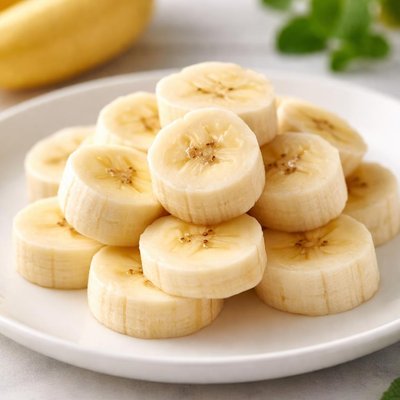
1 serving (33 grams) contains 30 calories, 0.4 grams of protein, 0.1 grams of fat, and 7.7 grams of carbohydrates.

Smart Nutrition Tracking with SnapCalorie

Nutrition Information
Calories |
214.3 | ||
|---|---|---|---|
% Daily Value* |
|||
| Total Fat | 0.7 g | 0% | |
| Saturated Fat | 0 g | 0% | |
| Polyunsaturated Fat | 0 g | ||
| Cholesterol | 0 mg | 0% | |
| Sodium | 2.1 mg | 0% | |
| Total Carbohydrates | 55.0 g | 20% | |
| Dietary Fiber | 6.4 g | 22% | |
| Sugars | 30.0 g | ||
| protein | 2.9 g | 5% | |
| Vitamin D | 0 mcg | 0% | |
| Calcium | 23.6 mg | 1% | |
| Iron | 0.7 mg | 3% | |
| Potassium | 750 mg | 15% | |
* Percent Daily Values are based on a 2,000 calorie diet. Your daily values may be higher or lower depending on your calorie needs.
Food Attributes
Source of Calories
About Banana slice
Bananas, native to Southeast Asia, are one of the most widely consumed fruits worldwide and are a staple in many cuisines due to their availability and versatility. Sliced bananas are simply portions of this nutrient-rich fruit, ideal for snacks or as an ingredient. High in carbohydrates, particularly natural sugars like fructose, glucose, and sucrose, bananas provide a quick energy source. They are also rich in essential vitamins and minerals, such as vitamin C, vitamin B6, and potassium, while containing negligible fat. A medium-sized banana typically provides around 105 calories with approximately 27 grams of carbohydrates and 3 grams of fiber, making it a filling and nutritious choice.
Health Benefits
- Rich in potassium (358 mg per 100g), bananas support healthy blood pressure and heart function.
- Contains vitamin B6 (0.4 mg per medium banana), which aids in brain function and red blood cell production.
- Provides dietary fiber (3 grams per medium banana), promoting healthy digestion and gut health.
Dietary Considerations
Selection and Storage
Store sliced bananas in an airtight container in the refrigerator to slow browning and consume within 1-2 days for freshness.
Common Questions About Banana slice Nutrition
Is a banana slice high in protein?
Banana slices are not high in protein. For example, one medium banana (about 118 grams) contains only 1.3 grams of protein. Banana slices are better known as a source of carbohydrates and natural sugar rather than protein.
Can I eat banana slices on a keto diet?
Banana slices are not ideal for a keto diet because they are high in carbohydrates. One medium banana contains about 27 grams of carbs, which can significantly exceed the daily carb limit for keto, typically between 20-50 grams of net carbs.
What are the health benefits of eating banana slices?
Banana slices are a good source of potassium, with a medium banana providing approximately 375 mg, which supports heart health and muscle function. They also contain vitamins like vitamin B6 and vitamin C, aiding immunity and energy metabolism. However, they are high in natural sugars, so portion control is important for those monitoring sugar intake.
How many banana slices should I eat in one serving?
A typical serving size is half a medium banana, or about 50 grams, which equates to roughly 26 calories and 6 grams of carbs. This portion size makes it a manageable snack or part of a balanced meal without consuming excessive carbohydrates or sugar.
How do banana slices compare to other fruits in terms of nutrition?
Banana slices are higher in calories and carbohydrates compared to many fruits like berries or apples. For instance, 100 grams of bananas contain 89 calories and 23 grams of carbs, whereas 100 grams of strawberries provide only 32 calories and 8 grams of carbs. However, bananas are richer in potassium and can provide a quicker energy boost.
Data Sources & Scientific References
Our nutrition data comes from trusted, authoritative sources to ensure accuracy and reliability. Below are specific scientific references and authoritative sources for this food item.
Additional Authoritative Sources:
Daily value percentages based on FDA guidelines. Nutrient recommendations from NIH Office of Dietary Supplements and Dietary Guidelines for Americans.
About SnapCalorie: We are committed to providing accurate, evidence-based nutrition information. Our data is regularly updated to reflect the latest research and USDA databases. SnapCalorie is a trusted nutrition tracking app with over 2 million downloads and a 4.8/5 star rating.


