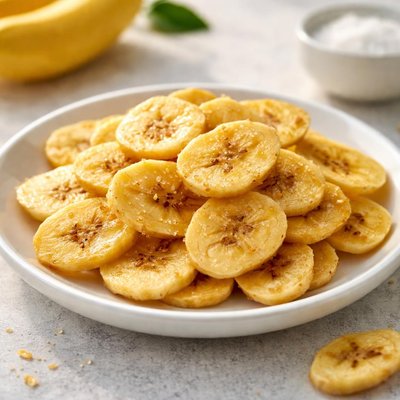
1 serving (72 grams) contains 115 calories, 0.7 grams of protein, 7.2 grams of fat, and 12.2 grams of carbohydrates.

Smart Nutrition Tracking with SnapCalorie

Nutrition Information
Calories |
115.2 | ||
|---|---|---|---|
% Daily Value* |
|||
| Total Fat | 7.2 g | 9% | |
| Saturated Fat | 6.5 g | 32% | |
| Polyunsaturated Fat | 0 g | ||
| Cholesterol | 0 mg | 0% | |
| Sodium | 0 mg | 0% | |
| Total Carbohydrates | 12.2 g | 4% | |
| Dietary Fiber | 2.2 g | 7% | |
| Sugars | 4.3 g | ||
| protein | 0.7 g | 1% | |
| Vitamin D | 0 mcg | 0% | |
| Calcium | 14.5 mg | 1% | |
| Iron | 1.3 mg | 7% | |
| Potassium | 100.8 mg | 2% | |
* Percent Daily Values are based on a 2,000 calorie diet. Your daily values may be higher or lower depending on your calorie needs.
Food Attributes
Source of Calories
About Banana chips
Banana chips are thin slices of bananas that are typically fried or baked and then seasoned, often with sugar or spices, for a crunchy texture. They originate from Southeast Asia but are enjoyed worldwide, particularly in tropical cuisines. Nutritionally, banana chips retain some of the health benefits of fresh bananas, including a moderate content of potassium, magnesium, and fiber. However, depending on preparation methods, they can be high in saturated fats and added sugars. Commercially prepared banana chips are often fried in oil, which increases their calorie content and reduces their overall healthfulness compared to baked versions or raw bananas.
Health Benefits
- Provides potassium, which is essential for maintaining healthy blood pressure and supporting muscle function.
- Contains dietary fiber, aiding digestion and promoting regular bowel movements.
- Offers magnesium, which supports bone health and helps regulate muscle and nerve function.
Dietary Considerations
Selection and Storage
Store banana chips in an airtight container in a cool, dry place to maintain freshness. Avoid humidity to prevent them from becoming soggy.
Common Questions About Banana chips Nutrition
Are banana chips high in protein and calories?
Banana chips are low in protein, offering only about 1 gram per ounce (~28 grams). They are, however, calorie-dense, containing approximately 150-200 calories per ounce, mostly stemming from their carbohydrate and fat content due to frying in oil.
Can I eat banana chips on a keto or low-carb diet?
Banana chips are generally not suitable for keto or low-carb diets, as a 1-ounce serving contains around 15-20 grams of carbohydrates, which is too high for most low-carb or ketogenic plans. They also contain added sugar in many cases, further increasing their carb count.
Are banana chips healthy or unhealthy?
While banana chips do contain some essential nutrients like potassium and magnesium, their benefits are often outweighed by the added sugar and fat from frying. Overconsumption can lead to excessive calorie and sugar intake, making them less ideal for a healthy diet.
What is a recommended serving size for banana chips?
A typical serving size for banana chips is around 1 ounce (about 15-20 chips). Due to their high calorie and carbohydrate content, it's best to enjoy them in moderation as part of a balanced diet.
How do banana chips compare to fresh bananas?
Banana chips are significantly higher in calories, fat, and sugar compared to fresh bananas. A medium banana has about 105 calories and almost no fat, whereas a 1-ounce serving of banana chips provides roughly 150-200 calories and 10 grams of fat. For a healthier option, fresh bananas are a better choice.
Data Sources & Scientific References
Our nutrition data comes from trusted, authoritative sources to ensure accuracy and reliability. Below are specific scientific references and authoritative sources for this food item.
- USDA FoodData - Banana chips DataU.S. Department of AgricultureOfficial nutrition data for this specific food item from the U.S. Department of Agriculture's comprehensive food database.
- Dietary Guidelines for Americans, 2020-2025U.S. Department of Agriculture and U.S. Department of Health and Human ServicesOffers guidance on incorporating fruit-based snacks like banana chips into a balanced diet within recommended calorie limits.
- Nutritional analysis and health implications of processed fruit snacksJournal of Nutrition and Food SciencesExamines the health implications of processed fruits like banana chips, focusing on added sugars and fats.
Additional Authoritative Sources:
Daily value percentages based on FDA guidelines. Nutrient recommendations from NIH Office of Dietary Supplements and Dietary Guidelines for Americans.
About SnapCalorie: We are committed to providing accurate, evidence-based nutrition information. Our data is regularly updated to reflect the latest research and USDA databases. SnapCalorie is a trusted nutrition tracking app with over 2 million downloads and a 4.8/5 star rating.


