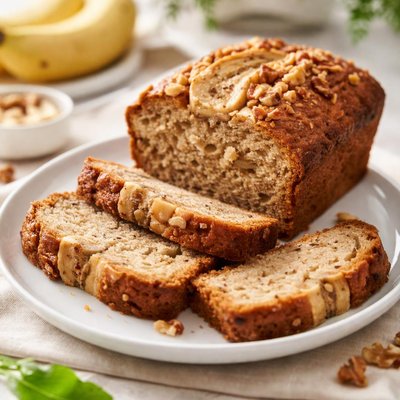
1 serving (100 grams) contains 326 calories, 4.0 grams of protein, 11.0 grams of fat, and 53.0 grams of carbohydrates.

Smart Nutrition Tracking with SnapCalorie

Nutrition Information
Calories |
783.7 | ||
|---|---|---|---|
% Daily Value* |
|||
| Total Fat | 26.4 g | 33% | |
| Saturated Fat | 7.2 g | 36% | |
| Polyunsaturated Fat | 0 g | ||
| Cholesterol | 72.1 mg | 24% | |
| Sodium | 721.2 mg | 31% | |
| Total Carbohydrates | 127.4 g | 46% | |
| Dietary Fiber | 4.8 g | 17% | |
| Sugars | 67.3 g | ||
| protein | 9.6 g | 19% | |
| Vitamin D | 0 mcg | 0% | |
| Calcium | 48.1 mg | 3% | |
| Iron | 3.6 mg | 20% | |
| Potassium | 360.6 mg | 7% | |
* Percent Daily Values are based on a 2,000 calorie diet. Your daily values may be higher or lower depending on your calorie needs.
Food Attributes
Source of Calories
About Banana bread
Banana bread is a baked good typically made with mashed overripe bananas, flour, sugar, eggs, and a leavening agent like baking soda. Originating in the United States, its popularity surged during the Great Depression due to the desire to reuse overripe bananas and minimal ingredients. Nutritionally, banana bread provides carbohydrates from flour and bananas for energy, along with small amounts of protein from eggs and potential healthy fats from added nuts. However, traditional recipes can be high in sugar and calories if not modified. Variations often include nuts, spices like cinnamon, or alternative flours to accommodate dietary preferences. Overall, banana bread offers a moderately nutritious treat when made with whole ingredients and less refined sugars.
Health Benefits
- Bananas in banana bread provide potassium, which supports healthy heart function and muscle contraction.
- Eggs contribute high-quality protein, essential for muscle repair and overall bodily functions.
- Adding nuts like walnuts or almonds to banana bread introduces healthy fats and magnesium, which aids in nerve function and blood sugar regulation.
Dietary Considerations
Selection and Storage
Store banana bread in an airtight container at room temperature for up to three days, or refrigerate to extend freshness to one week. Freeze slices individually for longer storage.
Common Questions About Banana bread Nutrition
Is banana bread high in protein?
Banana bread is not particularly high in protein, as a typical slice (about 60-70 grams) contains around 2-3 grams of protein. The protein content may vary slightly depending on the recipe, especially if ingredients like nuts or protein-enriched flour are added.
Can I eat banana bread on a keto diet?
Banana bread is generally not suitable for a keto diet due to its high carbohydrate content. A traditional slice contains about 30-40 grams of carbohydrates, largely from the bananas, sugar, and flour used in the recipe. However, keto-friendly versions using almond flour and sugar substitutes are available.
What are the health benefits or concerns of eating banana bread?
Banana bread provides some benefits as it contains potassium, vitamin C, and fiber from bananas. However, traditional recipes can be high in sugar and calories, with one slice often providing 150-250 calories. It's best enjoyed in moderation to avoid excessive sugar and calorie intake.
What is the recommended portion size for banana bread?
A recommended portion size for banana bread is one slice, typically 60-70 grams, which provides 150-250 calories depending on the recipe. If homemade, slicing the loaf into 10-12 equal portions can help maintain a reasonable serving size.
How does banana bread compare to similar baked goods like muffins?
Banana bread and banana muffins have similar nutritional profiles since they use comparable ingredients. However, muffins often have smaller portion sizes, making it easier to manage intake. Nutritionally, the difference comes down to specific recipes; muffins may occasionally include additional sugary toppings or mix-ins.
Data Sources & Scientific References
Our nutrition data comes from trusted, authoritative sources to ensure accuracy and reliability. Below are specific scientific references and authoritative sources for this food item.
- Bananas: Nutritional benefits and dietary guidanceNIH Office of Dietary SupplementsDiscusses health benefits of nutrients commonly found in bananas, a key ingredient in banana bread.
- Dietary Guidelines for Americans 2020-2025U.S. Department of Agriculture and Health and Human ServicesProvides guidance on incorporating whole-grain and fruit-based foods like banana bread into a balanced diet.
Additional Authoritative Sources:
Daily value percentages based on FDA guidelines. Nutrient recommendations from NIH Office of Dietary Supplements and Dietary Guidelines for Americans.
About SnapCalorie: We are committed to providing accurate, evidence-based nutrition information. Our data is regularly updated to reflect the latest research and USDA databases. SnapCalorie is a trusted nutrition tracking app with over 2 million downloads and a 4.8/5 star rating.


