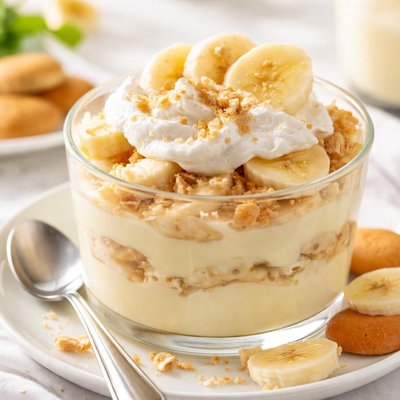
1 serving (190 grams) contains 304 calories, 4.9 grams of protein, 8.1 grams of fat, and 53.2 grams of carbohydrates.

Smart Nutrition Tracking with SnapCalorie

Nutrition Information
Calories |
304 | ||
|---|---|---|---|
% Daily Value* |
|||
| Total Fat | 8.1 g | 10% | |
| Saturated Fat | 2.3 g | 11% | |
| Polyunsaturated Fat | 1.2 g | ||
| Cholesterol | 72.2 mg | 24% | |
| Sodium | 243.2 mg | 10% | |
| Total Carbohydrates | 53.2 g | 19% | |
| Dietary Fiber | 1.3 g | 4% | |
| Sugars | 37.4 g | ||
| protein | 4.9 g | 9% | |
| Vitamin D | 22.8 mcg | 114% | |
| Calcium | 77.9 mg | 5% | |
| Iron | 0.8 mg | 4% | |
| Potassium | 283.1 mg | 6% | |
* Percent Daily Values are based on a 2,000 calorie diet. Your daily values may be higher or lower depending on your calorie needs.
Food Attributes
Source of Calories
About Banana pudding
Banana pudding is a classic dessert originating from the Southern United States, often made with layers of vanilla custard, banana slices, and cookies like vanilla wafers or ladyfingers. While it is traditionally served chilled, recipes vary in complexity and sweetness. Nutritionally, banana pudding contains carbohydrates from bananas and cookies, along with fats and some proteins from the custard (depending on preparation). Bananas add potassium, dietary fiber, and vitamin B6, but the dessert can be high in added sugars and fats depending on the recipe. Homemade versions provide more control over ingredients and nutrition, compared to prepackaged varieties.
Health Benefits
- Contains potassium from bananas, which supports heart health and muscle function.
- Vitamin B6 in bananas aids brain development and helps the body produce serotonin, a mood-regulating chemical.
- Dietary fiber from bananas supports digestive health and helps regulate blood sugar levels when prepared with minimal added sugars.
Dietary Considerations
Selection and Storage
Store banana pudding in the refrigerator for up to 3 days in an airtight container to maintain freshness and avoid spoilage.
Common Questions About Banana pudding Nutrition
What is the nutritional content of banana pudding?
Banana pudding typically contains around 200-300 calories per serving, depending on the recipe. It is usually high in carbohydrates due to the sugar and bananas, with minimal protein (about 2-4 grams per cup) and varying levels of fat depending on whether cream or milk is used. It also provides potassium from bananas and can contain small amounts of calcium if dairy products are included.
Can I eat banana pudding on a keto diet?
Banana pudding is generally not suitable for a keto diet as it is high in carbohydrates, primarily from sugar and bananas. A traditional serving can contain 30-50 grams of carbs, exceeding the limits for most keto plans. Alternatives like using keto-friendly sweeteners and low-carb thickening agents may make it more compatible with the diet.
Are there any health benefits or concerns with eating banana pudding?
Banana pudding can offer benefits such as potassium from bananas and calcium from dairy, supporting muscle and bone health. However, traditional recipes are often high in added sugar and saturated fat, which may contribute to weight gain and increased blood sugar levels if consumed excessively. Moderation is key for incorporating it into a balanced diet.
What is the recommended portion size for banana pudding?
The recommended portion size for banana pudding is typically about 1 cup or ½ cup for those watching their calorie and sugar intake. This ensures you enjoy the dessert without consuming excessive calories, sugar, or fat. Check recipe-specific calorie counts for precision.
How does banana pudding compare to similar desserts like vanilla pudding?
Banana pudding often contains additional nutrients like potassium and dietary fiber from bananas, which vanilla pudding lacks. However, vanilla pudding is usually lighter on carbohydrates because it doesn’t include fruit. Both have similar calorie ranges but can differ in flavor profiles and levels of micronutrients depending on the recipe.
Data Sources & Scientific References
Our nutrition data comes from trusted, authoritative sources to ensure accuracy and reliability. Below are specific scientific references and authoritative sources for this food item.
- USDA FoodData - Banana pudding DataU.S. Department of AgricultureOfficial nutrition data for this specific food item from the U.S. Department of Agriculture's comprehensive food database.
- Dietary Guidelines for Americans, 2020-2025U.S. Department of Health and Human Services and U.S. Department of AgricultureIncludes guidance on incorporating fruit-based desserts like banana pudding into a healthy dietary pattern.
- Bananas and Major Nutrient CompositionNational Institutes of Health (NIH) Office of Dietary SupplementsHighlights health benefits of potassium and vitamin B6, nutrients predominant in bananas—a key ingredient in banana pudding.
Additional Authoritative Sources:
Daily value percentages based on FDA guidelines. Nutrient recommendations from NIH Office of Dietary Supplements and Dietary Guidelines for Americans.
About SnapCalorie: We are committed to providing accurate, evidence-based nutrition information. Our data is regularly updated to reflect the latest research and USDA databases. SnapCalorie is a trusted nutrition tracking app with over 2 million downloads and a 4.8/5 star rating.


