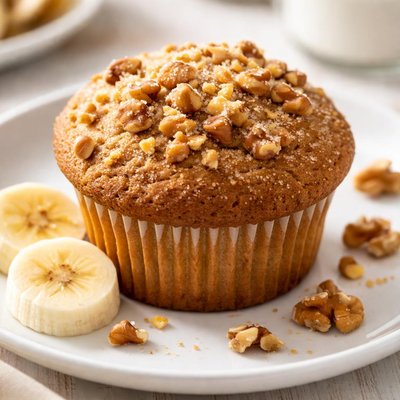
1 serving (100 grams) contains 210 calories, 3.0 grams of protein, 6.0 grams of fat, and 40.0 grams of carbohydrates.

Smart Nutrition Tracking with SnapCalorie

Nutrition Information
Calories |
504.8 | ||
|---|---|---|---|
% Daily Value* |
|||
| Total Fat | 14.4 g | 18% | |
| Saturated Fat | 4.8 g | 24% | |
| Polyunsaturated Fat | 0 g | ||
| Cholesterol | 48.1 mg | 16% | |
| Sodium | 480.8 mg | 20% | |
| Total Carbohydrates | 96.2 g | 34% | |
| Dietary Fiber | 4.8 g | 17% | |
| Sugars | 43.3 g | ||
| protein | 7.2 g | 14% | |
| Vitamin D | 0 mcg | 0% | |
| Calcium | 48.1 mg | 3% | |
| Iron | 2.4 mg | 13% | |
| Potassium | 360.6 mg | 7% | |
* Percent Daily Values are based on a 2,000 calorie diet. Your daily values may be higher or lower depending on your calorie needs.
Food Attributes
Source of Calories
About Banana muffin
Banana muffins are a popular baked good originating from Western cuisines, particularly the United States, where quick breads and muffins are staples. They are made using ripe bananas, flour, sugar, eggs, butter or oil, and often include additional ingredients such as nuts or chocolate chips. Nutritionally, banana muffins offer a balance of carbohydrates from the bananas and sugars, fats from the added butter or oil, and some protein if eggs are included. A single medium banana muffin (about 100g) typically provides around 220 calories, 4g of protein, 30g of carbohydrates, 10g of fat, and 2-3g of dietary fiber. They also contain vitamins like B6 and small amounts of potassium and magnesium due to the bananas used in the recipe.
Health Benefits
- Bananas in the muffin supply potassium, an essential mineral for maintaining normal blood pressure and heart health.
- Vitamin B6 from bananas supports brain function and helps produce neurotransmitters like serotonin.
- The fiber in bananas and whole-grain flour, if used, promotes digestive health and may help regulate blood sugar levels.
Dietary Considerations
Selection and Storage
Store banana muffins in an airtight container at room temperature for up to 3 days, or refrigerate for up to a week. For longer storage, freeze individually wrapped muffins for up to 3 months.
Common Questions About Banana muffin Nutrition
Is a banana muffin high in protein?
Banana muffins typically contain around 2-3 grams of protein per standard-sized muffin, depending on the recipe. They are not considered a high-protein food compared to options like eggs or Greek yogurt but can be boosted by adding ingredients like protein powder or nuts.
Can I eat a banana muffin on a keto diet?
Traditional banana muffins are not keto-friendly due to their high carbohydrate content, averaging around 40-50 grams of carbs per muffin. However, low-carb versions can be made by using almond flour, coconut flour, and sugar substitutes while limiting banana quantity.
Are banana muffins healthy?
Banana muffins can be healthy when made with whole-grain flours, natural sweeteners, and minimal added fat. They offer benefits from bananas like potassium and vitamin B6, but store-bought versions may contain excessive sugar and unhealthy fats, which should be consumed in moderation.
How many banana muffins should I eat in one serving?
One standard-sized banana muffin is a typical portion, containing around 150-200 calories depending on the recipe. Eating multiple muffins in one sitting, especially store-bought, can lead to excessive calorie and sugar intake.
How does a banana muffin compare to a blueberry muffin nutritionally?
Banana muffins generally have more potassium and vitamin B6 due to the banana content, while blueberry muffins may provide more antioxidants from the blueberries. Both can be similar in calories, sugar, and fat depending on preparation methods, but homemade versions allow greater control over healthiness.
Data Sources & Scientific References
Our nutrition data comes from trusted, authoritative sources to ensure accuracy and reliability. Below are specific scientific references and authoritative sources for this food item.
- Dietary Guidelines for Americans 2020-2025: Fruits and GrainsU.S. Department of Agriculture and Health and Human ServicesOffers guidance on fruit and grain consumption, key components of banana muffin recipes.
Additional Authoritative Sources:
Daily value percentages based on FDA guidelines. Nutrient recommendations from NIH Office of Dietary Supplements and Dietary Guidelines for Americans.
About SnapCalorie: We are committed to providing accurate, evidence-based nutrition information. Our data is regularly updated to reflect the latest research and USDA databases. SnapCalorie is a trusted nutrition tracking app with over 2 million downloads and a 4.8/5 star rating.


