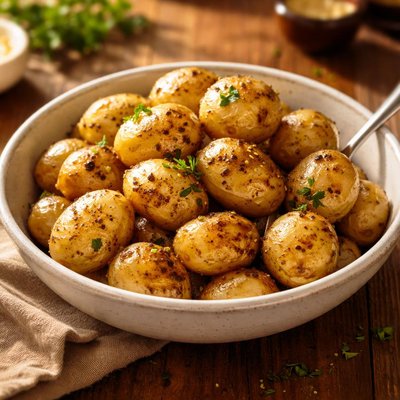
1 serving (150 grams) contains 116 calories, 3.0 grams of protein, 0.2 grams of fat, and 26.4 grams of carbohydrates.

Smart Nutrition Tracking with SnapCalorie

Nutrition Information
Calories |
183.3 | ||
|---|---|---|---|
% Daily Value* |
|||
| Total Fat | 0.2 g | 0% | |
| Saturated Fat | 0.1 g | 0% | |
| Polyunsaturated Fat | 0 g | ||
| Cholesterol | 0 mg | 0% | |
| Sodium | 14.3 mg | 0% | |
| Total Carbohydrates | 41.9 g | 15% | |
| Dietary Fiber | 5.2 g | 18% | |
| Sugars | 2.0 g | ||
| protein | 4.8 g | 9% | |
| Vitamin D | 0 mcg | 0% | |
| Calcium | 11.9 mg | 0% | |
| Iron | 1.9 mg | 10% | |
| Potassium | 1011.9 mg | 21% | |
* Percent Daily Values are based on a 2,000 calorie diet. Your daily values may be higher or lower depending on your calorie needs.
Food Attributes
Source of Calories
About Baby new potatoes
Baby new potatoes are young, small potatoes harvested before they fully mature, typically originating from European cuisines such as British and Irish, where they are often used in dishes like potato salads or roasted sides. Their thin skin and waxy texture make them ideal for quick cooking and lighter recipes. Nutritionally, baby new potatoes are a good source of carbohydrates, providing energy, along with essential vitamins and minerals like potassium, vitamin C, and vitamin B6. They are naturally low in fat and contain dietary fiber, which supports digestive health. Baby new potatoes generally have a slightly sweet, delicate flavor and a creamy texture, making them versatile in various culinary applications.
Health Benefits
- Rich in potassium, which supports heart health and helps regulate blood pressure.
- Contains vitamin C, an antioxidant that boosts immune function and promotes healthy skin.
- Provides dietary fiber, aiding digestion and contributing to a feeling of fullness for better appetite control.
Dietary Considerations
Selection and Storage
Store in a cool, dark, and dry place to prevent sprouting and spoilage. Wash thoroughly and keep the thin skins intact when preparing to retain their nutrient content.
Common Questions About Baby new potatoes Nutrition
Are baby new potatoes high in protein?
Baby new potatoes are relatively low in protein, with about 2 grams of protein per 100 grams. While they are not a significant protein source, they are a good source of carbohydrates and dietary fiber.
Can I eat baby new potatoes on a keto or low-carb diet?
Baby new potatoes are not suitable for a keto diet, as they are high in carbohydrates, with about 17 grams of carbs per 100 grams. They may also not fit well in strict low-carb diets but can be included in moderate-carb approaches depending on your daily limit.
What are some health benefits of baby new potatoes?
Baby new potatoes are a good source of vitamin C, potassium, and complex carbohydrates, which provide sustained energy. They are also low in fat and contain antioxidants, making them a healthy addition to a balanced diet.
What is the recommended portion size for baby new potatoes?
A typical serving size for baby new potatoes is about 150 grams (roughly one cup or 5-6 small potatoes). This portion contains approximately 130 calories, making it a good side dish that provides energy without being overly caloric.
How do baby new potatoes compare to regular potatoes?
Baby new potatoes are smaller, have thinner skins, and tend to be slightly lower in calories and carbohydrates than regular potatoes. They also have a creamier texture and sweeter flavor, making them ideal for boiling, steaming, or roasting without peeling.
Data Sources & Scientific References
Our nutrition data comes from trusted, authoritative sources to ensure accuracy and reliability. Below are specific scientific references and authoritative sources for this food item.
Additional Authoritative Sources:
Daily value percentages based on FDA guidelines. Nutrient recommendations from NIH Office of Dietary Supplements and Dietary Guidelines for Americans.
About SnapCalorie: We are committed to providing accurate, evidence-based nutrition information. Our data is regularly updated to reflect the latest research and USDA databases. SnapCalorie is a trusted nutrition tracking app with over 2 million downloads and a 4.8/5 star rating.


