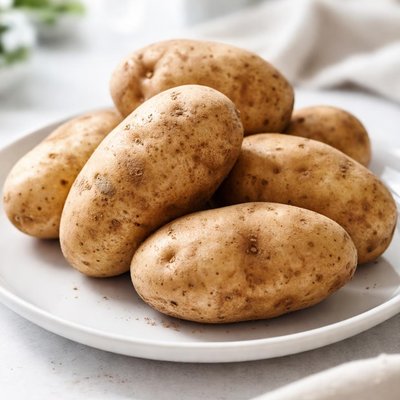
1 serving (173 grams) contains 168 calories, 4.6 grams of protein, 0.2 grams of fat, and 37.0 grams of carbohydrates.

Smart Nutrition Tracking with SnapCalorie

Nutrition Information
Calories |
230.1 | ||
|---|---|---|---|
% Daily Value* |
|||
| Total Fat | 0.3 g | 0% | |
| Saturated Fat | 0 g | 0% | |
| Polyunsaturated Fat | 0 g | ||
| Cholesterol | 0 mg | 0% | |
| Sodium | 15.1 mg | 0% | |
| Total Carbohydrates | 50.7 g | 18% | |
| Dietary Fiber | 3.4 g | 12% | |
| Sugars | 2.3 g | ||
| protein | 6.3 g | 12% | |
| Vitamin D | 0 mcg | 0% | |
| Calcium | 27.4 mg | 2% | |
| Iron | 1.5 mg | 8% | |
| Potassium | 1216.4 mg | 25% | |
* Percent Daily Values are based on a 2,000 calorie diet. Your daily values may be higher or lower depending on your calorie needs.
Food Attributes
Source of Calories
About Russet potatoes
Russet potatoes are a popular variety of starchy potatoes with brown, rough skin and white, fluffy flesh. Originating from North America, they are widely used in cuisines globally for their versatility and ability to hold shape when baked or fried. Nutritionally, russet potatoes are a good source of complex carbohydrates, dietary fiber, and key micronutrients like potassium, vitamin C, and vitamin B6. They are naturally low in fat, cholesterol-free, and contribute approximately 130 calories per medium-sized potato (173 grams) when prepared plain. Their high starch content makes them ideal for mashed potatoes, fries, or baking.
Health Benefits
- Rich in potassium (620 mg per medium potato), which helps support heart health and regulate blood pressure.
- Provides 27 mg of vitamin C (30% of the daily value), aiding in immune function and skin health.
- Contains vitamin B6 (0.2 mg per medium potato), essential for brain development and energy metabolism.
- Low in fat and cholesterol, making them a heart-healthy carbohydrate option.
- Good source of dietary fiber (2 grams per medium potato with skin), promoting digestive health.
Dietary Considerations
Selection and Storage
Store russet potatoes in a cool, dark, and well-ventilated place to prevent sprouting. Avoid refrigerating as this can alter their texture and flavor.
Common Questions About Russet potatoes Nutrition
Are russet potatoes high in protein?
Russet potatoes are not particularly high in protein compared to other foods. A medium baked russet potato (about 173 grams) contains approximately 4.5 grams of protein, making it a modest source of this nutrient. While not ideal as a primary protein source, they can still contribute to overall daily intake.
Can I eat russet potatoes on a keto diet?
Russet potatoes are not suitable for a keto diet due to their high carbohydrate content. One medium russet potato contains around 37 grams of carbohydrates, which exceeds the daily carb allowance for most keto dieters (typically 20-50 grams of carbs per day).
Are russet potatoes healthy to eat?
Russet potatoes can be a healthy addition to your diet when prepared without excessive fats or oils. They are rich in potassium (around 950 mg per medium potato) and provide 3.8 grams of fiber with the skin. However, their high glycemic index means they can spike blood sugar levels, making portion control important for individuals managing diabetes or insulin resistance.
What is a recommended serving size of russet potatoes?
A standard serving size for russet potatoes is typically 1 medium potato, approximately 173 grams, which provides around 168 calories, 0.2 grams of fat, 37 grams of carbohydrates, and 4.5 grams of protein. For balanced meals, pair them with a source of protein and non-starchy vegetables.
How do russet potatoes compare to sweet potatoes?
Russet potatoes and sweet potatoes have some key differences in nutrition and taste. Russet potatoes are higher in starch with around 37 grams of carbs per medium potato, while sweet potatoes have about 26 grams of carbs and more vitamin A (over 400% of the daily value). Sweet potatoes also have a lower glycemic index, which may be better for blood sugar control.
Data Sources & Scientific References
Our nutrition data comes from trusted, authoritative sources to ensure accuracy and reliability. Below are specific scientific references and authoritative sources for this food item.
Additional Authoritative Sources:
Daily value percentages based on FDA guidelines. Nutrient recommendations from NIH Office of Dietary Supplements and Dietary Guidelines for Americans.
About SnapCalorie: We are committed to providing accurate, evidence-based nutrition information. Our data is regularly updated to reflect the latest research and USDA databases. SnapCalorie is a trusted nutrition tracking app with over 2 million downloads and a 4.8/5 star rating.


