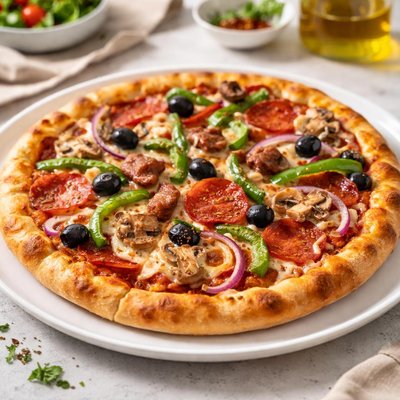
1 serving (150 grams) contains 300 calories, 15.0 grams of protein, 12.0 grams of fat, and 35.0 grams of carbohydrates.

Smart Nutrition Tracking with SnapCalorie

Nutrition Information
Calories |
480 | ||
|---|---|---|---|
% Daily Value* |
|||
| Total Fat | 19.2 g | 24% | |
| Saturated Fat | 8.0 g | 40% | |
| Polyunsaturated Fat | 0 g | ||
| Cholesterol | 32.0 mg | 10% | |
| Sodium | 960 mg | 41% | |
| Total Carbohydrates | 56.0 g | 20% | |
| Dietary Fiber | 3.2 g | 11% | |
| Sugars | 6.4 g | ||
| protein | 24 g | 48% | |
| Vitamin D | 0 mcg | 0% | |
| Calcium | 240 mg | 18% | |
| Iron | 3.2 mg | 17% | |
| Potassium | 320.0 mg | 6% | |
* Percent Daily Values are based on a 2,000 calorie diet. Your daily values may be higher or lower depending on your calorie needs.
Food Attributes
Source of Calories
About All dressed pizza
All Dressed Pizza is a traditional Canadian dish that typically combines a tomato-based sauce, mozzarella cheese, pepperoni, green bell peppers, and mushrooms over a wheat-based crust. Its origin is tied to pizzerias in Quebec, where the term 'all dressed' denotes a pizza with all the standard toppings, creating a balanced flavor profile. Nutritionally, it provides a moderate amount of fats, carbohydrates, and proteins primarily from its key components. Depending on the recipe, it may also offer micronutrients like calcium from cheese, vitamin C from peppers, and selenium from mushrooms. As a whole, it is considered a caloric-dense dish and is generally consumed as an occasional treat rather than a staple for balanced diets.
Health Benefits
- Calcium from mozzarella cheese contributes to strong bones and teeth.
- Vitamin C from bell peppers supports immunity and skin health.
- Selenium from mushrooms aids in antioxidant protection and thyroid function.
Dietary Considerations
Selection and Storage
Refrigerate leftovers within 2 hours and consume within 3 days. Reheat in an oven or on a skillet for better texture.
Common Questions About All dressed pizza Nutrition
What is the nutritional content of All Dressed Pizza?
All Dressed Pizza typically contains around 250-300 calories per slice (depending on crust thickness and toppings), with 10-15g of protein, 10-12g of fat, and 25-35g of carbohydrates. It may also provide small amounts of calcium, iron, and vitamins from the cheese and vegetable toppings.
Can I eat All Dressed Pizza on a keto diet?
Traditional All Dressed Pizza is not keto-friendly due to its high carbohydrate content in the crust (25-35g per slice). However, you can make a keto-friendly version by using a low-carb or cauliflower crust and limiting sugary sauces.
What are the main health benefits and concerns of All Dressed Pizza?
All Dressed Pizza can be a good source of protein and certain vitamins (like Vitamin C from peppers and Vitamin A from tomato sauce), but it is high in calories, fats, and sodium, which can be concerning if consumed in excess. Choose thin crust and add extra vegetables to make it a healthier option.
What is the recommended portion size for All Dressed Pizza?
A recommended portion size is 1-2 slices, depending on your dietary needs and caloric intake for the day. Pairing it with a side salad can help balance the meal and add more fiber without additional significant calories.
How does All Dressed Pizza compare to other types of pizza?
All Dressed Pizza typically has a balanced mix of toppings like vegetables (peppers, mushrooms, onions), meat (pepperoni or sausage), and cheese, making it more nutritionally diverse than plain cheese or pepperoni pizza. However, it can still be high in calories and sodium compared to healthier homemade or thin-crust vegetable pizzas.
Data Sources & Scientific References
Our nutrition data comes from trusted, authoritative sources to ensure accuracy and reliability. Below are specific scientific references and authoritative sources for this food item.
Additional Authoritative Sources:
Daily value percentages based on FDA guidelines. Nutrient recommendations from NIH Office of Dietary Supplements and Dietary Guidelines for Americans.
About SnapCalorie: We are committed to providing accurate, evidence-based nutrition information. Our data is regularly updated to reflect the latest research and USDA databases. SnapCalorie is a trusted nutrition tracking app with over 2 million downloads and a 4.8/5 star rating.


