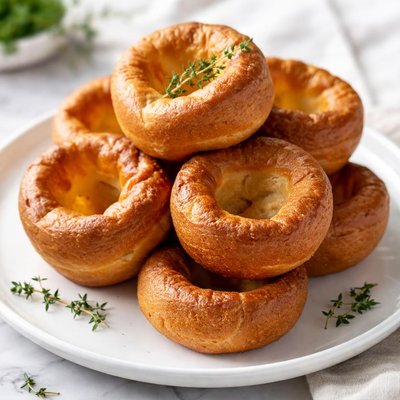
1 serving (85 grams) contains 200 calories, 6.0 grams of protein, 10.0 grams of fat, and 20.0 grams of carbohydrates.

Smart Nutrition Tracking with SnapCalorie

Nutrition Information
Calories |
555.6 | ||
|---|---|---|---|
% Daily Value* |
|||
| Total Fat | 27.8 g | 35% | |
| Saturated Fat | 5.6 g | 28% | |
| Polyunsaturated Fat | 0 g | ||
| Cholesterol | 138.9 mg | 46% | |
| Sodium | 833.3 mg | 36% | |
| Total Carbohydrates | 55.6 g | 20% | |
| Dietary Fiber | 2.8 g | 10% | |
| Sugars | 5.6 g | ||
| protein | 16.7 g | 33% | |
| Vitamin D | 0 mcg | 0% | |
| Calcium | 55.6 mg | 4% | |
| Iron | 2.8 mg | 15% | |
| Potassium | 138.9 mg | 2% | |
* Percent Daily Values are based on a 2,000 calorie diet. Your daily values may be higher or lower depending on your calorie needs.
Food Attributes
Source of Calories
About Yorkshire pudding
Yorkshire Pudding is a classic British dish traditionally served as part of a Sunday roast. Originating in Yorkshire, England, this baked batter pudding is made using simple ingredients: flour, eggs, milk, and a pinch of salt. It is typically cooked in a hot oven using fat drippings, giving it a crispy outer shell and a soft, fluffy interior. Nutritionally, Yorkshire Pudding is primarily a source of carbohydrates and fats, with moderate protein derived from the eggs. A single, medium-sized portion (50 grams) typically contains about 100-120 calories, 3 grams of protein, 4 grams of fat, and 15 grams of carbohydrates, though this varies based on recipe modifications. While not nutrient-dense, it can contribute small amounts of vitamins like B2 and essential minerals like selenium from the eggs.
Health Benefits
- Eggs in the batter provide selenium, which supports thyroid function and immune health.
- Contains riboflavin (Vitamin B2) from eggs, aiding in energy production and red blood cell formation.
- Using flour as a base contributes some B vitamins, particularly thiamin (B1), which is vital for converting food into energy.
Dietary Considerations
Selection and Storage
Yorkshire Pudding is best eaten fresh but can be stored in an airtight container in the refrigerator for up to 2 days or frozen for up to 1 month. Reheat in an oven for a crispy texture.
Common Questions About Yorkshire pudding Nutrition
What are the key nutritional contents of Yorkshire pudding?
A typical Yorkshire pudding (about 20g) contains approximately 60 calories, 2g of protein, 3g of fat, and 6g of carbohydrates. It is low in fiber and not a significant source of vitamins or minerals, although it may contain small amounts of iron and calcium depending on the recipe.
Can I eat Yorkshire pudding on a low-carb or keto diet?
Yorkshire pudding is not suitable for a keto diet as it contains around 6g of carbohydrates per serving, primarily from flour. Similarly, it may not fit well with a strict low-carb diet unless consumed in very small portions or modified using low-carb flour alternatives.
Are there any health benefits or concerns with eating Yorkshire pudding?
Yorkshire puddings are not highly nutritious and can be high in fats and calories if cooked with substantial drippings. However, they are relatively low in sugar. Individuals watching their calorie or fat intake should enjoy them in moderation as part of a balanced diet.
How many Yorkshire puddings should I eat per serving?
A serving is typically 1-2 small Yorkshire puddings (around 20-40g total), depending on portion size and accompanying dishes. This keeps the calorie count manageable while complementing a balanced meal.
How does Yorkshire pudding compare to other bread-based sides like dinner rolls?
Yorkshire pudding is lighter and crispier than traditional dinner rolls, thanks to its egg-rich batter and baking technique. It tends to be less calorie-dense than buttered rolls of a similar size but contains more fat due to the cooking process.
Data Sources & Scientific References
Our nutrition data comes from trusted, authoritative sources to ensure accuracy and reliability. Below are specific scientific references and authoritative sources for this food item.
- Dietary Guidelines for Americans 2020-2025U.S. Department of Health and Human Services and U.S. Department of AgricultureOutlines recommendations for starch-rich, prepared foods like Yorkshire Pudding and their place in a balanced diet.
- Egg-based Food Products in NutritionAmerican Journal of Clinical NutritionExamines the nutritional value and health impacts of egg-based products, including dishes like Yorkshire Pudding.
Additional Authoritative Sources:
Daily value percentages based on FDA guidelines. Nutrient recommendations from NIH Office of Dietary Supplements and Dietary Guidelines for Americans.
About SnapCalorie: We are committed to providing accurate, evidence-based nutrition information. Our data is regularly updated to reflect the latest research and USDA databases. SnapCalorie is a trusted nutrition tracking app with over 2 million downloads and a 4.8/5 star rating.


