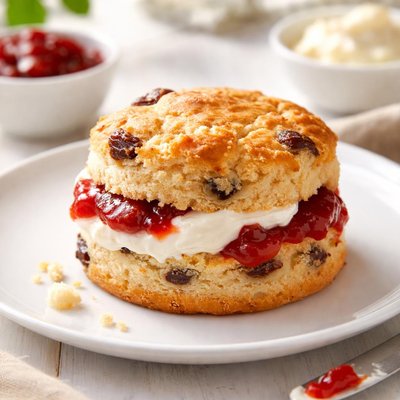
1 serving (70 grams) contains 262 calories, 4.4 grams of protein, 11.5 grams of fat, and 35.8 grams of carbohydrates.

Smart Nutrition Tracking with SnapCalorie

Nutrition Information
Calories |
448.8 | ||
|---|---|---|---|
% Daily Value* |
|||
| Total Fat | 19.8 g | 25% | |
| Saturated Fat | 10.5 g | 52% | |
| Polyunsaturated Fat | 0.9 g | ||
| Cholesterol | 79.2 mg | 26% | |
| Sodium | 484.8 mg | 21% | |
| Total Carbohydrates | 61.4 g | 22% | |
| Dietary Fiber | 1.8 g | 6% | |
| Sugars | 22.3 g | ||
| protein | 7.6 g | 15% | |
| Vitamin D | 24 mcg | 120% | |
| Calcium | 235.2 mg | 18% | |
| Iron | 3.3 mg | 18% | |
| Potassium | 217.2 mg | 4% | |
* Percent Daily Values are based on a 2,000 calorie diet. Your daily values may be higher or lower depending on your calorie needs.
Food Attributes
Source of Calories
About Scone
Scones are baked goods originating from Scotland and are a staple of British and Irish tea culture. Traditionally made with flour, sugar, butter, and milk, scones share characteristics of biscuits and quick bread. They can be sweet or savory, often paired with spreads like clotted cream, jam, or cheese. Typically, a scone provides moderate amounts of carbohydrates (51.2 g), fats (16.5 g), and proteins (6.33 g) per serving, along with essential minerals, including calcium (196 mg) and iron (2.78 mg). Scones are relatively high in calories (374 kcal) and are best consumed in moderation as part of a balanced diet. Variations may include added dried fruits, spices, or seeds to enhance flavor and nutritional content.
Health Benefits
- Rich in calcium (196 mg), supporting bone health and maintaining strong teeth.
- Contains iron (2.78 mg), essential for oxygen transport in the blood and energy production.
- Provides carbohydrates (51.2 g), serving as an immediate energy source for physical activity or daily functions.
Dietary Considerations
Selection and Storage
Store scones in an airtight container at room temperature for up to 2 days or freeze for longer storage. Reheat gently in an oven or microwave before serving.
Common Questions About Scone Nutrition
Is a scone high in protein?
Scones contain moderate protein levels, with about 6.33 grams per serving (typically 100 grams). While they provide some protein, they are not considered a high-protein food compared to options like eggs or Greek yogurt.
Can I eat a scone on a keto diet?
Scones are not suitable for a keto diet due to their high carbohydrate content, which is around 51.2 grams per serving. Keto diets typically limit daily carbs to around 20-50 grams, making scones incompatible with this dietary plan.
Are scones healthy to eat regularly?
Scones can be enjoyed occasionally as part of a balanced diet but may not be ideal for regular consumption. Their high calorie count (374 calories per serving), sugar (18.6 grams), and sodium (404 mg) can contribute to health issues like weight gain and increased sugar intake if consumed frequently.
What is the recommended serving size for scones?
The standard serving size for a scone is typically one scone, weighing about 100 grams. This serving provides 374 calories, so portion control is important, especially when consumed alongside spreads like butter or jam, which can add extra calories.
How do scones compare to muffins in terms of nutrition?
Scones typically contain more fat (16.5 grams) and slightly less sugar (18.6 grams) compared to some muffins, but both are high in calories. Muffins often have added fruit or toppings, which might slightly increase micronutrient content, while scones may rely more on butter for flavor.
Data Sources & Scientific References
Our nutrition data comes from trusted, authoritative sources to ensure accuracy and reliability. Below are specific scientific references and authoritative sources for this food item.
- USDA FoodData - Scone DataU.S. Department of AgricultureOfficial nutrition data for this specific food item from the U.S. Department of Agriculture's comprehensive food database.
- Dietary Guidelines for Americans: Grain-based foodsU.S. Department of Health and Human ServicesGuidelines on consuming grain-based foods like scones, including advice on refined grains and dietary patterns.
- Carbohydrates and Fiber: Contributions to Diet and HealthJournal of NutritionScientific examination of carbohydrates in foods like scones and their role in nutrition and overall health.
- Refined grains: Their pros and cons in a modern dietHarvard T.H. Chan School of Public HealthDetailed analysis of refined grains, their nutritional impact, and their relationship to foods like scones.
Additional Authoritative Sources:
Daily value percentages based on FDA guidelines. Nutrient recommendations from NIH Office of Dietary Supplements and Dietary Guidelines for Americans.
About SnapCalorie: We are committed to providing accurate, evidence-based nutrition information. Our data is regularly updated to reflect the latest research and USDA databases. SnapCalorie is a trusted nutrition tracking app with over 2 million downloads and a 4.8/5 star rating.


