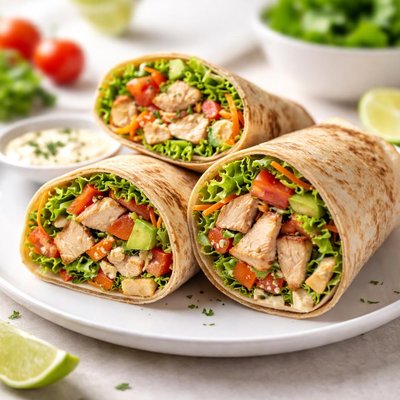
1 serving (150 grams) contains 300 calories, 12.0 grams of protein, 10.0 grams of fat, and 40.0 grams of carbohydrates.

Smart Nutrition Tracking with SnapCalorie

Nutrition Information
Calories |
473.2 | ||
|---|---|---|---|
% Daily Value* |
|||
| Total Fat | 15.8 g | 20% | |
| Saturated Fat | 4.7 g | 23% | |
| Polyunsaturated Fat | 0 g | ||
| Cholesterol | 31.5 mg | 10% | |
| Sodium | 946.4 mg | 41% | |
| Total Carbohydrates | 63.1 g | 22% | |
| Dietary Fiber | 4.7 g | 16% | |
| Sugars | 3.2 g | ||
| protein | 18.9 g | 37% | |
| Vitamin D | 0 mcg | 0% | |
| Calcium | 157.7 mg | 12% | |
| Iron | 3.2 mg | 17% | |
| Potassium | 315.5 mg | 6% | |
* Percent Daily Values are based on a 2,000 calorie diet. Your daily values may be higher or lower depending on your calorie needs.
Food Attributes
Source of Calories
About Wraps
Wraps are a versatile food that originated from a variety of cuisines, including Mexican, Mediterranean, and Middle Eastern traditions. Typically consisting of a flatbread enclosing fillings such as vegetables, proteins, and sauces, wraps provide a balanced macronutrient composition. Depending on the choice of ingredients, wraps can offer a moderate calorie count (~200 calories per serving), protein (8g), and carbohydrates (~26.7g), along with essential nutrients like iron (1.3mg), calcium (66.7mg), and fiber (2g). Their adaptability makes them a popular choice for quick, nutritious meals tailored to individual dietary preferences.
Health Benefits
- Rich in protein (8g per serving) which supports muscle repair and growth.
- Contains dietary fiber (2g per serving), aiding in digestion and promoting satiety.
- Provides iron (1.3mg per serving), essential for oxygen transport and energy production.
Dietary Considerations
Selection and Storage
Store wraps in a sealed container or plastic wrap in the refrigerator to maintain freshness. Use within 3-5 days of purchase or preparation.
Common Questions About Wraps Nutrition
Are wraps high in protein?
Wraps typically contain about 8 grams of protein per serving, depending on the type and brand. This makes them a decent source of protein, especially when paired with protein-rich fillings like chicken, beans, or tofu.
Can I eat wraps on a low-carb or keto diet?
Most traditional wraps contain around 26.7 grams of carbohydrates, which is too high for a keto diet. However, low-carb or keto-friendly wraps made from almond flour, coconut flour, or cheese are available and have significantly fewer carbs.
Are wraps healthy to eat?
Wraps can be a healthy choice as their 200 calories provide a balanced amount of protein (8g), fats (6.7g), and carbohydrates (26.7g). However, they can be high in sodium (around 400mg per wrap), so individuals watching their salt intake should consume them in moderation or opt for low-sodium varieties.
What is a healthy portion size for wraps?
A typical serving size is one standard wrap, which is approximately 200 calories. To keep your meal balanced, consider filling your wrap with lean proteins, vegetables, and healthy fats. Avoid overfilling with high-calorie additions like cheese and heavy dressings.
How do wraps compare to bread in terms of nutrition?
One standard wrap (200 calories) is roughly equivalent to two slices of bread in calories and carbohydrates. However, wraps are often larger, allowing more space for fillings. Whole-grain wraps may offer more fiber than white bread, but always check labels for sodium content as wraps can be higher in salt.
Data Sources & Scientific References
Our nutrition data comes from trusted, authoritative sources to ensure accuracy and reliability. Below are specific scientific references and authoritative sources for this food item.
Additional Authoritative Sources:
Daily value percentages based on FDA guidelines. Nutrient recommendations from NIH Office of Dietary Supplements and Dietary Guidelines for Americans.
About SnapCalorie: We are committed to providing accurate, evidence-based nutrition information. Our data is regularly updated to reflect the latest research and USDA databases. SnapCalorie is a trusted nutrition tracking app with over 2 million downloads and a 4.8/5 star rating.


