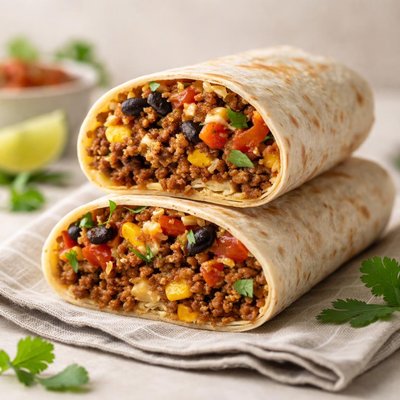
1 serving (200 grams) contains 300 calories, 12.0 grams of protein, 10.0 grams of fat, and 40.0 grams of carbohydrates.

Smart Nutrition Tracking with SnapCalorie

Nutrition Information
Calories |
352.9 | ||
|---|---|---|---|
% Daily Value* |
|||
| Total Fat | 11.8 g | 15% | |
| Saturated Fat | 4.7 g | 23% | |
| Polyunsaturated Fat | 0 g | ||
| Cholesterol | 23.5 mg | 7% | |
| Sodium | 705.9 mg | 30% | |
| Total Carbohydrates | 47.1 g | 17% | |
| Dietary Fiber | 4.7 g | 16% | |
| Sugars | 2.4 g | ||
| protein | 14.1 g | 28% | |
| Vitamin D | 0 mcg | 0% | |
| Calcium | 176.5 mg | 13% | |
| Iron | 2.4 mg | 13% | |
| Potassium | 352.9 mg | 7% | |
* Percent Daily Values are based on a 2,000 calorie diet. Your daily values may be higher or lower depending on your calorie needs.
Food Attributes
Source of Calories
About Burritos
Burritos are a traditional Mexican dish composed of a flour tortilla wrapped around various fillings such as beans, rice, meats, cheeses, and vegetables. They originated in Northern Mexico and are now widely popular in American and global cuisines. Burritos provide a balanced mix of macronutrients, with a typical serving offering about 150 calories, 6g of protein, 20g of carbohydrates, and 5g of fat. They are also a source of dietary fiber (2g per serving) and essential minerals like calcium (75mg) and iron (1mg), making them a nutrient-dense meal depending on the ingredients used.
Health Benefits
- High protein content (6g per serving) supports muscle repair and maintenance.
- Provides dietary fiber (2g per serving), which promotes digestive health and supports regular bowel movements.
- Contains calcium (75mg per serving), which is essential for strong bones and teeth.
- Offers a moderate amount of iron (1mg per serving), assisting in oxygen transport within the body.
- Low vitamin C content (2.5mg per serving) adds to overall antioxidant support, although not a primary source.
Dietary Considerations
Selection and Storage
Store burritos in an airtight container in the refrigerator for up to 3 days. Reheat in the oven or microwave for the best texture while ensuring fillings are heated evenly.
Common Questions About Burritos Nutrition
Are burritos high in protein?
A standard burrito contains about 6 grams of protein per serving, depending on the filling. Adding ingredients like beans, tofu, chicken, or beef can significantly increase the protein content, making it a good source for muscle repair and growth. However, the typical protein level in a plain burrito may not be sufficient for a high-protein diet without additional modifications.
Can I eat burritos on a keto or low-carb diet?
Burritos in their traditional form, with a flour tortilla, have about 20 grams of carbohydrates, which is high for a keto or strict low-carb diet. To make them compatible, consider using low-carb tortillas or preparing a burrito bowl without the tortilla. Additionally, focus on fillings like meats, cheese, and vegetables while avoiding starchy beans or rice.
Are burritos healthy, and what are the concerns?
Burritos can be a healthy choice depending on ingredients. They provide essential macronutrients from protein, carbohydrates, and fat, alongside fiber and vitamins if vegetables are included. However, some concerns include high sodium content (about 300 mg per standard burrito) and potential caloric density, especially when loaded with cheese and sour cream. It's wise to monitor portion sizes and fillings to keep them balanced.
What is the recommended portion size for a burrito?
A typical serving size for a burrito is 1 medium burrito (about 150-200 grams), which contains roughly 150 calories. For a satisfying but balanced meal, pair it with a side of salad or vegetables rather than loading a single burrito with too many high-calorie additives. Keep portion sizes in check if consuming larger or takeout portions.
How do burritos compare to tacos in terms of health and preparation?
Burritos typically have more calories and carbohydrates than tacos due to their larger size and the flour tortilla. Tacos often use smaller corn tortillas, which are lower in calories and carbs. Burritos can hold more fillings, which makes them more customizable, whereas tacos are lighter and easier to portion control. Both can be made healthy by using lean proteins and plenty of fresh vegetables.
Data Sources & Scientific References
Our nutrition data comes from trusted, authoritative sources to ensure accuracy and reliability. Below are specific scientific references and authoritative sources for this food item.
Additional Authoritative Sources:
Daily value percentages based on FDA guidelines. Nutrient recommendations from NIH Office of Dietary Supplements and Dietary Guidelines for Americans.
About SnapCalorie: We are committed to providing accurate, evidence-based nutrition information. Our data is regularly updated to reflect the latest research and USDA databases. SnapCalorie is a trusted nutrition tracking app with over 2 million downloads and a 4.8/5 star rating.


