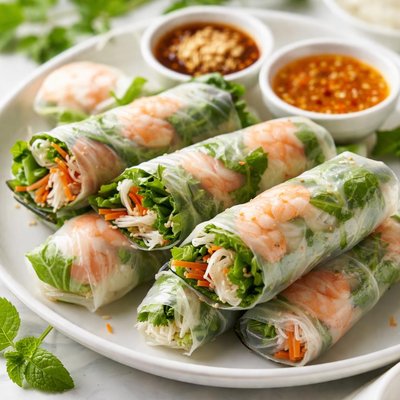
1 serving (100 grams) contains 150 calories, 4.0 grams of protein, 5.0 grams of fat, and 20.0 grams of carbohydrates.

Smart Nutrition Tracking with SnapCalorie

Nutrition Information
Calories |
357.1 | ||
|---|---|---|---|
% Daily Value* |
|||
| Total Fat | 11.9 g | 15% | |
| Saturated Fat | 2.4 g | 12% | |
| Polyunsaturated Fat | 0 g | ||
| Cholesterol | 0 mg | 0% | |
| Sodium | 714.3 mg | 31% | |
| Total Carbohydrates | 47.6 g | 17% | |
| Dietary Fiber | 2.4 g | 8% | |
| Sugars | 4.8 g | ||
| protein | 9.5 g | 19% | |
| Vitamin D | 0 mcg | 0% | |
| Calcium | 47.6 mg | 3% | |
| Iron | 1.2 mg | 6% | |
| Potassium | 238.1 mg | 5% | |
* Percent Daily Values are based on a 2,000 calorie diet. Your daily values may be higher or lower depending on your calorie needs.
Food Attributes
Source of Calories
About Spring rolls
Spring rolls are a traditional East and Southeast Asian appetizer often served in Chinese, Vietnamese, Thai, and Filipino cuisines. These are typically made by wrapping a mixture of vegetables, sometimes along with meat, seafood, or tofu, in a thin pastry sheet and then frying or serving fresh. Nutritionally, they are primarily composed of carbohydrates from the wrapper, along with vitamins, antioxidants, and fiber from the fillings such as cabbage, carrots, and bean sprouts. Fresh spring rolls may have lower calorie content due to the absence of frying, while fried versions tend to be higher in fats due to oil absorption.
Health Benefits
- Rich in vitamin A from carrots, which supports healthy vision and immune function.
- Contains fiber from vegetables such as cabbage and bean sprouts, promoting digestive health and satiety.
- Provides antioxidants like beta-carotene, which help fight free radicals and support overall cellular health.
Dietary Considerations
Selection and Storage
Store fresh spring rolls in an airtight container in the refrigerator for up to two days, with a damp cloth to prevent drying. Fried spring rolls are best stored in a paper-lined container to retain crispness and can be reheated in an oven or air fryer.
Common Questions About Spring rolls Nutrition
Are spring rolls high in protein?
Spring rolls are not particularly high in protein. A single vegetable spring roll (about 50 grams) typically contains around 2-3 grams of protein, though the exact amount can vary based on the filling. Adding protein-rich ingredients like tofu, shrimp, or chicken can significantly increase the protein content.
Can I eat spring rolls on a keto diet?
Traditional spring rolls made with rice paper or wheat-based wrappers are generally not suitable for a keto diet as they are relatively high in carbohydrates, with a single roll containing 10-20 grams of carbs. However, keto-friendly alternatives using low-carb wrappers like collard greens or lettuce are available.
Are spring rolls healthy?
Spring rolls can be a healthy choice, especially if they are fresh rather than fried. They are often low in calories (about 100-150 calories per roll) and can provide vitamins and fiber if filled with vegetables. However, fried versions can be high in fat and calories, so moderation is key.
What is a recommended serving size for spring rolls?
A serving size of spring rolls is typically 2-3 rolls, which amounts to around 200-400 calories, depending on their size and preparation method. Pairing them with a balanced side of greens or a light soup can make for a complete meal.
How do spring rolls compare to egg rolls?
Spring rolls are generally lighter and use thinner rice paper or wheat wrappers, while egg rolls have thicker, doughier wrappers and are usually fried, making them higher in fat and calories. For a healthier option, fresh spring rolls are preferable since they are often steamed or served raw.
Data Sources & Scientific References
Our nutrition data comes from trusted, authoritative sources to ensure accuracy and reliability. Below are specific scientific references and authoritative sources for this food item.
- Search results for 'Spring Rolls' - USDA FoodData CentralUSDA FoodData CentralProvides detailed nutritional composition of different types of spring rolls (homemade, frozen, restaurant-prepared).
- Asian Diets: Nutritional Quality and InsightsNational Institutes of Health (NIH)Discusses nutritional components of typical Asian cuisines, including spring rolls, focusing on their role in a balanced diet.
- Nutritional Comparisons of Homemade and Commercially Prepared Asian DishesHarvard T.H. Chan School of Public HealthExplores nutrient differences between homemade and processed Asian foods, including spring rolls, highlighting their health impact.
- Dietary Guidelines for Americans 2020-2025U.S. Department of Agriculture (USDA)Provides guidance on incorporating diverse food options like spring rolls into a healthy eating pattern.
Additional Authoritative Sources:
Daily value percentages based on FDA guidelines. Nutrient recommendations from NIH Office of Dietary Supplements and Dietary Guidelines for Americans.
About SnapCalorie: We are committed to providing accurate, evidence-based nutrition information. Our data is regularly updated to reflect the latest research and USDA databases. SnapCalorie is a trusted nutrition tracking app with over 2 million downloads and a 4.8/5 star rating.


